
Shopify records every order your store takes, but an order history doesn't tell you much about the person behind it. To bring customers back, you need to see what each one bought and when, which messages they opened and what they asked your support team.
A customer relationship management (CRM) tool pulls all of that into one profile per customer and lets you act on it. It's how you find the customers worth a second, third and tenth order and reach them before they drift away. That's the foundation of repeat sales and of growing customer lifetime value.
We've rounded up the best CRMs for Shopify brands below, with what each costs and the kind of brand it suits. You'll find tools built for consumer brands rather than sales teams, including one that comes free with every Shopify store, plus a sales CRM for brands that also sell wholesale.
What are the best CRMs for Shopify?
The best CRMs for Shopify brands include Klaviyo, Shopify's own customer segments, Gorgias and Segments, with Zoho CRM for brands that also sell wholesale.
For a Shopify brand, a CRM is any tool that builds one profile per customer from your store data and lets you act on it. The tools below differ mainly in which team works from that profile: marketing, support or sales.
The table compares their ratings and starting prices, and the kind of brand each one suits.
| App | Rating, November 2026 | Starting price, November 2026 | Best for |
|---|---|---|---|
| Klaviyo | 4.7 from 3,450 reviews | Free, then from $20/month | Most Shopify brands that want one customer profile behind email, SMS and push |
| Shopify customer segments | 4.8 from 4,873 reviews* | Free with Shopify | Newer stores that want segments and campaigns without another tool |
| Gorgias | 4.3 from 709 reviews | $40/month with AI Agent, $10 for the helpdesk alone | Brands that want support agents to see every order and customer |
| Segments | 5.0 from 57 reviews | $49/month | Brands that want to find their best and at-risk customers without a data team |
| Zoho CRM | 4.3 from 7,007 reviews* | Free for 3 users, then $14/user/month billed annually | Small teams that want a low-cost sales CRM for wholesale accounts |
* Shopify's customer segments are built into every store, so their rating is for Shopify Messaging, the app that sends campaigns to them. Zoho CRM isn't sold through the App Store, so its rating is from Capterra, in October 2026.
1. Klaviyo
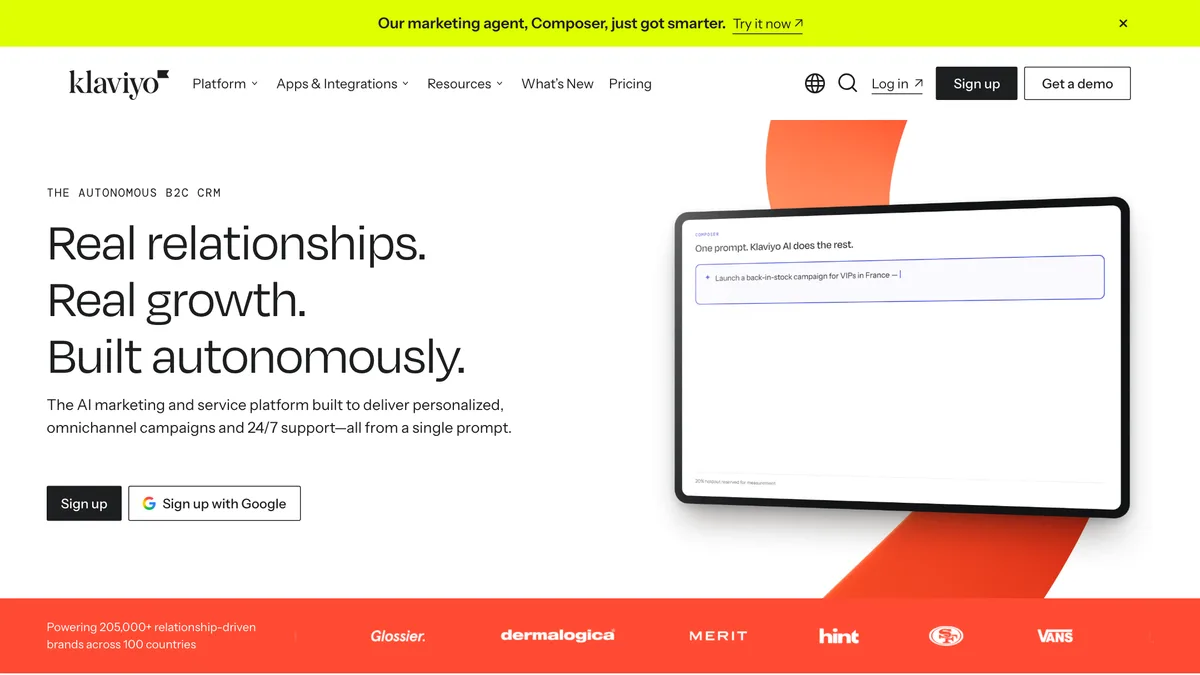
Klaviyo calls itself a B2C CRM, and for most Shopify brands that's the role it plays. It syncs your Shopify customers, orders and on-site activity in real time and builds a profile for every shopper, which your email, SMS, WhatsApp and push messages all run from.
Segments and flow triggers can use both historical and real-time data, and paid email plans add predictive analytics and personalized product recommendations. Klaviyo also has its own helpdesk, which shares one profile between service and marketing.
Dermalogica, the Unilever Prestige skincare brand, reported 21% year-over-year growth in revenue from CRM in a 2026 Klaviyo case study.
- Pricing, November 2026: Free for up to 250 active profiles and 500 emails a month, then Email from $20 a month and Marketing from $25 a month, both rising with your number of active profiles, with SMS as an add-on
- Shopify App Store rating, November 2026: 4.7 from 3,450 reviews
- Best for: most Shopify brands, as the main customer profile behind email, SMS and push
2. Shopify customer segments
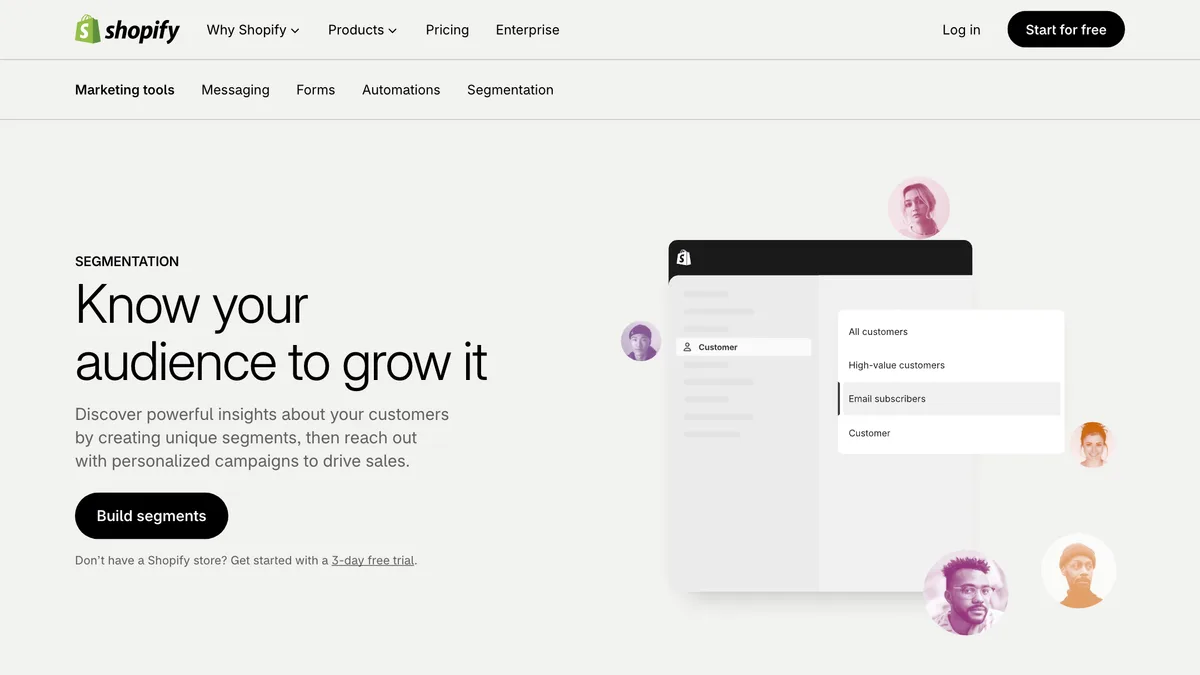
Shopify's customer segments are built into every store, and they cover a lot of what a CRM does. Each customer record already holds their orders, and segments are rule-based lists that update themselves as customers meet or stop meeting your criteria.
You can segment by the products people bought, where they live, custom metafields and how they engaged with your emails and texts. Start from a template, or ask Sidekick, Shopify's AI assistant, to build a segment from a plain-English description. Those segments then feed campaigns in Shopify Messaging (formerly Shopify Email), targeted discounts and automations.
In 2022, Airsign, a vacuum brand, built a segment of customers who had bought before it launched subscriptions, sent them a personalized discount and saw about 30% of them convert, according to Shopify.
- Pricing, November 2026: segments are free in every Shopify store, and Shopify Messaging sends your first 10,000 emails a month free, then charges $1 per 1,000
- Shopify App Store rating, November 2026: 4.8 from 4,873 reviews for Shopify Messaging
- Best for: newer Shopify stores that want segments and campaigns without paying for another tool
3. Gorgias
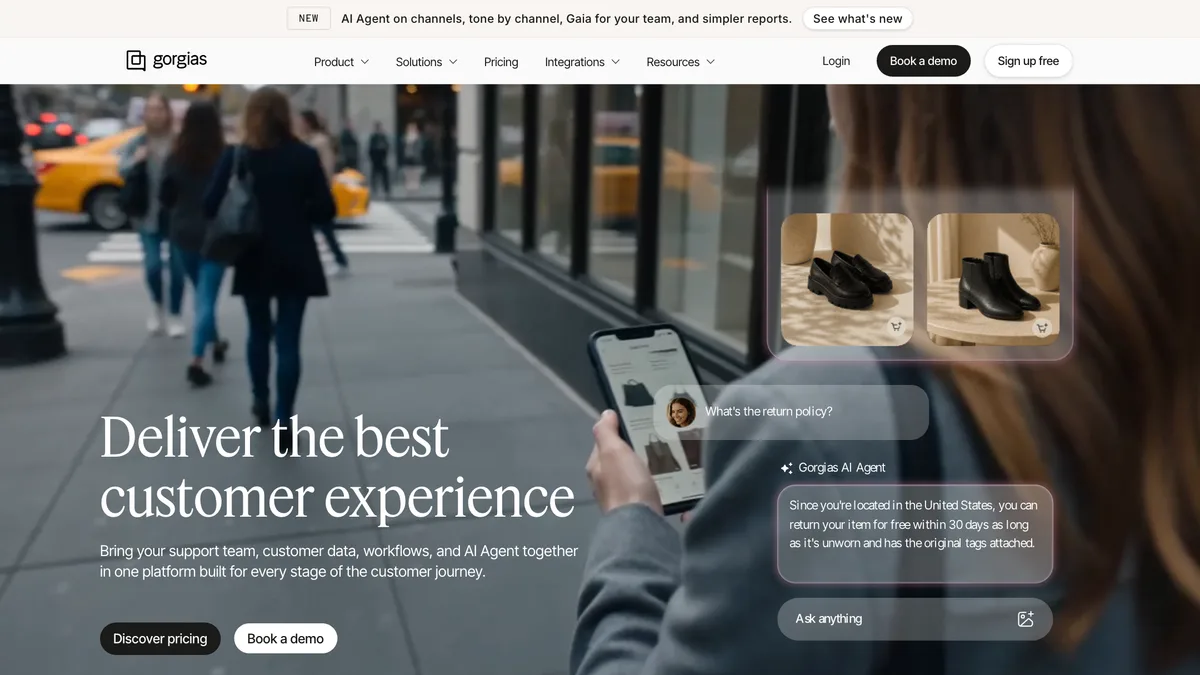
Gorgias is a helpdesk built for Shopify, and its customer profiles make it the service side of a CRM. Every ticket shows the customer's orders and past conversations across email, chat, SMS, voice and social, and agents can edit, refund or cancel an order without leaving it.
That context turns support into a chance to sell. AI Agent answers order, shipping and return questions around the clock, and AI Shopping Assistant answers product questions and recommends products. Revenue tracking shows what your support team generates, and Gorgias connects to Klaviyo, Recharge and Yotpo out of the box.
In 2025, Tommy John's support team drove $106K in sales in two months after moving to Gorgias from Zendesk, according to Gorgias.
- Pricing, November 2026: Starter $40 a month for 50 tickets, rising to Pro at $550 for 2,000 and Advanced at $1,430 for 5,000, with custom plans above that. Each price includes a monthly AI Agent component, and the helpdesk alone costs $10 to $900 a month
- Shopify App Store rating, November 2026: 4.3 from 709 reviews
- Best for: Shopify brands that want support agents to see every order and turn conversations into sales
4. Segments
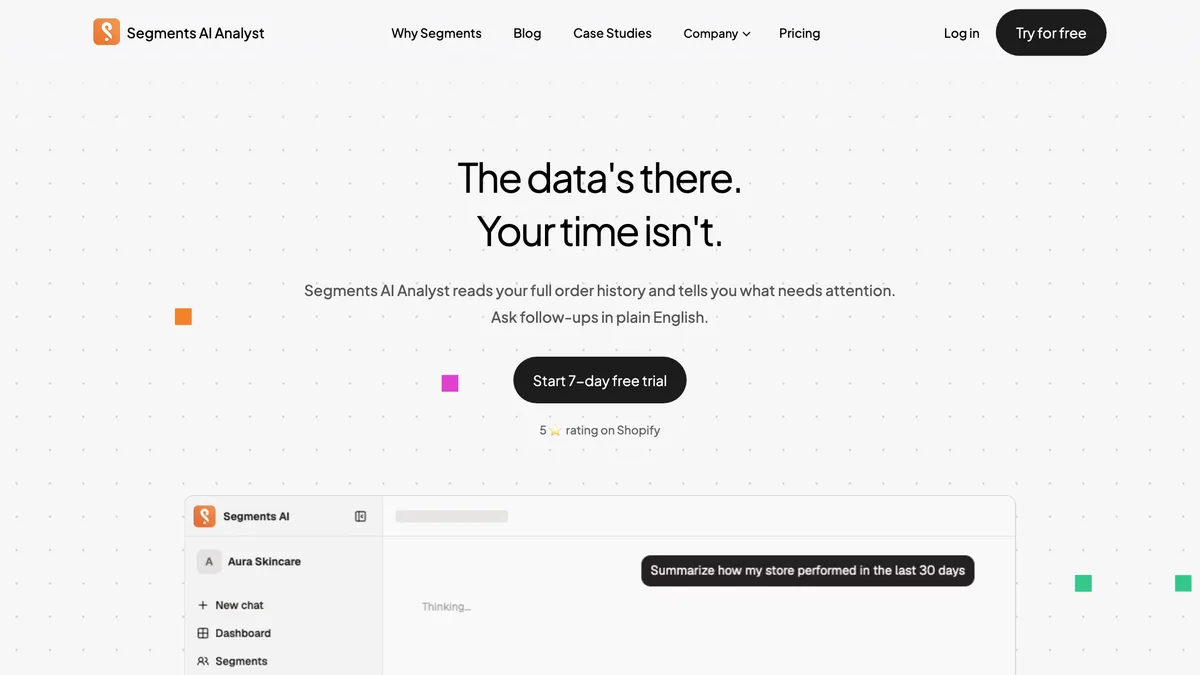
Segments, from Tresl, is a customer analytics app for Shopify that works as the analysis layer of a CRM. It reads your full order history and lets you ask questions in plain English, such as which products are bought together or who's about to churn, then returns a table, chart or segment.
The segments are what make it useful for retention. The Analyst plan syncs them to Shopify as customer tags, and the Analyst & Marketing plan pushes them to Klaviyo, Meta and Google. Customers it flags as likely to buy again or at risk of lapsing can go straight into a campaign.
True Botanicals, a clean skincare brand, saw a 128% increase in purchases from subscribers by using Segments' cohort analyses, according to Tresl.
- Pricing, November 2026: Analyst $49 a month and Analyst & Marketing $149 a month, with a 7-day free trial
- Shopify App Store rating, November 2026: 5.0 from 57 reviews
- Best for: brands that want to find their best and at-risk customers without hiring a data analyst
5. Zoho CRM
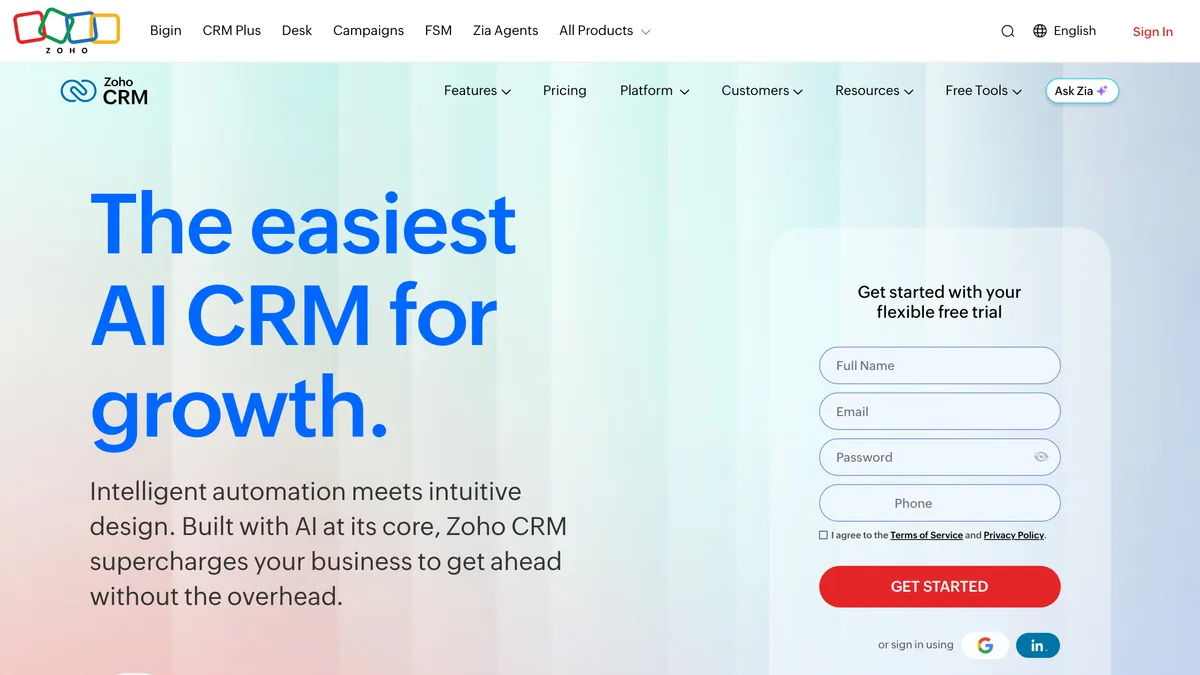
Zoho CRM is a low-cost sales CRM with a free edition for up to three users. Zoho's own Shopify extension is free and syncs customers, orders and products, so each Shopify customer becomes a contact with their purchases attached.
It's built around leads, deals and accounts rather than shoppers. Standard includes workflows, cadences and sales forecasting, Professional adds quotes and inventory management, and Enterprise adds journey orchestration and customer portals, which suits brands that manage wholesale accounts.
- Pricing, November 2026: Free for up to three users, then Standard from $14 per user a month billed annually ($20 monthly), rising to $40 ($50 monthly) on Enterprise, with an Ultimate edition above that
- Capterra rating, October 2026: 4.3 from 7,007 reviews
- Best for: small teams that want a low-cost sales CRM for wholesale accounts
Marketing, service and sales CRMs
CRMs for Shopify brands fall into three groups, depending on which team works from the customer profile and what they do with it.
Marketing CRMs turn the profile into segments and messages. Service CRMs put it in front of the people answering customers. Sales CRMs organize it around deals and business accounts, which is why they suit wholesale more than direct-to-consumer selling.
| Marketing CRMs | Service CRMs | Sales CRMs | |
|---|---|---|---|
| Built around | Shoppers and what they do on your store | Conversations and orders | Leads, deals and business accounts |
| Main users | Marketing and retention team | Support team | Sales or wholesale team |
| How they act on the profile | Segments, email, SMS and push | Replies, order edits, refunds and product recommendations | Pipelines, follow-ups and quotes |
| Tools in this list | Klaviyo, Shopify customer segments, Segments | Gorgias | Zoho CRM |
Most direct-to-consumer brands start with a marketing CRM, because that's where the profile drives repeat purchases most directly. It should run all your channels from the same data, so email, SMS and push work together instead of piling up.
A service CRM joins it once support volume grows. Connect the two, so a customer who just complained doesn't get a cheerful promo the next morning.
A sales CRM is best suited to brands that also sell to other businesses. For a store selling to thousands of individual shoppers, its pipelines and deal stages mostly go unused.
How much does a Shopify CRM cost?
A CRM for your Shopify store can cost anything from nothing, using the segments built into Shopify, to custom enterprise pricing. What you pay grows with your customer list, your support volume or the size of your team.
The headline price is rarely the full cost. Klaviyo bills on active profiles, the contacts who can receive your marketing, so clearing out people who never engage keeps the bill down.
Gorgias bills on tickets, so a busy holiday season can push you up a tier. Its AI Agent also adds $30 to $530 a month to the helpdesk price, depending on the plan. A sales CRM like Zoho CRM prices per seat instead, which stays cheap for a small wholesale team.
We'd start with what Shopify gives you for free, and pay for more only when a specific team needs it.
How to choose a CRM for your Shopify store
The best CRM for your Shopify store is the one your team will actually work from every day. Start with what you need the customer profile to do, then pick the tool built for that, rather than buying the biggest platform and hoping to grow into it.
Whichever you pick, put it through a few checks before you sign:
- Make sure it syncs cleanly with Shopify, including orders, refunds and customer tags, and read its recent App Store reviews for sync complaints.
- Choose one profile as your source of truth, and connect your other tools to it, so marketing and support see the same customer.
- Price it on your numbers a year from now, with the list size, ticket volume and team you expect, not the ones you have today.
Get those right and your CRM becomes the base of a retention engine that keeps bringing customers back.
Final thoughts
Most Shopify brands don't need a traditional CRM. They need one clear profile per customer and a way to act on it, and for most stores that's Klaviyo, backed by the segments Shopify already gives you.
Add a helpdesk like Gorgias as your support volume grows, and an analytics tool like Segments when you want sharper answers about who's coming back. Only reach for a sales CRM like Zoho CRM if you sell to other businesses.
Whichever you choose, judge it by one thing: whether it gets more of your customers to their second and third order.
Frequently asked questions
What's the difference between a CRM and a CDP?
A CRM is the tool your team works in to see and act on customer profiles, while a customer data platform (CDP) collects data from many sources, cleans it and feeds it to other tools. For Shopify brands the line has blurred, since tools like Klaviyo now cover both for many stores.
What customer data should a Shopify CRM track?
A Shopify CRM should track each customer's orders, products, order dates and total spend, along with their email and SMS consent. Engagement with your messages, support conversations and subscription or loyalty status make the profile far more useful for spotting who's likely to buy again.
Do small Shopify stores need a CRM?
Small Shopify stores don't need a paid CRM to get started, because Shopify's built-in customer records and segments cover the basics. A paid tool starts to pay for itself once you're sending regular campaigns and automated flows, or once support questions take up a real part of someone's day.
Can you use more than one CRM with Shopify?
You can use more than one CRM with Shopify, and many brands run a marketing CRM and a helpdesk side by side, each pulling from the same store data. Decide which one owns consent and marketing preferences, and connect them so updates in one show up in the other.