
Most people who visit your store will leave without buying, and few of them come back on their own. A sign-up popup gives you a way to stay in touch, because it asks for an email address or phone number while they're still on the page.
Those sign-ups are where retention starts. Your email and SMS lists are the audience for your welcome series, cart reminders, product launches and sales. The faster they grow, the more of your revenue can come from repeat purchases instead of paid ads.
A good popup app does more than show a form. It decides who sees which offer and when, catches shoppers as they're about to leave, tests one version against another and sends every sign-up straight to your email and SMS platform.
We've rounded up the best popup apps for Shopify brands, from free forms inside tools you may already pay for to AI builders and services that run your popups for you. After the list, we compare built-in forms with dedicated apps, break down what they cost and cover how to choose one.
What are the best popup apps for Shopify?
The best popup apps for Shopify brands include Klaviyo's sign-up forms, OptiMonk, Alia and Justuno.
These tools fall into two camps. Some are sign-up forms built into an email and SMS platform, so they come with a tool you already pay for. Others are dedicated popup apps that send subscribers to whichever platform you use.
The dedicated apps vary a lot in how much they do for you. Some are simple builders you run yourself. Others use AI to design, time and test your popups, and a few will give you a team that runs the whole thing.
That range shows in their prices, which run from free to several hundred dollars a month:
| App | Rating, November 2026 | Starting price, November 2026 | Best for |
|---|---|---|---|
| Klaviyo sign-up forms | 4.7 from 3,450 reviews | Free | Brands that already run email and SMS through Klaviyo |
| OptiMonk | 4.8 from 454 reviews | Free | Brands that want AI to design, target and test popups |
| Alia | 4.7 from 113 reviews | $200/month | Growing brands that want popups tested and optimized for them |
| Justuno | 4.6 from 668 reviews | $59/month | Brands that want popups, visitor identification and hands-on help |
| Wisepops | 4.9 from 70 reviews | $599/month | Larger brands that want popups, web push and an onsite feed run with a strategist |
| Pop Convert | 4.9 from 8,661 reviews | Free | Smaller stores that want a quick, low-cost popup tool |
| Shopify Forms | 4.5 from 776 reviews | Free | Newer stores that want a free form inside Shopify |
1. Klaviyo sign-up forms
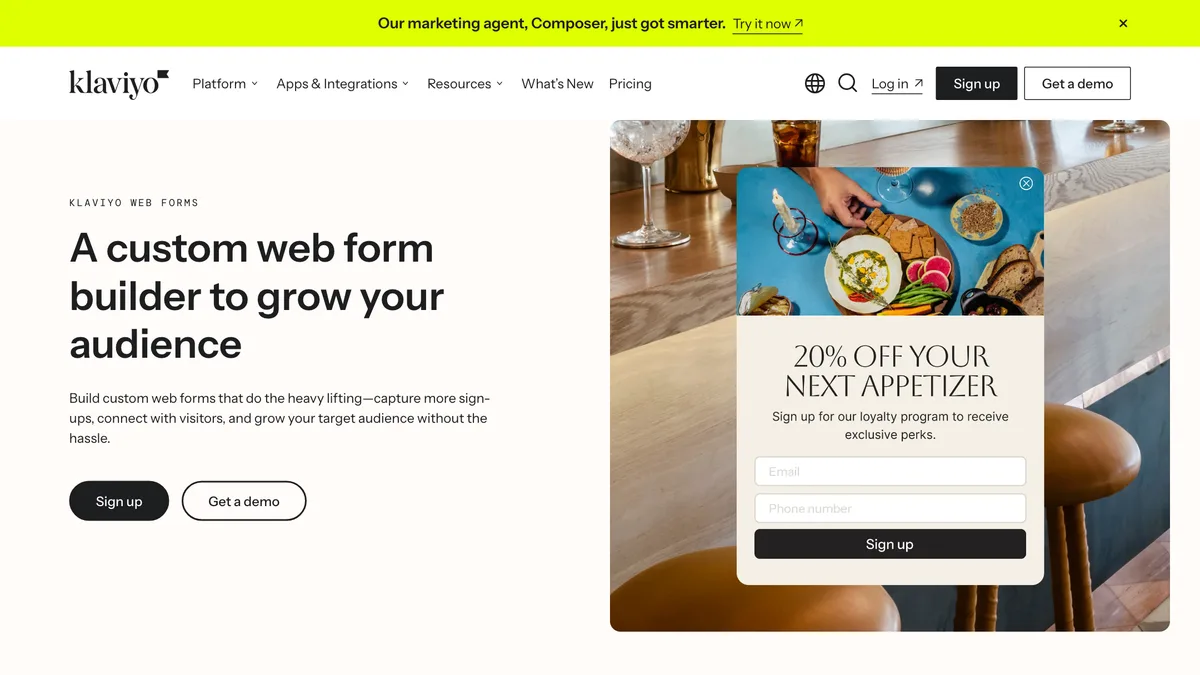
Klaviyo is the email and SMS platform many Shopify brands already use, and its sign-up forms come with every plan, including the free one.
You can build pop-ups, fly-outs, embedded and full-page forms, banners, teasers and spin-to-win forms from more than 70 templates. Forms can target shoppers by segment, location, cart value or UTM parameters, and you can A/B test designs and offers while Klaviyo's AI tests when each form appears.
Because the forms live inside Klaviyo, every sign-up goes straight into your lists and flows. Shop Pay users get their details pre-filled and discounts applied automatically.
In 2024, Tata Harper, the skincare brand, grew submissions to its desktop and mobile sign-up popups by more than 65% after Klaviyo's AI tested when and where they appeared, according to Klaviyo.
- Pricing, November 2026: forms come with every Klaviyo plan, including the free plan for up to 250 active profiles; paid plans start at $20 a month for email and $15 for SMS, and rise with your list and sends
- Shopify App Store rating, November 2026: 4.7 from 3,450 reviews
- Best for: brands that already run email and SMS through Klaviyo and want forms that feed their flows directly
2. OptiMonk
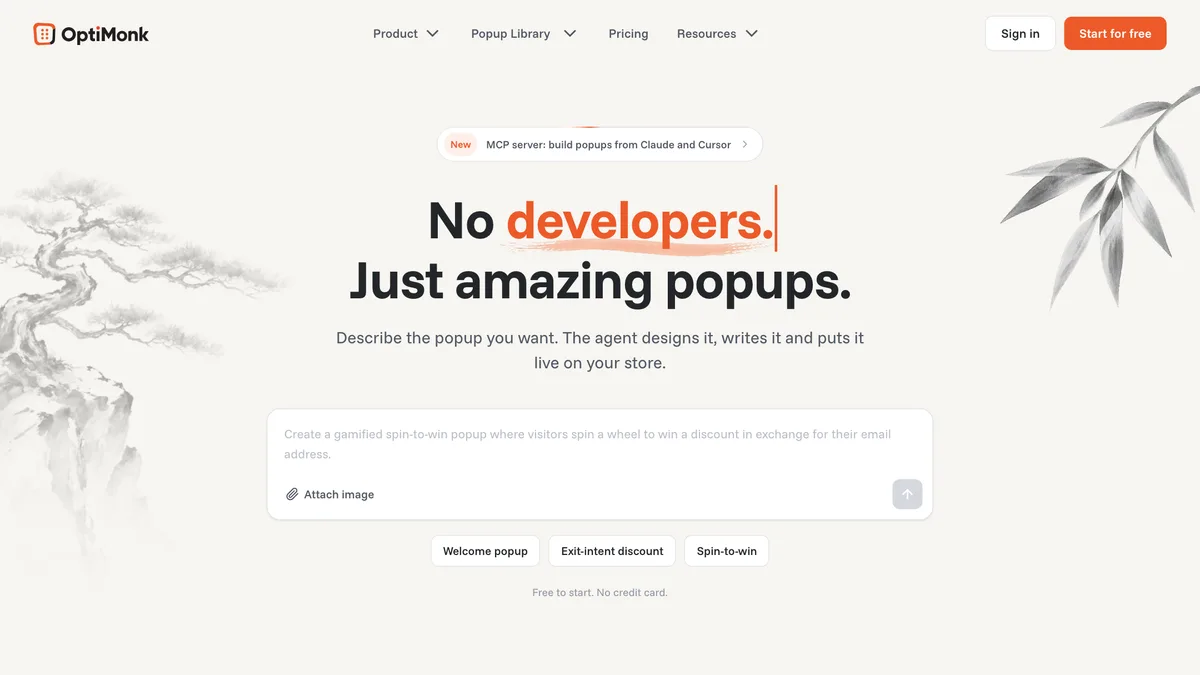
OptiMonk is a popup app that builds campaigns with an AI agent. You describe the popup you want, and the agent designs it, writes it and puts it live on your store.
Formats include welcome and exit-intent discounts and spin-to-win. You can change anything in the visual editor or build popups from Claude or ChatGPT through its MCP server. The agent also suggests A/B tests, runs them on real visitors and offers to roll out the winner.
Sign-ups sync to Klaviyo, Attentive, Postscript and Mailchimp, and every plan, including the free one, has every feature.
Fashion brand Mott & Bow's two-step welcome popup converted at over 10% and collected more than 100,000 new email subscribers in six months, according to OptiMonk.
- Pricing, November 2026: free for 10,000 pageviews a month, then from $29 a month, with the Growth plan covering 100,000 pageviews from $99; prices rise with your traffic, and yearly billing saves 25%
- Shopify App Store rating, November 2026: 4.8 from 454 reviews
- Best for: brands that want AI to design, target and test popups without a designer
3. Alia
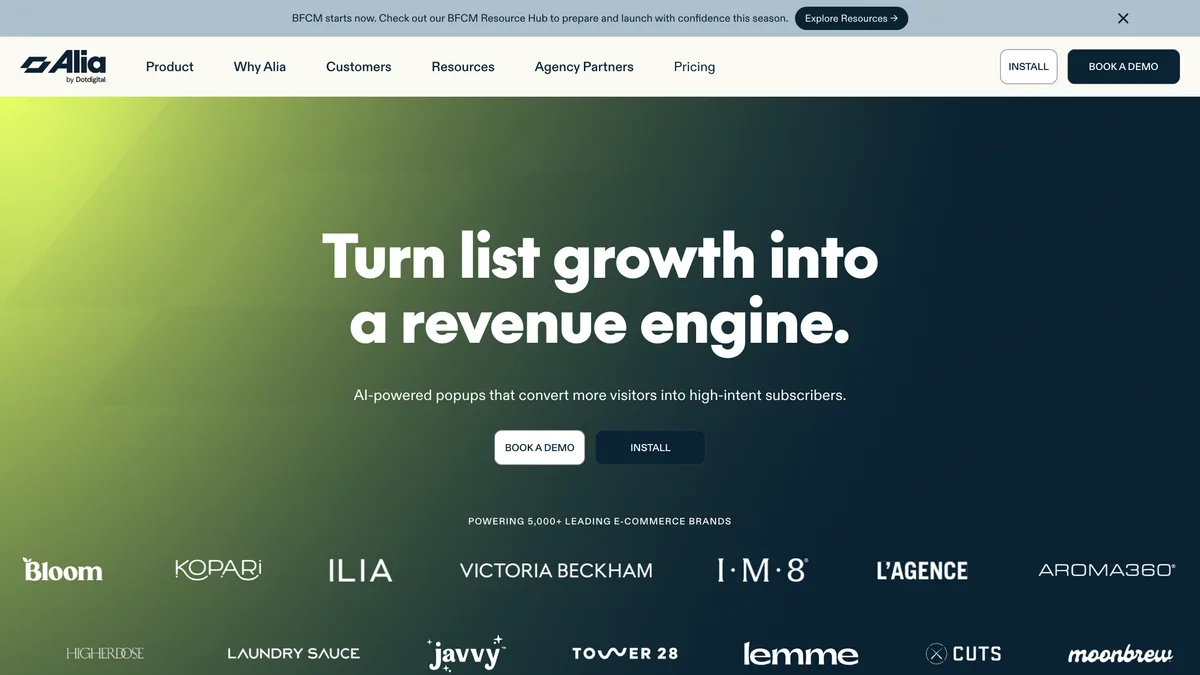
Alia is a popup app built only for Shopify brands and focused on growing email and SMS lists. It has been part of the marketing platform Dotdigital since March 2026.
Alia's testing picks winners on revenue, AOV and net-new subscribers rather than form submissions alone, and machine learning decides when to show a second popup to each visitor. You can target popups by UTM source, page, device, location, cart contents and Klaviyo segment, and gamified formats include spin-to-win and scratch-offs.
Multi-step popups and quizzes collect zero-party data that syncs to Klaviyo, Attentive, Postscript or Omnisend. Every plan includes white-glove onboarding, and on the Fully Managed plan a dedicated customer success manager and Alia's team run your A/B tests for you.
Kopari Beauty grew its email list 142% in the first 90 days after moving its popups to Alia, according to Alia.
- Pricing, November 2026: Basic from $200 a month for up to 20,000 monthly visitors and Fully Managed from $400 for the same traffic, with prices rising as your traffic grows and 25% off billed yearly
- Shopify App Store rating, November 2026: 4.7 from 113 reviews
- Best for: growing Shopify brands that want their popups tested and optimized for them
4. Justuno
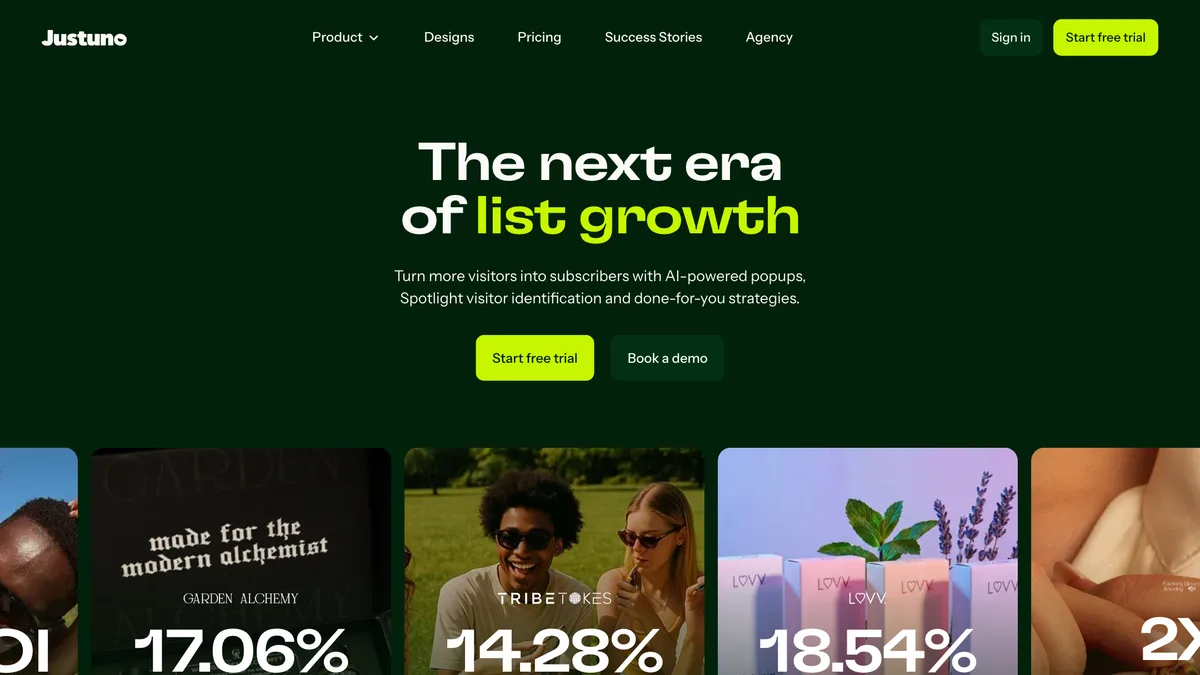
Justuno is an email and SMS list growth platform that pairs AI popups with Spotlight, an add-on that identifies anonymous visitors to power your abandonment flows.
You can run quizzes, spin-to-win games, exit offers and banners, then A/B test their offers, design and wording. AI Smart Timing shows each offer when a shopper is most likely to act.
Sign-ups sync to Klaviyo, Attentive, Postscript, Omnisend and Iterable. Every plan includes white-glove onboarding, and the Done-For-You plan adds a dedicated account manager and ongoing help from Justuno's experts.
Skincare brand Omnilux grew its email list 607% during a surge in traffic, using Justuno popups that changed their message with each visitor's on-site behavior, according to Justuno.
- Pricing, November 2026: Lite from $59 a month for up to 10,000 monthly visitors and Done-For-You from $299 for up to 20,000, with prices rising as your traffic grows and Spotlight as an add-on
- Shopify App Store rating, November 2026: 4.6 from 668 reviews
- Best for: brands that want popups, visitor identification and hands-on help from one vendor
5. Wisepops
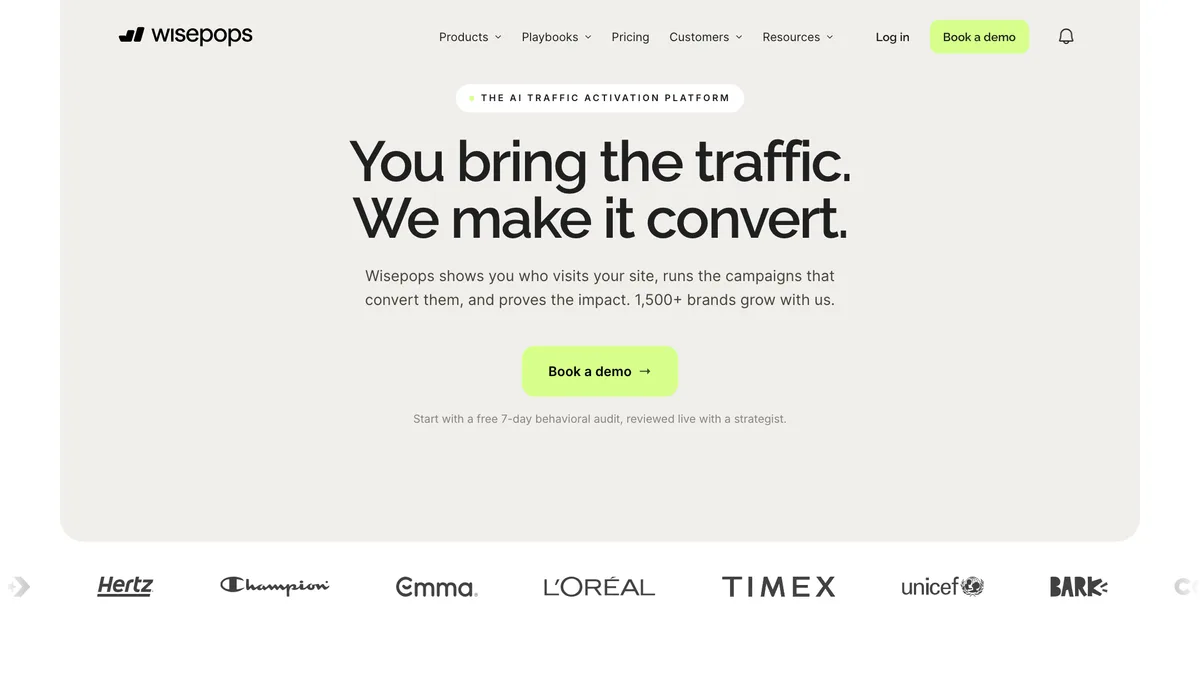
Wisepops runs popups alongside embedded forms, bars, quizzes, an onsite notification feed and web push, with AI product recommendations and A/B tests against control groups.
For list growth, Wisepops runs email and SMS popups, spin-to-win wheels and exit-intent offers, and you can target campaigns on more than 30 behavioral signals.
Leads sync to Klaviyo, Omnisend, Mailchimp and other tools. The company pairs its software with a dedicated strategist who audits your traffic, designs campaigns and reviews performance with you every month.
UK underwear brand OddBalls captured more than 88,000 emails and 34,000 phone numbers between January and June 2024, with a 16.8% sign-up rate, according to Wisepops.
- Pricing, November 2026: the Kick-Starter plan on the Shopify App Store is $599 a month for up to 1 million pageviews, with a dedicated account manager; Wisepops quotes larger plans after a traffic audit
- Shopify App Store rating, November 2026: 4.9 from 70 reviews
- Best for: larger brands that want popups, web push and an onsite feed in one tool, run with a strategist
6. Pop Convert
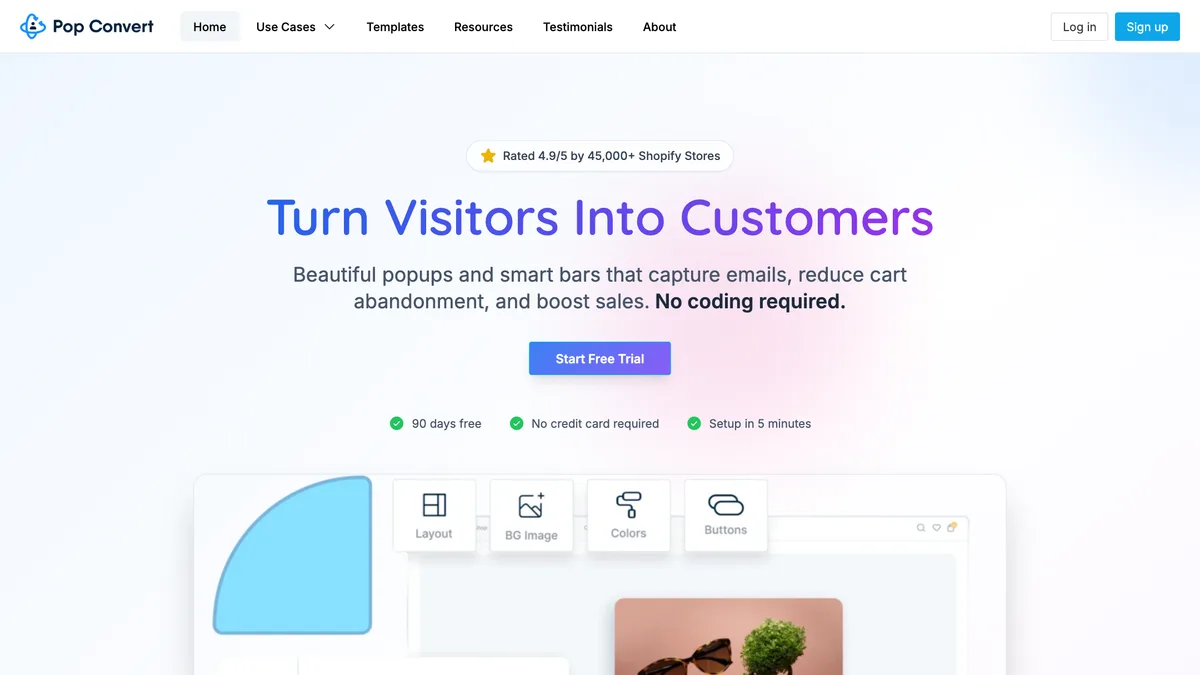
Pop Convert is a popup and smart bar app made for Shopify. Its script is under 15KB, to protect your page speed.
You can trigger popups on exit intent, scroll, a timer, location or page URL, and run A/B tests. Spin wheels, countdown timers and banners cover sales and announcements.
Email and phone sign-ups go straight into your Shopify customer list.
- Pricing, November 2026: free for up to 1,000 visitors and 50 subscribers a month, then from $15 a month on Shopify's Basic plan to $129 on Shopify Plus for unlimited visitors, with a 90-day free trial
- Shopify App Store rating, November 2026: 4.9 from 8,661 reviews
- Best for: smaller Shopify stores that want a quick, low-cost popup and announcement tool
7. Shopify Forms
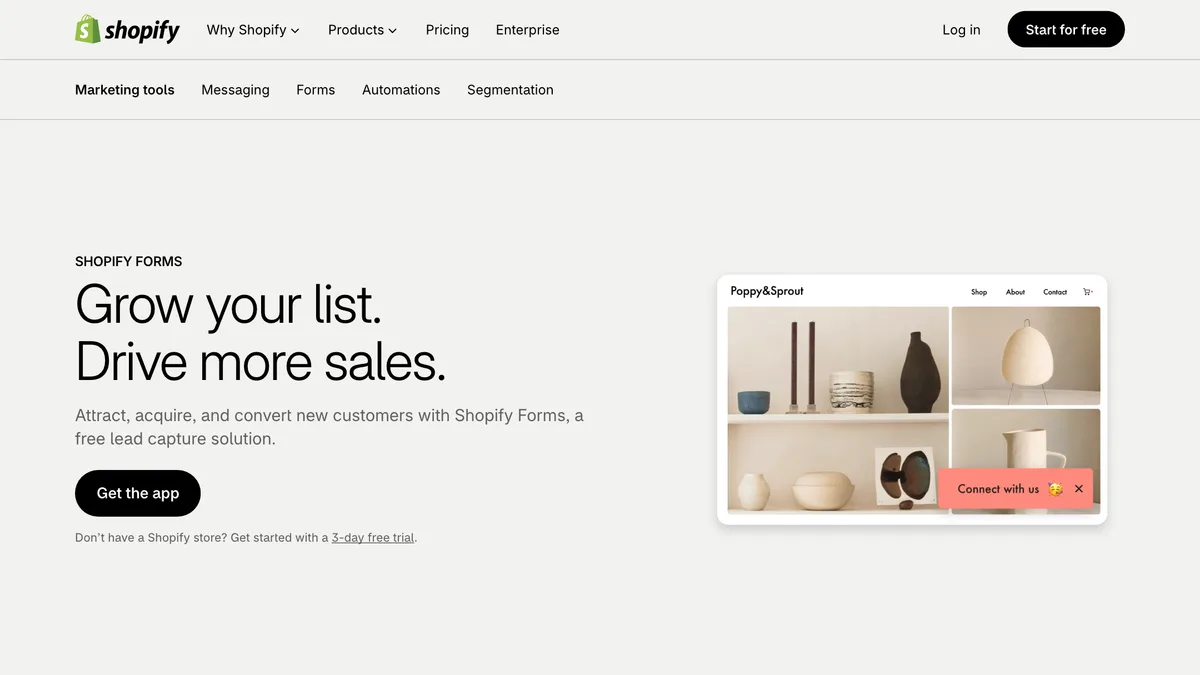
Shopify Forms is Shopify's own free app for pop-up and inline sign-up forms.
You choose where and when each form appears, match it to your brand, add fields such as birthday, phone number or product interest and attach a discount. You can also translate forms to match your store's other languages.
Sign-ups become customers in your Shopify admin, ready for Shopify Messaging, which sends up to 10,000 emails a month for free. Discounts apply automatically at checkout for Shop Pay users.
- Pricing, November 2026: free
- Shopify App Store rating, November 2026: 4.5 from 776 reviews
- Best for: newer stores that want a free sign-up form that works with Shopify's own marketing tools
Built-in sign-up forms vs dedicated popup apps
Most Shopify brands should start with the sign-up forms built into their email platform, then move to a dedicated popup app when they want more testing, targeting or help.
| Built-in forms | Dedicated popup apps | |
|---|---|---|
| Examples | Klaviyo, Shopify Forms | OptiMonk, Alia, Justuno, Wisepops, Pop Convert |
| Cost | Included with your email platform | A separate subscription, from free to several hundred dollars a month |
| Where sign-ups go | Straight into the same platform's lists and flows | Synced to your email and SMS platform through an integration, or to your Shopify customer list |
| Testing and optimization | A/B tests and AI timing in Klaviyo | AI design, automatic testing, smarter re-triggering and, with some vendors, a team to run it |
| If you change email platform | Your forms have to be rebuilt | Your popups stay; you reconnect the integration |
Built-in forms are best suited to brands that want one less tool to manage. They cost nothing extra and sign-ups land in your flows with no sync to set up. For many stores, they do the job well.
A dedicated app is a strong fit when list growth is a priority and you want to test more than your email platform allows.
Compared with built-in forms, these apps give you more formats and triggers, and the AI-led ones such as OptiMonk and Alia test and optimize on their own. Alia, Justuno and Wisepops will also give you people who run the program for you.
How much do popup apps for Shopify cost?
Popup apps for Shopify cost anywhere from nothing to several hundred dollars a month. Most of the dedicated apps charge by how much traffic your store gets, so the price climbs as you grow.
Built-in forms cost nothing extra if you already pay for your email platform, since Klaviyo prices by the active profiles on your list rather than by its forms. Shopify Forms is free, and Pop Convert prices its paid plans by your Shopify plan instead of your traffic.
The dedicated apps measure traffic in different ways. OptiMonk and Wisepops count pageviews, while Alia and Justuno count monthly visitors. A typical visit takes in more than one page, so a plan for 100,000 pageviews covers fewer shoppers than one for 100,000 visitors. Check which figure a plan uses before you compare prices.
Managed plans cost more. In November 2026, Justuno's Done-For-You plan started at $299 a month, Alia's Fully Managed plan at $400 and Wisepops' Kick-Starter plan, with its dedicated account manager, at $599. In return, the vendor's team helps plan, test and improve your popups.
Most of the paid apps let you try them first, with free trials that run from 14 days on Alia, Justuno and Wisepops to 90 days on Pop Convert.
We'd start with the forms in your email platform or a free plan, and only pay for more once you know how much your list is worth to you.
How to choose a popup app for your Shopify store
The right popup app for your Shopify store is the one that grows your list without getting in your shoppers' way, and fits the tools and team you already have.
Start with where your sign-ups need to go. Check how each app passes email addresses, phone numbers, custom fields and consent to your email and SMS platform before you build anything. A broken sync loses subscribers without anyone noticing.
Then decide who will run your popups. A free builder suits a team with time to design and test its own campaigns. If nobody has that time, a managed plan puts the vendor's team on it.
Judge the results by net-new subscribers and the revenue from your welcome flow, not just the submit rate. A popup that collects existing customers' addresses again can look busy without growing your list.
Finally, look at every popup on your phone, where it covers more of the page, and make sure it's easy to close.
Final thoughts
Every subscriber your popup collects is someone you can bring back by email or text, instead of paying to reach them again through ads.
If you're on Klaviyo, start with the forms you already have. If you send email from Shopify Messaging, Shopify Forms is the free match. Pop Convert is a low-cost option if you want exit-intent triggers, spin wheels and A/B testing without a bigger subscription.
When list growth becomes a priority, OptiMonk is ideal for brands that want AI to build and test their popups. Alia, Justuno and Wisepops will run the program for you, for a few hundred dollars a month.
Frequently asked questions
Do popups hurt your Shopify store's SEO?
Popups can hurt your store's SEO if they cover the whole page, because Google says intrusive interstitials make content harder for search engines to understand and may lead to poor search performance.
Its guidance on interstitials recommends banners that take up a small part of the screen instead of full-page interstitials and large dialogs. On mobile, a teaser or a slide-in keeps the page readable.
What should you offer in a sign-up popup?
A discount on the first order is the classic offer in a sign-up popup, but free shipping, early access to new products or a free gift can work too, and they protect your margins.
Test the offer the same way you test the design: Klaviyo, OptiMonk and Justuno all let you A/B test offers as well as layouts.
Should you collect email and SMS in the same popup?
You can collect email and SMS in the same popup, and a two-step form is the usual way to do it: ask for the email address first, then the phone number on the next step.
That way you keep the email even if the shopper skips the phone number. Klaviyo and Alia both support multi-step forms.
Once you have both, decide what each channel sends, so a text doesn't just repeat the email.
How do you stop popups annoying existing customers?
To stop popups annoying existing customers, exclude people who are already subscribed so the sign-up offer only goes to new visitors.
Klaviyo can show or hide forms by segment, and Alia checks its own cookie and your email platform's scripts to avoid showing popups to current subscribers.
Can a popup help recover abandoned carts?
A popup can help recover abandoned carts, because you can only send a cart reminder to a shopper whose email address or phone number you have. Shopify's own marketing automations, cart reminders included, go only to subscribed customers by default.
A shopper who signs up through a popup can get a reminder if they leave items behind, and an exit-intent offer can catch some before they go.