
A useful ecommerce newsletter saves you time. It brings together news you'd otherwise have to track down, explains a change that affects your business or shares an idea from someone working through a familiar problem.
The difficulty is choosing what deserves a place in your inbox. Industry reporting, founder commentary and channel-specific advice all serve different purposes, and subscribing to more doesn't necessarily make you better informed.
The newsletters below cover a mix of ecommerce news, brand growth and customer retention. Here's what each offers and when it's likely to be useful.
Which ecommerce newsletters are worth subscribing to?
Start with The Retention Edge for customer relationships and repeat purchases, or Eli Weiss and Chase Dimond for a closer look at CX and email. Shopifreaks and Retail Brew cover the wider industry, while Operators and Nik Sharma bring perspectives from the work of growing a brand.
| Newsletter | Main focus |
|---|---|
| The Retention Edge | Retention, customer relationships and durable growth |
| Eli's Newsletter | Customer experience and retention |
| Chase Dimond's newsletter | Email marketing tactics and examples |
| Shopifreaks | Ecommerce platforms and industry developments |
| Retail Brew | Retail business news and consumer trends |
| Express Checkout | Consumer products, brands and retail |
| The New Consumer | Consumer behavior, reporting and analysis |
| Operators Newsletter | Decisions behind running a growing DTC business |
| DTC Newsletter | Ecommerce marketing tactics and news |
| Chew On This | Brand growth, marketing and profitability |
| Nik Sharma's newsletter | DTC marketing and the buying experience |
Newsletters for retention and customer experience
Growing a business depends on the relationship that continues after the first order. These publications approach that work through customer experience, broader retention thinking and the details of email marketing.
1. The Retention Edge
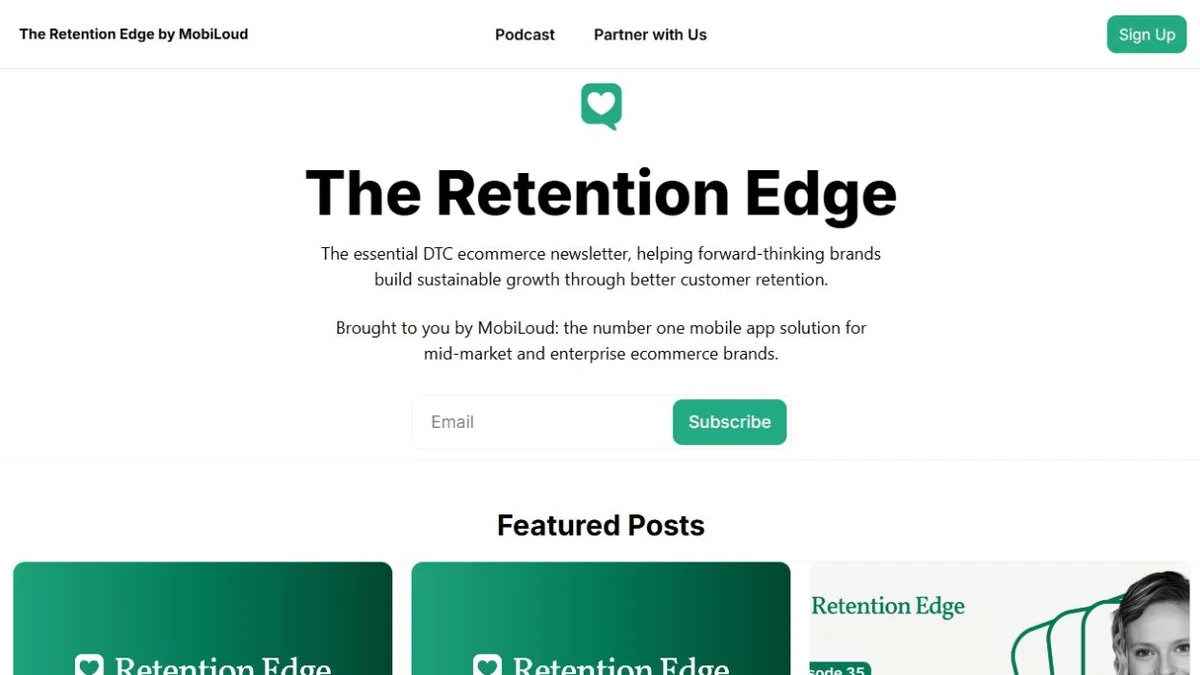
The Retention Edge is our own newsletter for ecommerce owners and teams who want to build a business customers keep buying from. We cover retention through the product, shopping experience, service and communication that shape the relationship over time.
Our starting point is how your customers buy. A brand selling weekly essentials has a different opportunity from one selling seasonal clothing, and useful retention work reflects that difference. We connect that understanding with practical topics such as customer experience, loyalty and the channels you use to stay in touch.
Our conversations with ecommerce operators bring business experiences into the discussion too. The emphasis is on understanding why people return and what a brand does to earn the next purchase. If you're looking for a way to connect your email, loyalty and customer service work with the bigger picture of retention, that's the perspective we bring.
2. Eli's Newsletter
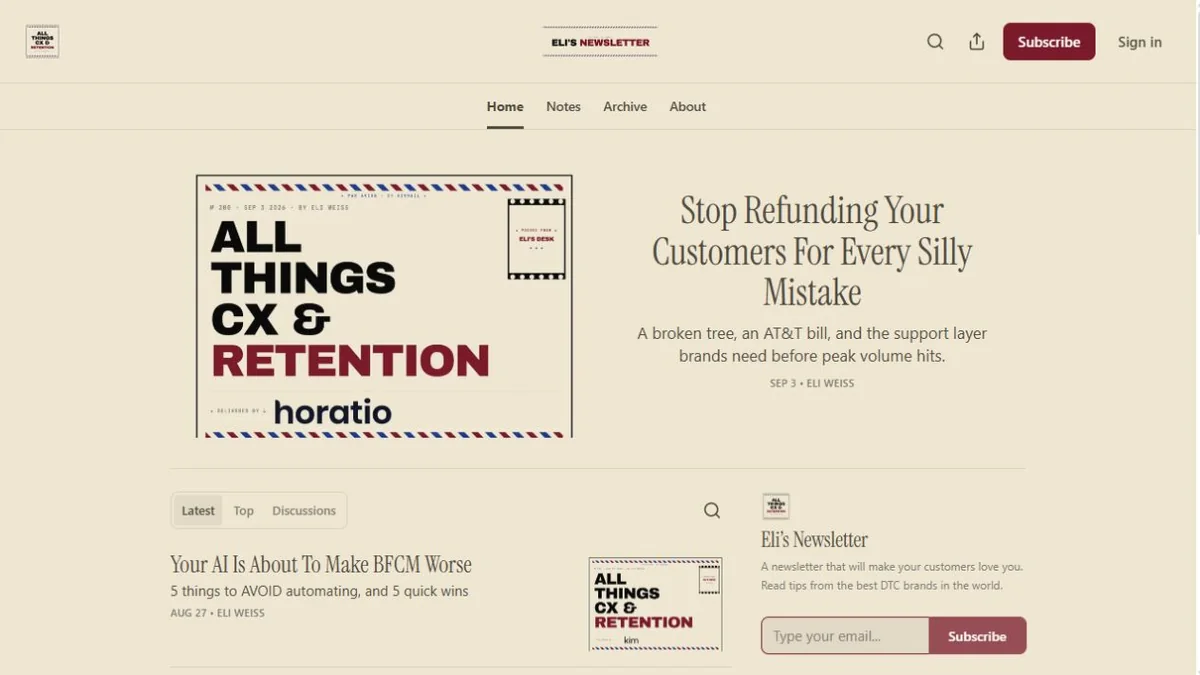
Eli's Newsletter explores customer experience and retention through the situations ecommerce teams deal with every day. Eli Weiss writes about service, communication, customer feedback and the assumptions brands make about why people stay or leave.
The detail often sits in moments that are easy to overlook. One edition on practical retention improvements examines the gap between ordering and fulfillment and what happens when someone wants to cancel a subscription. Those examples bring retention back to an experience a customer can feel.
It's especially useful if you oversee CX or want your marketing to reflect what customers are telling the business. The conversational writing makes operational issues accessible, while the customer perspective helps explain why they matter. You'll find ideas for examining the relationship around your campaigns, including frustrations another promotional message is unlikely to resolve.
3. Chase Dimond's newsletter
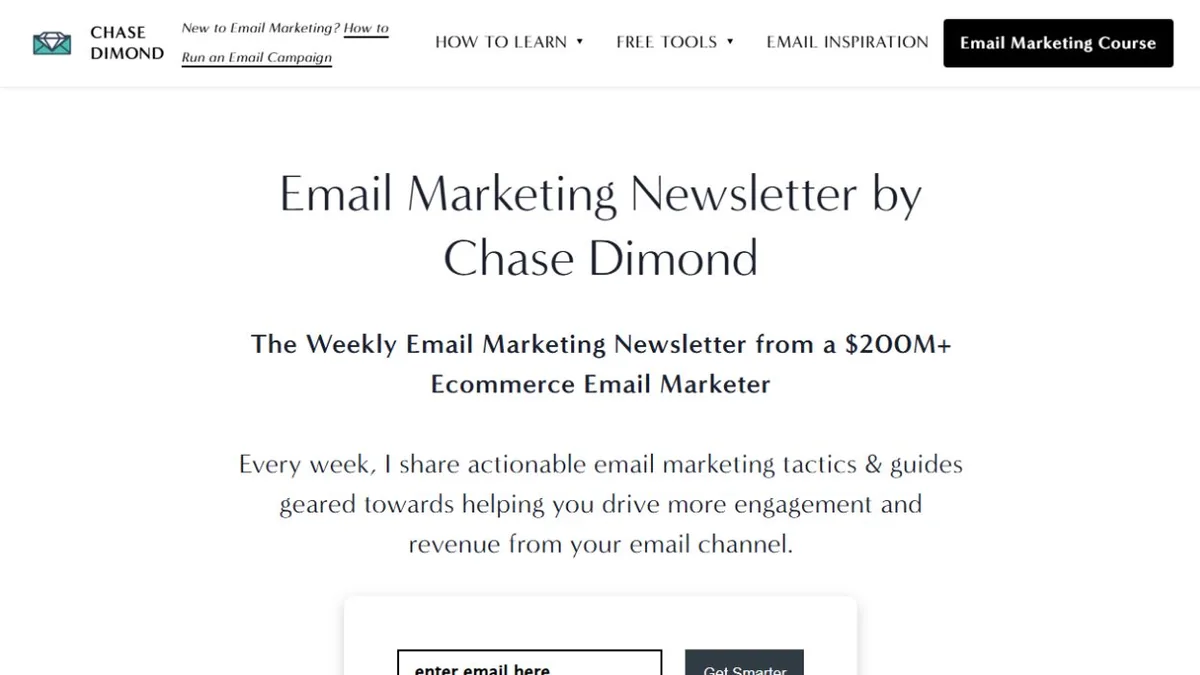
Chase Dimond's newsletter concentrates on ecommerce email marketing, with tactics and guides for improving engagement and revenue from the channel. Welcome sequences, subscriber information, campaigns and customer journeys are central to the broader body of resources around the publication.
The narrow focus is its advantage. If you spend your week planning emails or reviewing flows, you need detail about the messages themselves: what a new subscriber needs to understand, how to use what you know about them and how a series of emails fits together. The material gives you ideas to bring into that work.
It's a useful complement to broader DTC reading, particularly when email is a substantial part of your role. An owner managing the channel personally can use it to develop their understanding, while a specialist can look for approaches to test or adapt within an existing program.
Newsletters for ecommerce and retail news
Customer relationships develop within a wider market. These newsletters help you follow the platforms, products and shopping habits that influence what people expect from your brand.
4. Shopifreaks
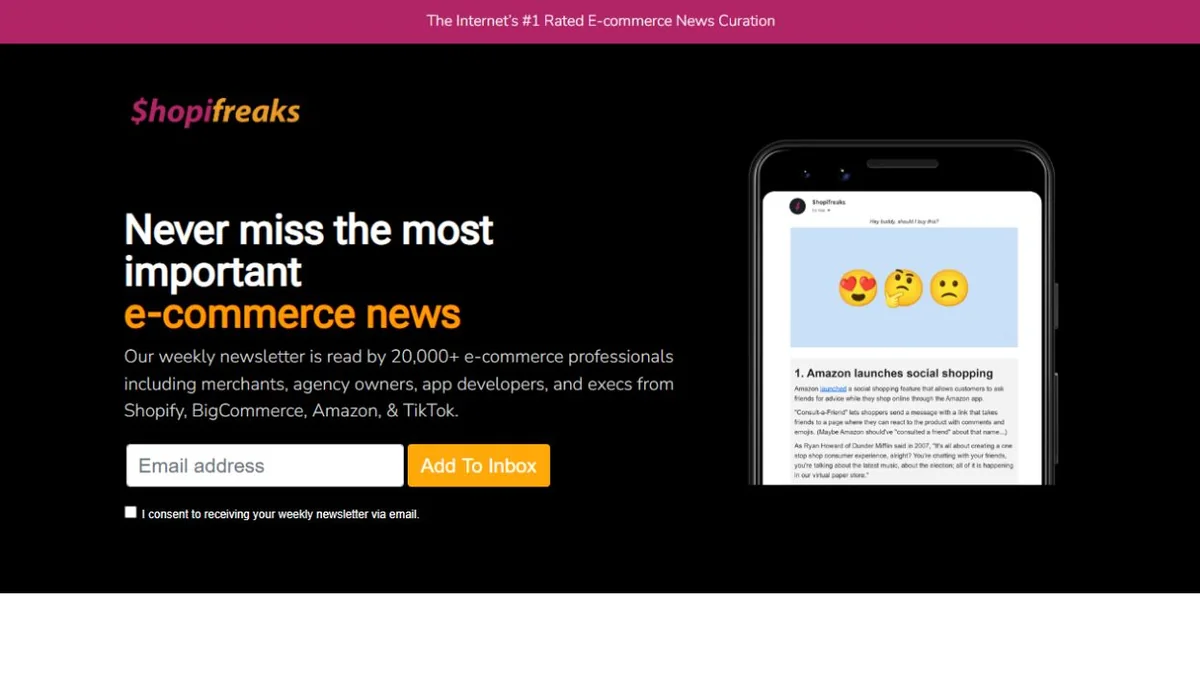
Shopifreaks, written by Paul Drecksler, gathers ecommerce industry developments into a weekly briefing. Platforms, payments, marketplaces, partnerships, funding and emerging technology all feature in its coverage, which extends well beyond Shopify despite the name.
The breadth is what makes it useful. An issue can bring together changes involving Amazon, TikTok, Meta and commerce software, helping you follow the companies that influence how your customers discover and buy products. The format saves you from tracking each platform's announcements separately.
For a store owner, it's a good way to maintain awareness of the wider ecommerce market while spending most of your time on your own business. You can spot developments worth investigating, then return to the detail when they become relevant to a channel, platform or service you use. It fits particularly well alongside a more specialized newsletter about your day-to-day work.
5. Retail Brew
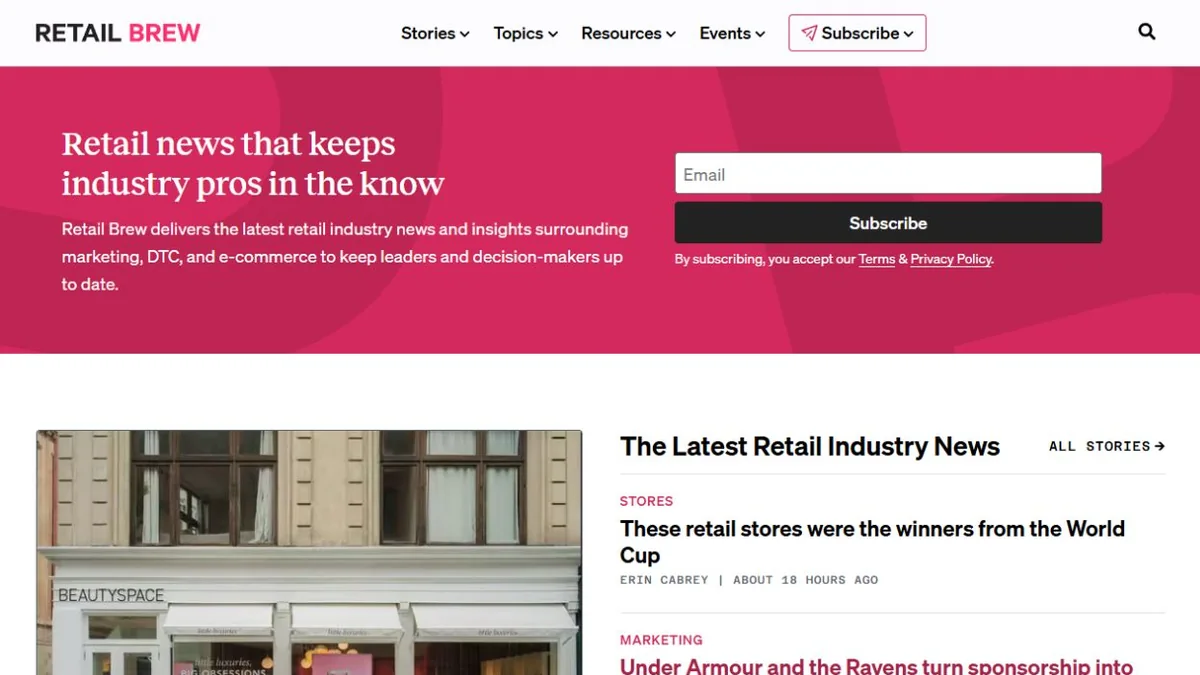
Retail Brew reports on the business of retail across physical stores and ecommerce. Its coverage includes consumer behavior, merchandising, store concepts, marketing and technology, with stories about both established retailers and newer brands.
That reporting gives it a different perspective from a newsletter written mainly for performance marketers. Topics such as the expansion of prestige beauty retail, brands building in-store experiences and the challenges of fulfilling a major wholesale order put digital growth in a wider commercial context.
It's particularly useful if your brand sells through several channels or is considering retail distribution. Even for an online-only store, the coverage helps explain the choices customers encounter elsewhere and how shopping expectations develop. Retail Brew earns its place by connecting individual company stories with the broader market your own products compete in.
6. Express Checkout
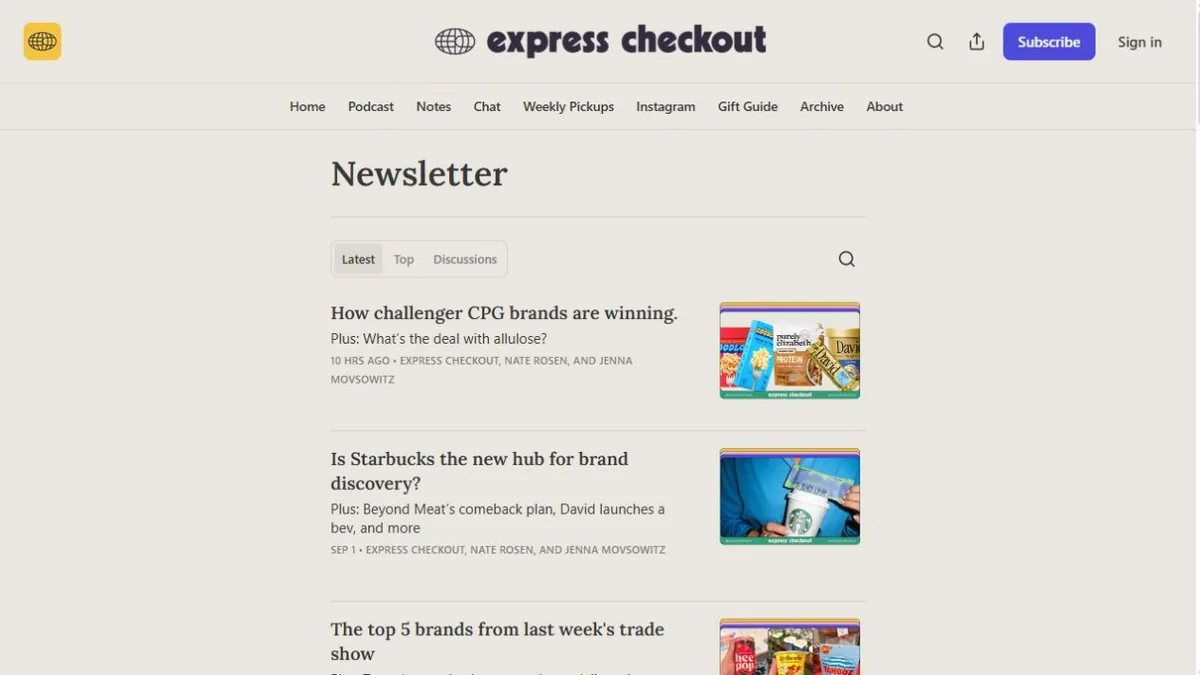
Express Checkout, founded by Nate Rosen, follows consumer packaged goods, emerging brands and retail. Product launches, category shifts and the businesses behind them give the newsletter a strong focus on what people are buying and how brands find a place in that market.
Its coverage can move from a new beverage or snack to a retail partnership, trade-show discovery or a change in how a familiar category is marketed. Recent subjects include challenger CPG brands, protein products and innovation in household goods. That product-level attention makes it particularly relevant to food, beverage, beauty and other everyday consumer categories.
If your role includes product development or positioning, it's a useful source of context beyond campaign performance. You can follow how other brands package an idea, where they introduce it and which consumer interests they're responding to, giving you more to think about when shaping your own next launch.
7. The New Consumer
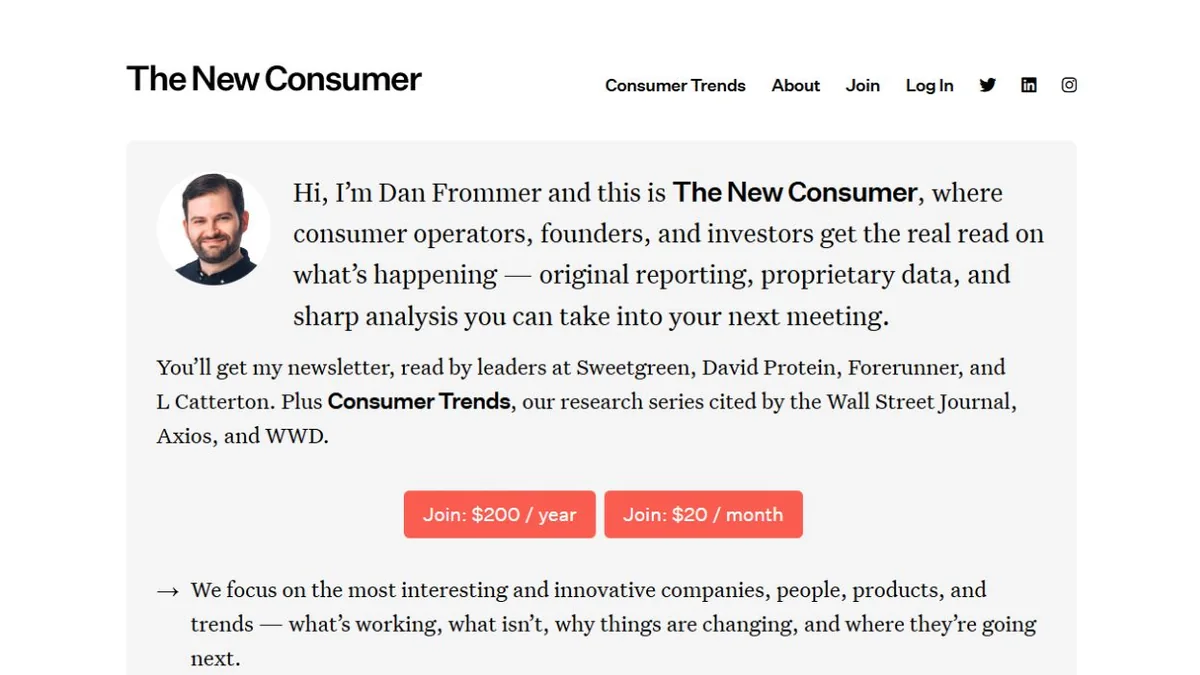
The New Consumer is Dan Frommer's paid publication about consumer businesses and changing behavior. Original reporting and analysis sit alongside its Consumer Trends research, with attention to the brands, products and preferences shaping how people spend.
The appeal is the depth around a market change. Coverage includes how design communicates trust, which brands people identify with and how interests such as wellness influence product categories. Those subjects help connect a business story with the customer attitudes behind it.
That makes it a useful addition for founders working on product strategy, positioning or longer-term brand direction. You may be looking for an explanation of why a category is gaining attention or what a successful brand is communicating particularly well. The New Consumer gives those questions more room than a short news summary, offering context you can bring to decisions about your own assortment and audience.
Newsletters for DTC growth and operations
Understanding what's changing is one part of the job. The following publications get closer to the decisions, campaigns and operating work involved in growing your own business.
8. Operators Newsletter
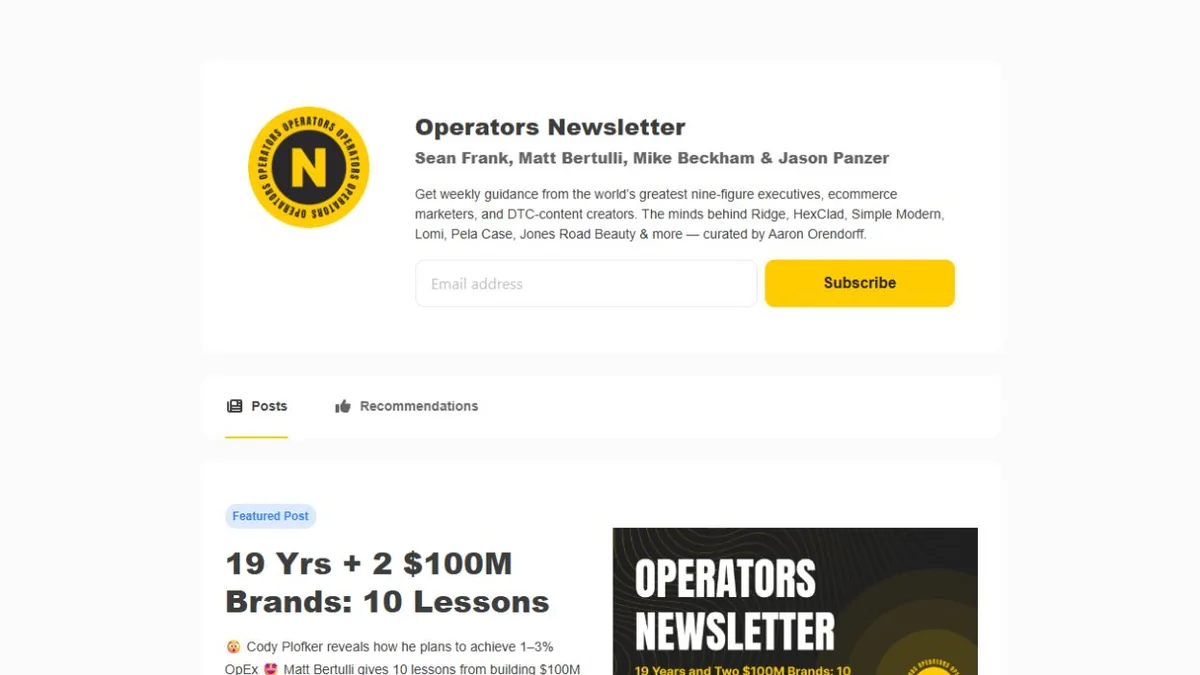
The Operators Newsletter brings together perspectives from people running consumer businesses, curated by Aaron Orendorff. Contributors include Sean Frank, Matt Bertulli, Mike Beckham and Jason Panzer, alongside other founders and marketers working inside DTC brands.
The format combines several voices and connects marketing with the wider business. Its archive includes discussions of acquisition cost and profitability, hiring, upsells, channel diversification and the process of launching a new brand in public. That gives readers more than one way to think through a decision.
It's especially useful when your responsibilities extend across the company. A tactic needs to make sense alongside your margins, team and operating capacity, and that is the context these contributors bring. If you enjoy the Operators podcast but prefer something you can scan and return to, the newsletter gives you access to that broader group of perspectives in a written format.
9. DTC Newsletter
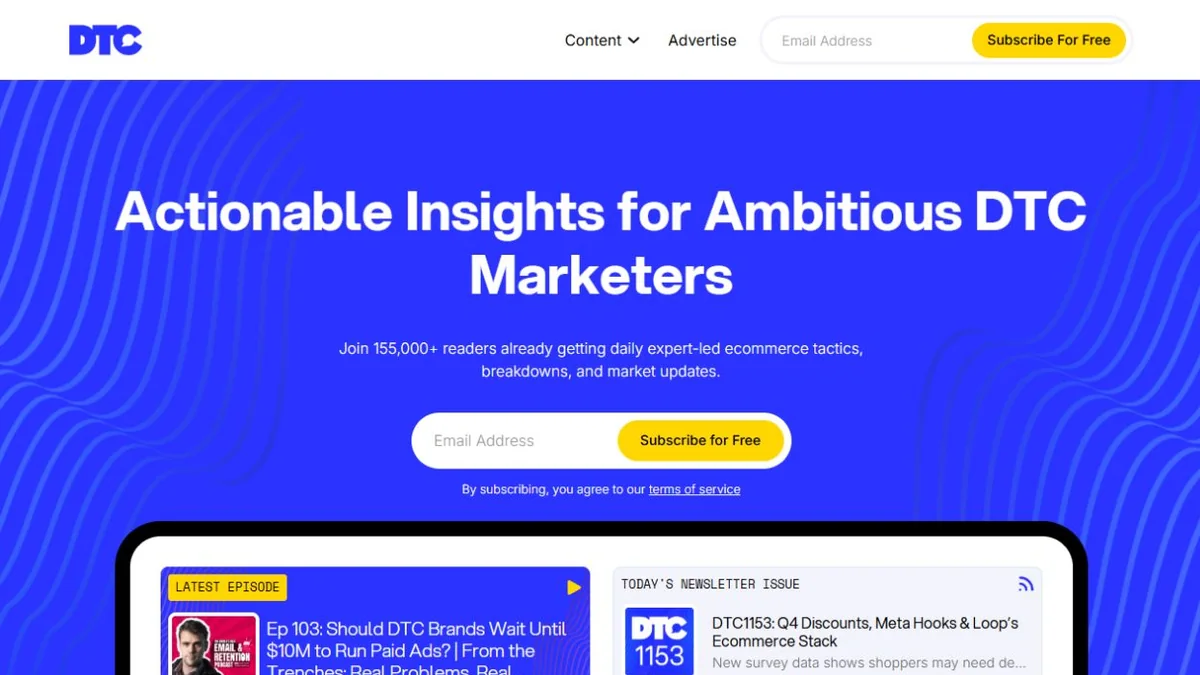
The DTC Newsletter brings ecommerce news, marketing tactics and brand breakdowns into the same email. Paid media, creative, conversion and retention sit alongside changes across major commerce platforms, making it a practical read for people involved in running campaigns.
Its variety is useful when you work across several marketing tasks. An issue might discuss an advertising hook, a brand's search strategy and a feature in its shopping experience. The brand breakdowns add concrete examples of how stores use things such as product quizzes, bundles and exchanges.
That mix gives you both developments to keep an eye on and ideas to investigate in your own work. It suits a marketer looking for a regular source of campaign and storefront inspiration without committing to a long essay on every topic. When a subject deserves more attention, the publication's associated podcasts provide a route into longer discussions.
10. Chew On This
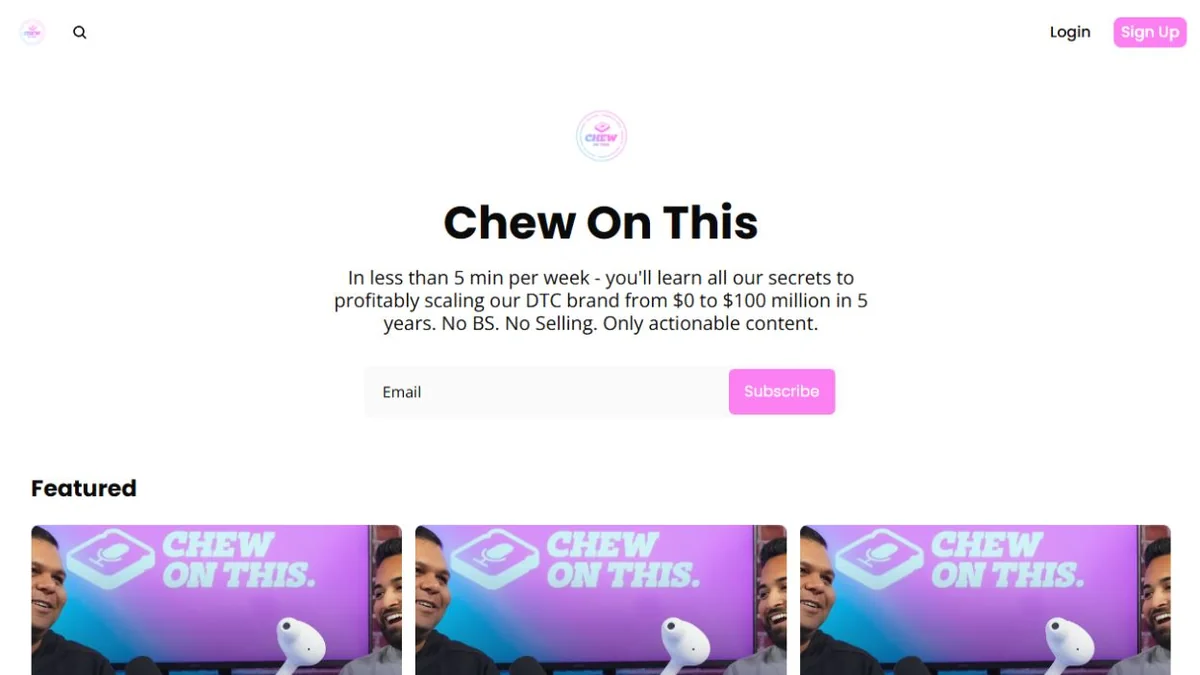
Chew On This looks at DTC growth through practical discussions and examples from consumer brands. Creative testing, customer experience, channel diversification and profitability all feature in its coverage, with attention to the decisions around a tactic.
The publication's brand examples give the advice context. Its coverage of Brez, for instance, explored why the beverage brand needed to diversify its acquisition channels and how visitors from different sources behaved after clicking. Other pieces discuss developing advertising ideas from customer research and preparing creative before major selling periods.
That makes it useful if you want to understand how a marketing approach fits a particular business. You can consider the product, audience and constraints that shaped the decision before trying it yourself. The newsletter works well for founders and growth leads who want detailed marketing ideas connected to the realities of operating a DTC brand.
11. Nik Sharma's newsletter
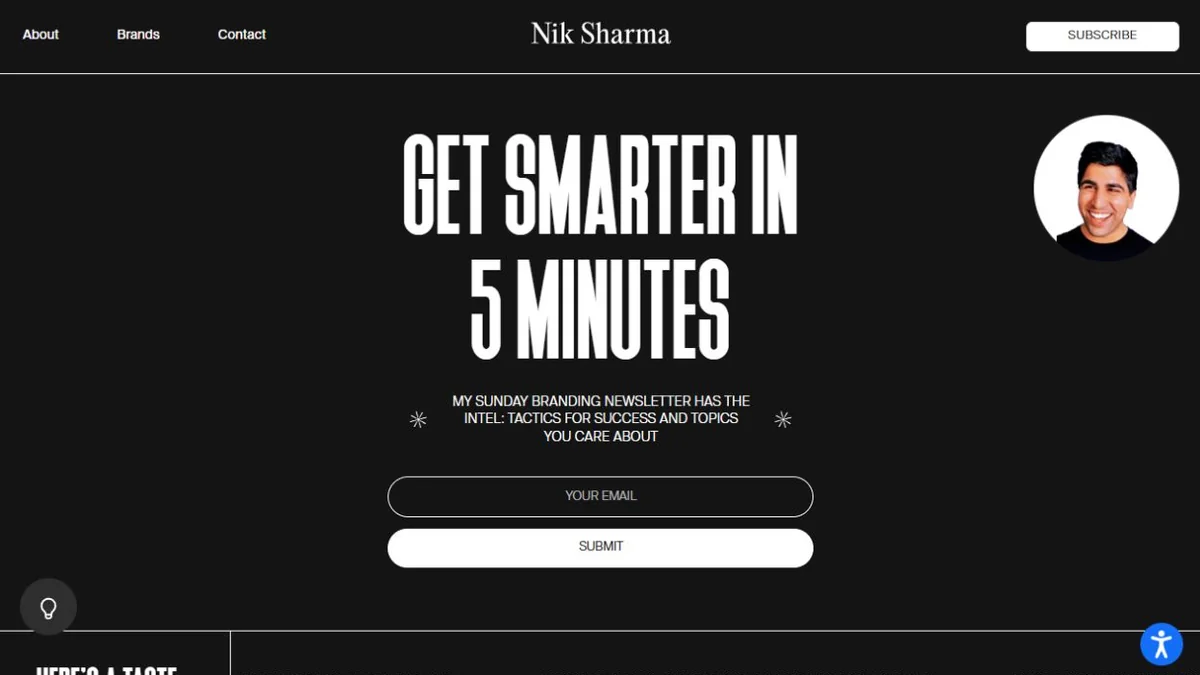
Nik Sharma's newsletter shares a hands-on perspective on DTC marketing, with a strong interest in how a brand presents its offer and turns attention into purchases. The writing often examines the buying experience closely enough to give you something specific to revisit in your own store.
His archive includes landing-page audits, email recommendations and discussions of keeping customers acquired during Black Friday. That range connects the first impression with what happens after someone buys, rather than treating each campaign as a separate piece of work.
It's a good fit when you already have a product and traffic but want to communicate the value more clearly. The practitioner perspective can help you question an unclear page, a weak offer or a missed follow-up opportunity. Longer editions also give ideas room to develop, making it useful reading when you want more explanation than a quick tip.
Final thoughts
The newsletters on this list offer a view of ecommerce beyond your own store. Some follow the brands and trends shaping the industry; others share the details of building campaigns, serving customers and running a business.
That range is part of what makes the industry interesting to follow. A new product story can spark an idea, and another operator's experience can shed light on a problem you've been working through. Good newsletters bring those perspectives into your inbox, often from people you wouldn't otherwise hear from.