
Running an ecommerce business gives you plenty to think about, and some of the most useful ideas come from people working through similar problems. A founder might share what happened after a product launch. A retention specialist might explain why customers stop buying. A store consultant might spot a detail on a product page that you've overlooked for years.
X, formerly Twitter, is one place where those conversations happen in public. Alongside the industry news and hot takes, you'll find operators explaining their decisions and specialists sharing examples from their work.
We've brought together 22 people whose experience is relevant to ecommerce owners and teams. The list includes founders, marketers, customer experience leaders and writers, with a description of the perspective each brings and where to find them.
22 ecommerce people to follow on X
The people below cover different parts of the business, from product development and fulfillment to paid media and repeat purchases. Their broader writing, interviews and businesses also give you somewhere to explore an idea beyond a single post.
1. Tobi Lütke
X: @tobi
Shopify co-founder and CEO Tobi Lütke offers a view of commerce from the platform side. His interests in software, product development and entrepreneurship inform how he talks about the tools people use to build businesses.
For Shopify merchants, following him can add context to the company's direction and its approach to new technology. His public conversations about AI, for example, reflect an interest in how software changes the work people can do and the businesses they can create.
There is a broader founder perspective here, too. Lütke's writing and interviews explore building teams, making decisions and developing products over time. That makes him an interesting follow for owners who want to understand the thinking behind one of the platforms shaping their industry.
2. Harley Finkelstein
X: @harleyf
Harley Finkelstein is Shopify's president and the co-founder of Firebelly Tea. His work connects the growth of commerce with the experience of being a merchant: finding an audience, choosing sales channels and building a business around a product people want.
That combination makes him useful to follow if you want to understand Shopify's direction alongside the decisions facing its merchants. He discusses entrepreneurship, resilience and meeting customers where they shop, including the role of physical retail alongside an online store.
His Shopify Masters conversation is a useful starting point. Finkelstein discusses experimenting with sales channels and learning through uncertainty, giving store owners context for deciding where to put their next investment of time and money.
3. Pietro Saccomani
X: @psaccomani
Pietro Saccomani founded MobiLoud, and he runs our Retention Edge newsletter and hosts our podcast. His work focuses on how ecommerce brands build stronger customer relationships, improve mobile shopping and turn an initial order into repeat business.
That focus makes him relevant to owners who want growth to continue after the first sale. Our newsletter connects retention with everyday decisions about the shopping experience, customer communication and the channels a brand uses to bring people back. He also follows how AI is changing product discovery.
Our podcast develops those ideas through conversations with founders, operators and customer experience leaders. The interviews explore how decisions about design, fulfillment and customer support influence loyalty, giving merchants concrete situations to compare with their own.
4. Taylor Holiday
Taylor Holiday leads Common Thread Collective, an ecommerce growth agency, and regularly connects marketing decisions with the financial health of a business. His work covers advertising, planning, creative strategy and the pressures that affect a brand's ability to grow profitably.
The useful part for a store owner is that connection between departments. A marketing report might look encouraging while the business struggles with cash flow or margins. Holiday's discussions help explain why teams need a shared view of what growth should produce and how much they can afford to spend.
His perspective is especially relevant if you're responsible for approving budgets or working with an agency. The Ecommerce Playbook provides longer discussions of the same questions, with examples and reasoning from the CTC team.
5. Nik Sharma
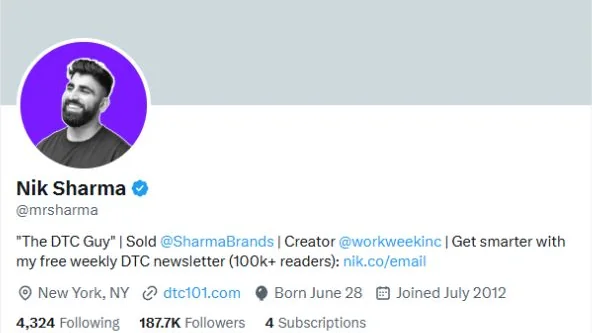
X: @mrsharma
Nik Sharma founded Sharma Brands, which joined Lunar Solar Group in 2025. His experience spans launching consumer brands and improving how they present, market and sell products online.
He is a useful follow for the connection between brand appeal and conversion. Product positioning, landing pages, creative and the offer a shopper sees all need to make sense together. Sharma's work often comes back to making a product easy to understand and giving customers a clear reason to care about it.
That perspective can help founders think beyond an individual campaign. A weak product explanation or confusing page can limit the return from otherwise good advertising. His examples and longer writing provide ideas for strengthening the experience people reach after they've clicked.
6. Eli Weiss
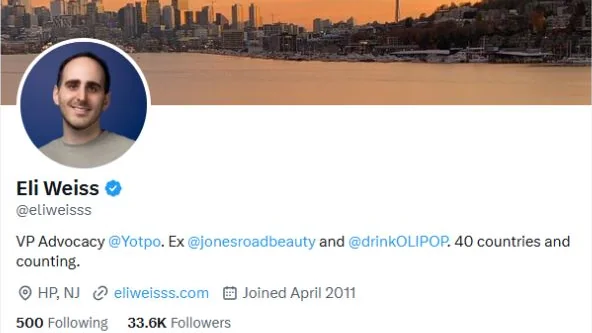
X: @eliweisss
Eli Weiss brings experience from customer experience and retention roles at OLIPOP and Jones Road Beauty, and now works in advocacy at Yotpo. His focus is how brands earn trust through the way they treat customers before, during and after a purchase.
His writing gives everyday customer interactions the attention they deserve. A complaint may reveal a product issue. A confusing delivery promise can create disappointment before the package arrives. Those are useful connections for owners who want their support team to contribute to improving the business.
Weiss also explores how loyalty develops and why a customer who continues buying may still be unhappy. His newsletter expands on those ideas through examples from consumer brands, making him a strong follow for anyone responsible for repeat purchases and customer relationships.
7. Kurt Elster
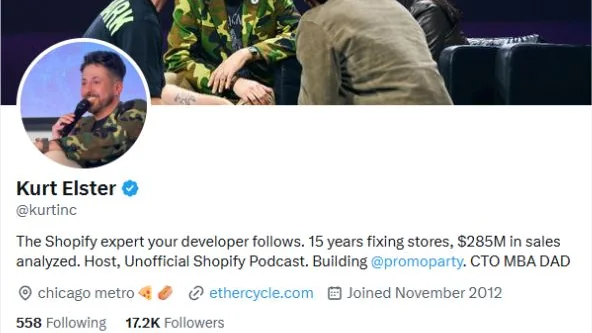
X: @kurtinc
Kurt Elster founded Ethercycle and hosts The Unofficial Shopify Podcast. His work stays close to the decisions Shopify merchants make about their stores, including design, functionality, product presentation and conversion.
That practical focus is useful when you're considering a redesign or deciding which improvements deserve a developer's time. A store can become more complicated as a team adds features, even when the customer would benefit from a clearer path to the product. Elster's consulting and interviews explore those tradeoffs through the experience of merchants and the people helping them.
His publications and podcast give store owners a way to understand technical and design decisions in a business context. You don't need to be a developer to benefit from a clearer explanation of what your store needs to do well.
8. Chase Dimond

Chase Dimond specializes in ecommerce email marketing. His work covers the messages and automated sequences that help brands turn subscribers into customers and keep those relationships going after the first order.
The attraction is the specificity of the topic. Subject lines, welcome emails, campaign ideas and follow-up messages are decisions a store's marketing team makes repeatedly. Examples and breakdowns can make it easier to see how the wording, timing and purpose of an email fit together.
Dimond's email marketing resources are relevant whether you're writing campaigns yourself or managing someone who does. His material provides a useful starting point for thinking about the role each message plays in the customer's relationship with your brand.
9. Zach Stuck

X: @zachmstuck
Zach Stuck founded Homestead and has built consumer brands including Hollow Socks and Mars Men. His background brings together agency work and the experience of owning the products being advertised.
That combination is useful because the consequences of a marketing decision extend into inventory, fulfillment and cash. A growing order book creates a different set of problems when you're responsible for getting products made and delivered. Stuck's public work and interviews cover that broader operating reality alongside acquisition and creative.
For founders moving beyond the early stages of a store, his perspective can help connect growth tactics with the business needed to support them. His conversation about fulfillment and brand growth is one example of how those subjects come together.
10. Sean Frank
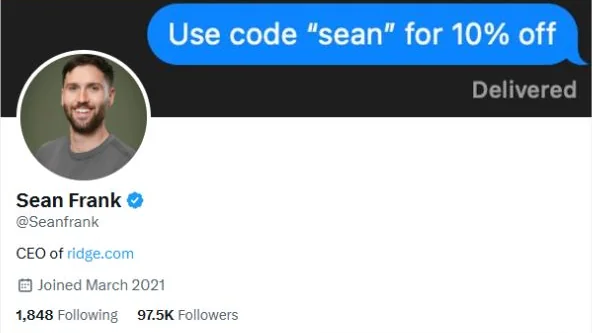
X: @Seanfrank
Ridge CEO Sean Frank talks about building a consumer brand across products, channels and markets. Ridge's development from a wallet business into a broader accessories company gives him a concrete reference point for discussions about expansion and brand identity.
His perspective is useful when an owner is thinking beyond the product that first made the business work. Adding a category creates questions about customer demand, distribution and whether the new product belongs under the same brand. Frank also discusses advertising and the operating decisions behind growth.
He is a co-host of Operators, where those subjects develop through conversations with other consumer business leaders. His interviews about Ridge also offer context on selling through retailers and marketplaces alongside a brand's own website.
11. Mike Beckham
Mike Beckham is the co-founder and CEO of Simple Modern, the drinkware and lifestyle brand. His writing combines the commercial side of building a company with the culture, leadership and values that shape how it operates.
The brand's experience across Amazon, its own store and major retailers makes his perspective relevant to owners expanding their distribution. Product quality and a recognizable identity need to hold together as a business reaches customers in more places.
Beckham also gives attention to the people doing that work. His founder writing explores entrepreneurship and leadership, while his public reflections on Simple Modern describe the challenges of building over many years. It's a useful follow for founders whose next stage of growth depends on developing the company around them.
12. Davie Fogarty
Davie Fogarty founded The Oodie, the wearable blanket brand. His educational content draws on the experience of developing consumer products, explaining them through marketing and building the operations behind a growing business.
Product choice and presentation are recurring parts of that work. The Oodie's appeal is easy to demonstrate visually, which gives Fogarty a useful reference point for discussing creative and the importance of a product that customers can understand quickly.
His videos develop many of the topics further, including starting a store and the problems that arrive as it grows. For owners building a physical product brand, his material offers a view of how product, marketing and execution depend on one another over time.
13. Andrew Youderian
X: @youderian
Andrew Youderian founded eComFuel, a community for established ecommerce owners, after building and selling online businesses of his own. That puts him in regular conversation with founders dealing with hiring, operations, profitability and the personal demands of ownership.
His perspective extends to what an owner wants a business to make possible. Growing revenue is one concern; building financial security and having time for family or other interests are also part of the conversation.
For someone who has moved beyond launching a store, those subjects can feel especially relevant. Youderian's podcast and writing explore the decisions that change as a business matures, including building a management team, dealing with difficult periods and deciding what the next stage should look like.
14. Andrew Faris
Andrew Faris has worked across media buying, ecommerce strategy and brand operations. Through AJF Growth and his podcast, he focuses on the relationship between marketing performance and profitable growth.
His material is useful for owners who want to understand the reasoning behind decisions in their advertising accounts. Campaign structure, creative and measurement all matter, but they sit inside a business with specific costs and financial goals. Faris tends to work through those connections in detail.
The perspective is particularly helpful when a simple dashboard result doesn't answer the question you're trying to resolve. His discussions encourage a closer look at what a result means for the whole business and why a marketer might choose one course of action over another.
15. Joe Spisak
X: @speeze
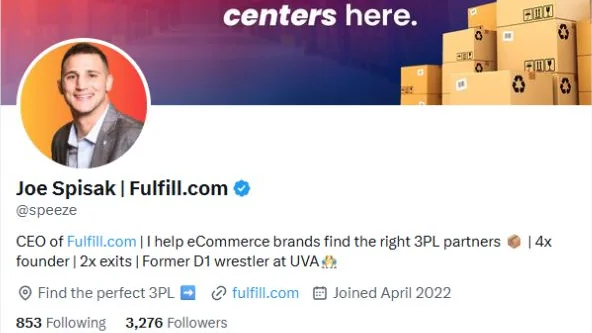
Joe Spisak is the co-founder and CEO of Fulfill.com, which connects ecommerce brands with third-party logistics providers. His experience includes operating product businesses and a fulfillment company, giving him a view of the relationship from both sides.
For a store owner, logistics decisions can be difficult to assess from a proposal alone. The warehouse needs to handle your product, order patterns and service expectations, and the costs need to make sense as volume changes. Spisak's work focuses on that fit between the brand and its fulfillment partner.
His interview with Practical Ecommerce explains how his own experience changing providers led to Fulfill.com. That operating background makes him a useful resource for founders working through shipping, warehousing and the customer experience after checkout.
16. Linda Bustos
X: @lindabustos
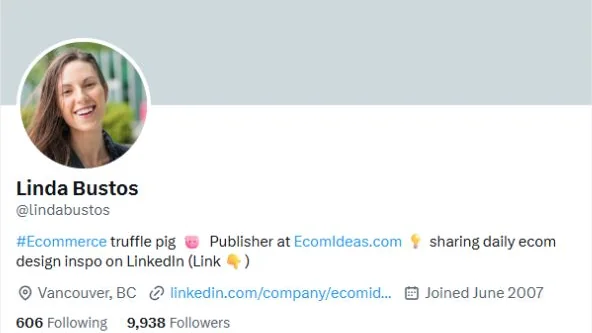
Linda Bustos publishes Ecom Ideas, a resource built around examples of online shopping experiences. Her work explores product discovery, merchandising, product pages and the design details that make a store easier to use.
The examples are the main attraction. Seeing how a retailer handles product pairing, a filter or an out-of-stock item gives you something concrete to discuss with your own team. It also helps explain why a seemingly small interface decision can make shopping more convenient.
Her Ecom Ideas work and posts on LinkedIn are particularly useful companions to her X profile. For owners planning store improvements, she provides a steady source of design references and explanations of the customer problem each approach addresses.
17. Armando Roggio
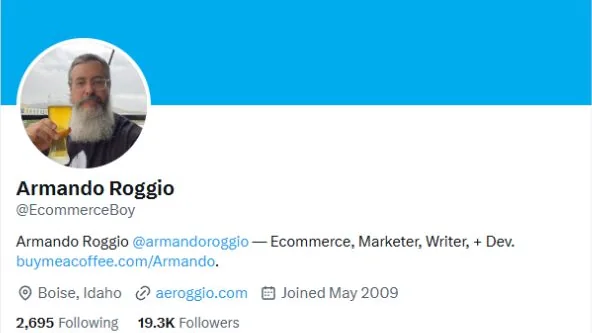
Armando Roggio is a longtime contributor to Practical Ecommerce with experience as a merchant, marketer and developer. That combination shows up in his coverage of the work involved in attracting customers and running an online store.
His articles cover subjects such as product descriptions, content marketing, shipping and changes in shopping technology. The range is useful for owners who are responsible for several parts of the business and need clear explanations that connect an idea with its application.
His coverage of AI shopping and faster delivery, for example, examines changes that can affect how smaller merchants compete. Alongside those broader developments, his content ideas and marketing guidance stay close to the everyday work of keeping a store visible and useful to customers.
18. Kunle Campbell
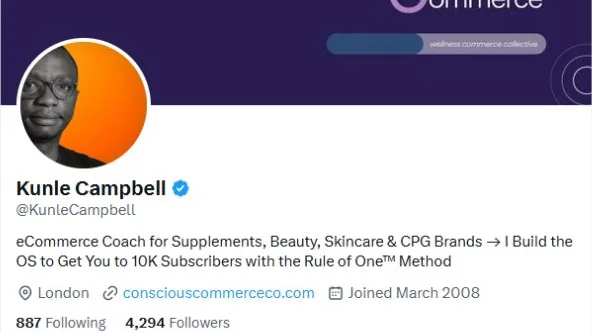
Kunle Campbell is an ecommerce advisor and operator whose work connects acquisition, conversion and customer retention. His current focus includes replenishment businesses such as supplements and skincare, where the relationship after a first purchase has a large role in the economics.
That makes his perspective useful for brands selling products people are expected to use repeatedly. Subscription growth depends on whether customers understand the product, develop a habit and continue seeing value as the next order approaches.
Campbell's writing and advisory work explores those connections, including product pages and the profitability of repeat customers. His broader background in ecommerce growth gives the retention discussion context across marketing, operations and the experience of using the product.
19. Harry Dry

Harry Dry created Marketing Examples, a collection of marketing and copywriting breakdowns. The account shares the work of the publication, with examples drawn from advertising, landing pages, emails and brand campaigns.
The strength is how concrete the explanations are. You can look at the words or creative being discussed and see how a change affects the message. That is useful when you're trying to explain a product clearly, make an offer more compelling or give feedback on a campaign.
The examples extend beyond ecommerce, but many apply directly to a store's daily marketing. A product page headline, a welcome email and an ad all need to help someone understand why a product matters to them. Dry's breakdowns make those communication choices easier to examine.
20. Amanda Natividad
X: @amandanat
Amanda Natividad is SparkToro's chief evangelist and the founder of Zero Click Marketing. Her work explores audience research and how brands can build recognition when people consume content inside social platforms, search results and other environments without visiting a website.
For ecommerce teams, that is relevant to the gap between attention and immediately measurable traffic. A useful product demonstration or a strong explanation can shape a future buying decision even when the viewer doesn't click through at the time.
Natividad's writing and resources connect that idea with understanding an audience and creating something worth paying attention to. She brings experience across consumer goods, software and agencies, giving store marketers examples that reach beyond a single channel or business model.
21. Rand Fishkin
X: @randfish
Rand Fishkin is the co-founder of SparkToro and previously co-founded Moz. His work now centers on audience research and marketing, including how people discover brands and how businesses can understand that behavior.
The useful question running through much of his work is where your customers already spend their attention. A brand can produce a lot of content without reaching the people likely to buy from it. Understanding the publications, creators and communities an audience follows can lead to more relevant marketing decisions.
Fishkin also writes about the limits of relying on clicks and attribution to explain every outcome. His SparkToro writing is a useful resource for store owners evaluating where to invest in awareness and how to think about influence that a conversion report may not fully capture.
22. Kaleigh Moore
X: @kaleighf
Kaleigh Moore is a writer and content strategist with a background covering ecommerce and retail. Her current work focuses on content, creators and visibility in AI search, bringing an editorial perspective to how businesses explain their expertise online.
That background makes her useful to follow when you're responsible for what your brand publishes. A buying guide, an educational article or a founder interview needs to contain information that helps the reader understand something. The quality of that information also matters as discovery extends into AI-generated answers.
Her Context Window newsletter and content work now have a strong B2B and creator focus. Ecommerce marketers can still take useful ideas from her approach to expert input, original material and the editorial judgment behind content people want to read.
Final thoughts
The value of following people who work in ecommerce is the context they bring to familiar questions. A founder sees a marketing decision alongside inventory and payroll. A customer experience specialist hears the problems that never appear in an ad report. A designer notices the point where a shopper gets stuck.
Those perspectives can make your own decisions better informed and introduce you to ideas you wouldn't have found through your usual sources. The people above offer plenty to explore, both in the conversations they share and in their longer writing, interviews and examples.