Picture a subscriber's inbox on an ordinary morning. There's an order confirmation, a shipping update, a reply from a friend and the newsletter they read every week. They were expecting all of them. Your campaign lands somewhere in the middle.
The emails around it get opened because the reader already knows why they're there. A campaign doesn't start with that advantage.
Your automated flows go out because a subscriber did something, like signing up or leaving a cart. A campaign goes out because you decided to send it, so it has to bring its own reason to be opened.
The email campaign examples below come from ecommerce brands that found a good reason. They're grouped by type: product launches, drops and restocks, loyalty and VIP campaigns, seasonal sends, partnerships and brand stories. A table sums them up first, and the end of the article covers which campaign ideas suit which kind of store.
What makes a good email campaign?
A good email campaign gives subscribers a reason to open it that's about the product or about them, rather than only about a discount. The campaigns below have a few things in common:
- The subject line carries the news. "Cranberry Orange Jam is Back!" and "Final hours for 2x + extra 15%" tell the reader what happened before they open.
- One thing leads. Each email is about one launch, one drop or one story. Other products come after it, if at all.
- The copy answers the reader's doubt. Heist explains why their decaf isn't the decaf you remember, and Soft Services describes a scent nobody can smell through a screen.
- The offer fits the goal, or there's no offer. A bundle, bonus points, a free second item and an app-only perk each have a purpose a sitewide code doesn't. Several of the strongest campaigns here offer nothing at all.
Here's what each campaign does well:
| Brand | Campaign | What it does well |
|---|---|---|
| Heist | Decaf launch | Answers the doubt about the product |
| Soft Services | Holiday scent launch | Tells the story behind a scent |
| Moment | New colors | Turns a small launch into a bundle |
| Garage | App early access | Uses a drop to grow app installs |
| Small Batch Jam Co | Seasonal return and new flavor | Pairs a favorite with something new |
| Hydro Flask | Members Week last call | Shows each member's points |
| goodr | Loyalty game | Rewards a click with points |
| Primal Kitchen | Halloween BOGO | Gives a second product, not a percentage |
| De La Calle | Día de los Muertos can | Ties a limited edition to the brand's culture |
| Liquid Death | Van Leeuwen collab | Makes an odd product into news |
| Lush | The Grinch collab | Writes in the character's voice |
| Gantri | Founder's anniversary letter | Tells a true story with nothing to sell |
| Graza | Staff spotlight | Treats an employee like a launch |
| Who Gives A Crap | Artists behind a limited edition | Sells a design through their artists |
| Marsh Hen Mill | Year in review | Shows customers their own year |
15 email campaign examples from ecommerce brands
The examples below are grouped by what each campaign is for. The subject lines and copy are the brands' own.
Product launches
A launch email has to explain something the subscriber hasn't seen yet. The ones below explain it from the reader's side.
1. Heist
Heist sells decaf and quarter-caf coffee. Their 2026 decaf email had the subject line "Decaf Has A Reputation. Here's Why Ours Is Different ☕" and opened with this:
YOU'RE NOT GIVING ANYTHING UP. You're just drinking better coffee.
From there, the email works through a coffee drinker's doubts one at a time. "YOU'VE PROBABLY HAD BAD DECAF BEFORE. HERE'S WHY IT WAS BAD. AND WHY HEIST ISN'T THAT." It answers "Does it actually taste good?" with tasting notes and "Will it keep me up?" with "THAT'S THE POINT. IT WON'T."
It closes on a 30-day money-back guarantee with "NO HOOPS." The email also carries Heist's tagline, "Coffee Without a Curfew."
For proof, the email cites the 93 their Blueprint coffee scored from Coffee Review in April 2026, which Heist calls the site's highest score for a water-processed decaf.
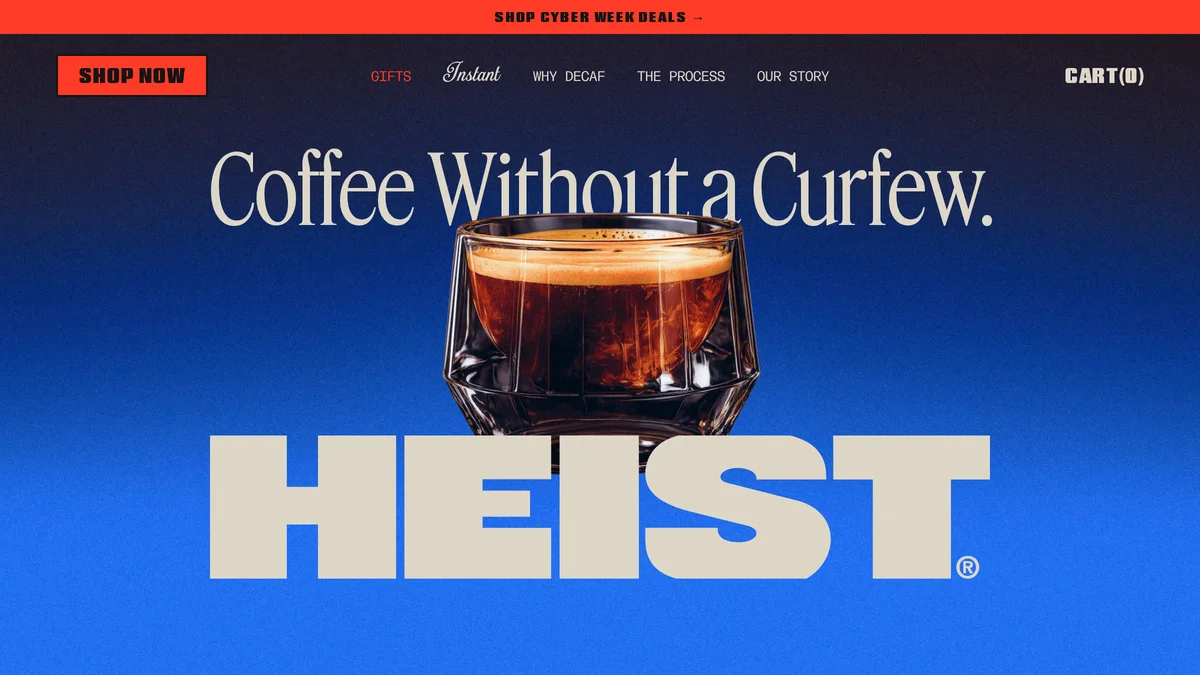
The email reads like an FAQ for a skeptical buyer. If your product comes with a well-known objection, answer it in the launch email, with proof and a guarantee rather than adjectives.
2. Soft Services
Body care brand Soft Services launched a holiday scent called Eternal Lemon in fall 2026, under the subject line "My tart will go on." Their launch email explains where the scent came from:
Our holiday-edition fragrance is based on a recipe of preserved lemon paste, by brand friend Chris Crawford of Tart Vinegar, long beloved by our founder Rebecca Zhou and featured in Samin Nosrat's new cookbook.
The perfumer, Vincent Schaller, then explains why he built the scent around the Primofiore lemon, "a beautiful Italian lemon whose name means 'first bloom'." The limited gift set was on sale at Soft Services' own site and Sephora.
Nobody can smell a fragrance in an email, so Soft Services sells it through its origin. You can sell any product customers can't try through a screen the same way, by telling them how it was made.
3. Moment
Moment makes phone and camera gear. Their 2026 color launch, "New Colors are Here", was short:
Matchy-matchy. Our new mobile collection just dropped: Cases and mounts in fresh colors that match your phone. Straps that match your case. Buttons you can mix and match.
Below it sat a second offer: "BUILD A KIT. Save up to $125 when you build a custom mobile kit."
New colors are a small launch on their own. The kit builder invites the reader to match a case, a strap and a mount, and rewards the bigger order with a discount. That raises the order value without putting a code on the whole store.
Drops, restocks and early access
Drops and restocks start with an advantage: people already want the product. The email only has to say it's here and give them a reason to act now.
4. Garage
Clothing brand Garage sent this early access email on September 11, 2026:
Subject: EARLY ACCESS: SPICY PALOMA
Preview: shop the drop early on the app!
Inside, the message was just as direct: "Don't have the app? Download now & shop the spicy new drop before anyone else!"
The early access belonged to app users, so the email sold the drop and gave everyone else a reason to download the app. Once a subscriber has the app, Garage can reach them with push notifications for the next drop.
5. Small Batch Jam Co
Small Batch Jam Co makes jam in Pacifica, California. On November 21, 2026, they sent "Cranberry Orange Jam is Back! New Debut Flavor: Old Bay Apricot Jam!!"
The email has two halves. "Look what's back..." brings back the cranberry orange jam with the story of a Cape Cod vacation. "Look what's new..." introduces the new flavor:
While attending college in Maryland, both Pablo and Gina grew very fond of Old Bay Seasoning, and when tasked with finding a fruit to pair alongside that rich and bold flavor, look no further than California's own Patterson apricot!
Both jams were $9, and three more flavors followed under "See what else is in store".
The returning favorite earns the open, because subscribers already know they like it. The new flavor then gets attention it would struggle to win alone.
Loyalty and VIP campaigns
Loyalty campaigns give loyalty program members something other subscribers don't get. The two below also put each member's own points balance in the email, so the perk is about them.
6. Hydro Flask
Hydro Flask sent "Final hours for 2x + extra 15% ⏳" on the last day of a 2026 Members Week, with the preview line "Your member perks end tonight." The banner read "LAST CHANCE. MEMBERS ONLY. Extra 15% off sale items. 2x rewards ends tonight." Below it came this block:
Don't leave rewards on the table
Points Status
100
Points to your next reward
2x points gets you there faster through midnight.
The points block is what makes the email work. "Double points" means little in the abstract, but a member who sees their own balance next to a link to their next reward has a personal reason to buy tonight. The midnight deadline is real, too.
7. goodr
Sunglasses brand goodr turned a 2026 loyalty email into a game. The subject line of "Can you help us find our CEO?!" set it up, and the email explained:
We told Carl the Flamingo to take a hike. He took it personally… Track him down, click & claim your reward.
The rules were simple: "Earn 63 points for finding Carl on your first click. (That's one for every U.S. National Park. Cool, right?) Earn 20 if you click and don't find Carl." Under the game, the email showed the member's tier and points balance.
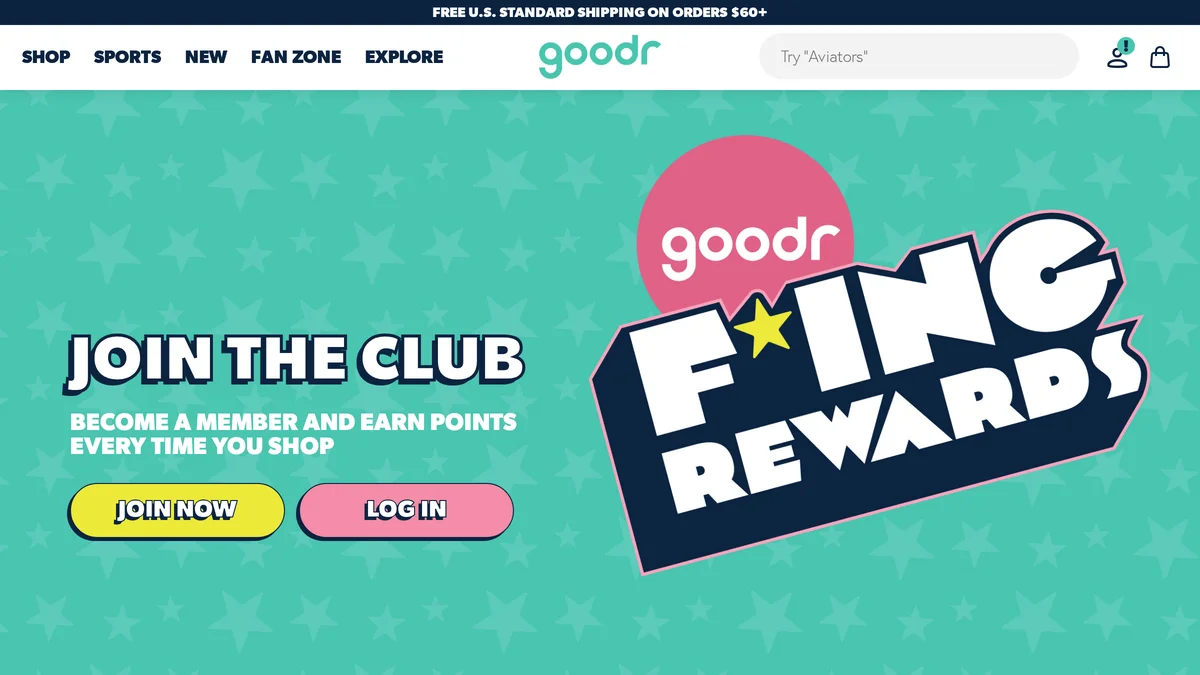
On goodr's base tier, members earn 1 point per dollar, so finding Carl was worth as much as a $63 order. Everyone who clicked earned something, and the email reminded members the program exists in goodr's usual jokey voice.
Seasonal campaigns
Seasonal campaigns borrow a date the subscriber already knows. Black Friday has its own set of examples, so the two here use other dates on the calendar.
8. Primal Kitchen
Primal Kitchen sent "A Halloween Treat: BOGO Collagen 👻" in October 2026, under the headline "Buy One. Boo One.":
No Tricks. Just Free Collagen. This Halloween, buy any collagen and get another FREE. Use code BOGOBOO at checkout.
The flavor section was titled "Pick Your Potion". The code expired on November 1, 2026, and didn't apply to orders with subscription items.
Halloween supplied the jokes, and the offer did the selling. A free second collagen product moves two units where a percentage off would discount one. Leaving subscription orders out kept the discount off sales Primal Kitchen already gets on a schedule.
9. De La Calle
De La Calle makes tepache, a fermented pineapple drink. Their 2026 email for Día de los Muertos, "We Remember", opens with the banner "Celebrate Día de los Muertos with Tepache".
Under the header "Tradition is meant to be shared," the email shows the limited edition can on an ofrenda with candles, marked "out of stock online!", and a button that leads to the brand's Spiced Pineapple flavor.
The date belongs to the culture behind the brand, not to the retail calendar, so the email feels like a celebration rather than a sale. And with the limited can sold out online, it still gave readers somewhere to go: the regular flavor, and a store locator at the bottom.
Partnerships and collabs
A collab email has fans of two brands to win over. It works best when the product is clearly news, and when the email sounds like both partners.
10. Liquid Death and Van Leeuwen
On September 15, 2024, Liquid Death sent "Hot Fudge Sundae Sparkling Water", with the preview line "We teamed up with Van Leeuwen Ice Cream so you could chug a sparkling hot fudge sundae." The email itself opened:
Yes. We really made a sparkling water that tastes exactly like a hot fudge sundae. And it's extremely limited.
The only places to buy it were Van Leeuwen scoop shops and Amazon. The email linked to the commercial and signed off with "Hurry because Hot Fudge Sundae will be gone faster than your childhood."
The product sounds unlikely, and the email leans into that. "Yes. We really made…" answers the reader's disbelief before they can voice it, and "extremely limited" gives them a reason to try it now.
11. Lush and The Grinch
Lush sent "You're a clean one ... Mr. Grinch" in fall 2026 to launch their collection with The Grinch. Every product gets a rhyme:
The Grinch BATH BOMB: With a face of mischief and apple-fresh foam, who knows, even The Grinch would want one of his own!
The email also offered $5 off through the Lush app, for purchases in participating US Lush shops, in a promotion running through December 23, 2026.
Writing in Dr. Seuss style makes the collab feel like part of the story rather than a logo printed on a bath bomb. If you partner with a character or another brand, borrowing their voice for the email does more than putting their name in the subject line.
Brand stories and community emails
Brand story and community emails sell less directly than the rest. They give subscribers a reason to care about the people behind the brand, which makes the next launch email easier to open.
12. Gantri
Gantri is a California lighting brand. For their 10th anniversary in 2026, founder and CEO Ian Yang sent "Celebrating 10 years of failures at Gantri". It starts with his first customer, at a New York craft fair in June 2017:
She picked out the light she wanted, entered her credit card information, and tapped "Confirm order". And then, a giant red error banner popped up.
He had only tested card payments in California, so the sales tax for New York broke the checkout. "She smiled and said she'd come back later. She never did." Instead of "the usual pomp and pageantry," he writes, Gantri would mark the anniversary by sharing their failures and what they learned from them.
The email has no product grid and no offer, just a specific, slightly painful story in the founder's own words. That builds the kind of trust a sale email can't, and most founders have a story like it.
13. Graza
Olive oil brand Graza sent "Step into our office 🫒" on May 29, 2026, with the preview line "Meet BENNY FROM FINANCE". The email shows a staff member in a giant squeeze-bottle costume, then lists his job description, his favorite Graza product and his favorite recipe.
It's built like a launch email, with the launch being a person. The favorite product and recipe sell the oil without saying so.
14. Who Gives A Crap
Who Gives A Crap sells toilet paper in printed wrappers. In summer 2026 they sent "How are our wrappers made?" about a limited edition:
Meet the artists. Our new limited edition features the talents of three of our favourite artists. So before it sails away, we thought we'd ask what inspired their wonderfully watery illustrations.
Each artist explains their design. Aley Wild says, "I also included a squid inspired by Botticelli's Venus as the sort of diva." The button reads "Shop The Splash Edition".
The limited edition is the wrapper art, not the paper inside. The email sells it by introducing the people who drew it, which gives a routine purchase a reason to happen now.
15. Marsh Hen Mill
Marsh Hen Mill sells stone-ground grits, rice and other grains. At the end of 2025 they sent "A Record Year for Marsh Hen Mill", headed "2025 Wrapped". It lists the five states that ordered the most, their top products and top recipes, and then this:
310 of you signed up for a recurring shipment of Marsh Hen Mill goodness this year!
It ends by thanking the subscriber by first name.
The format borrows from Spotify Wrapped, and it suits a small brand well. Customers see where the grains went and which recipes people cooked most, so the email reads as being about them rather than the products. The subscription figure quietly tells everyone else that a subscription exists.
How to plan your own email campaigns
The campaign ideas that fit your store depend on what you sell and what's happening this month:
- If you release new products often, launches and early access can carry most of your calendar, as they do for Heist, Moment and Garage.
- If you sell consumables or a small catalog, seasonal returns, new flavors and a year in review give you news without a new product every week, like Small Batch Jam Co and Marsh Hen Mill.
- If you run a loyalty program, points balances and member events give your best customers their own campaigns, like Hydro Flask's Members Week and goodr's game.
- If your founder, team or makers have stories, letters and features like Gantri's, Graza's and Who Gives A Crap's give subscribers a reason to open that has nothing to do with price.
Most brands fit more than one of these. Mixing them on a campaign calendar keeps a discount from being the only reason anyone opens your email.
Final thoughts
Campaigns are the part of email you fully control: what goes out, when and to whom. That freedom is also the problem, because nothing about a campaign tells the subscriber why it's in their inbox unless the email does.
So start with what you actually have this month. Something new deserves the Heist treatment: answer the doubt and back it up.
Something coming back works best paired with something new, as Small Batch Jam Co did. Members can get their own deadline and their own points, like Hydro Flask's. And if all you have is a good story, Gantri shows that a campaign with nothing to sell can still be the email people remember.
Frequently asked questions
What is an email blast?
An email blast is a single email sent to a whole list at the same time, usually a promotion. Many ecommerce brands now send campaigns to segments instead, such as past buyers of a product or loyalty members, because a message aimed at a smaller group fits it better.
How often should an ecommerce brand send email campaigns?
An ecommerce brand should send campaigns as often as they have a real reason to, and many send at least weekly. Watch your unsubscribe and spam complaint rates as you send more, and send extra campaigns to your most engaged subscribers rather than the whole list.
Should every email campaign include a discount?
Email campaigns don't need a discount to work. Gantri, Graza, Who Gives A Crap and Marsh Hen Mill all sent campaigns with no offer, and Heist's launch leaned on a guarantee instead. Save discounts for moments when they help, so subscribers don't learn to wait for one.
What makes a good email campaign subject line?
A good email campaign subject line tells the reader what's new, or plays on it in a way they'll get at once. "Cranberry Orange Jam is Back!" and "EARLY ACCESS: SPICY PALOMA" state the news plainly. "Decaf Has A Reputation. Here's Why Ours Is Different" names the doubt the email answers.
Where can you find more email campaign examples?
You can find more email campaign examples in email galleries such as Really Good Emails, Email Love and Milled, which collect thousands of sends from brands you can filter by type. Subscribing to the brands you compete with, and to brands you admire in other categories, shows you their whole calendar as it happens.