
Most growing Shopify brands hire an agency at some point, and plenty hire several over the years. One builds the store, another runs conversion tests and another looks after email.
The hard part is matching the agency to the job, because "Shopify agency" covers very different businesses. The label takes in studios that build headless stores, CRO teams that run tests, white-label shops that other agencies hire and full-service agencies that try to do all of it.
A great headless studio is still the wrong hire for a conversion problem. So we've rounded up some of the best Shopify agencies below, one of each kind. After the list, you'll find which kind of agency suits which job, how project work and retainers differ, where to find more agencies and what they cost.
Which Shopify agencies are worth hiring?
The Shopify agencies worth hiring include Netalico, Commerce-UI, GetDevDone, Blend Commerce and Fourmeta. Each is a different kind of agency, from a Shopify Plus build partner to a CRO specialist, so the right one depends on the job you need done.
| Agency | Based in | Kind of agency | Published pricing (November 2026) | Best for |
|---|---|---|---|---|
| Netalico | Miami (US team) | Shopify Plus builds, migrations and retainers | Retainers $3,700 to $10,000/month | Mid-market brands replatforming to Shopify Plus |
| Commerce-UI | Gdańsk, Poland | Design-led and headless builds | On request | Design-conscious fashion, lifestyle and beauty brands |
| GetDevDone | San Francisco | Development capacity, often white-label | Shopify work from $4,900 | Teams and agencies that need more developers |
| Blend Commerce | Henley-in-Arden, UK | CRO | On request | Established stores with steady traffic |
| Fourmeta | London | Full-service | Migrations from £9,000; retainer £2,700/month | UK and European brands wanting one partner |
1. Netalico
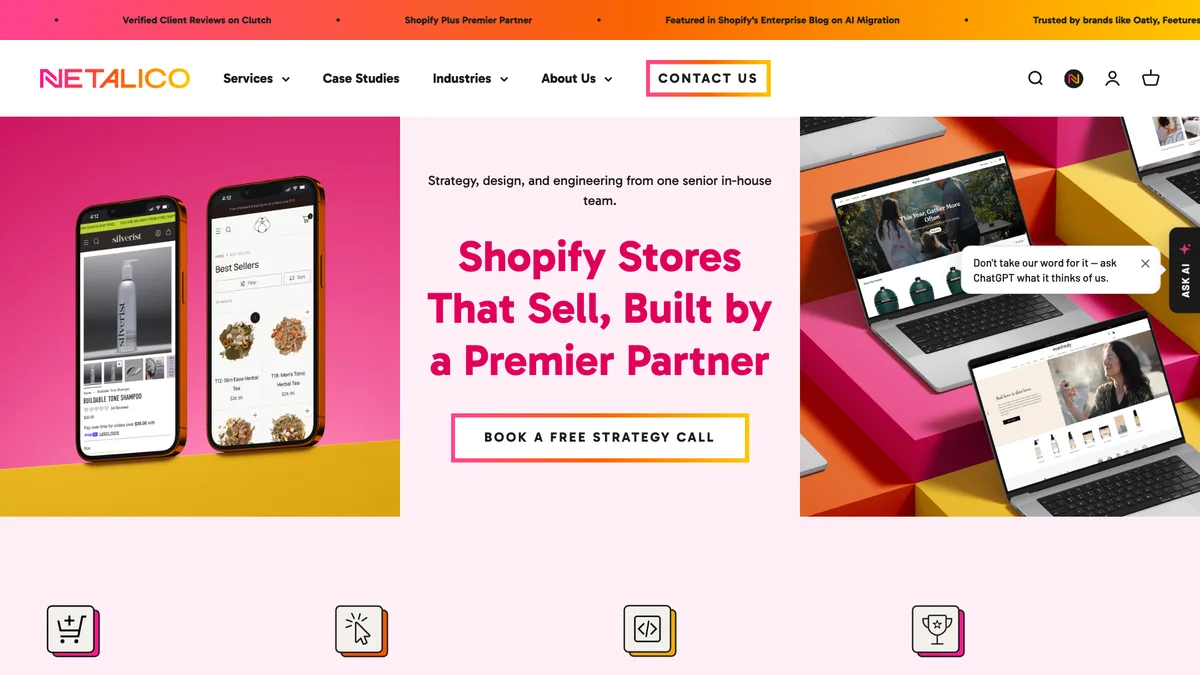
Netalico is a Shopify Plus agency for mid-market DTC and B2B brands, and has been building online stores since 2011.
Netalico moves brands to Shopify Plus from Magento, BigCommerce and Salesforce Commerce Cloud, and also handles development, UX design, Klaviyo email and CRO. Most of their clients stay on a monthly retainer after launch, with the same senior team that built the store.
For Oatly, the agency's case study reports a 188% increase in monthly recurring revenue from subscriptions in the three months after launch.
- Pricing: retainers from $3,700 to $10,000 a month, with the average client paying about $4,500; hourly packages at $165 to $185 an hour
- Clients include: Oatly, Big Green Egg, Feetures and Qunol
- Best for: mid-market brands replatforming to Shopify Plus that want the same team after launch
2. Commerce-UI
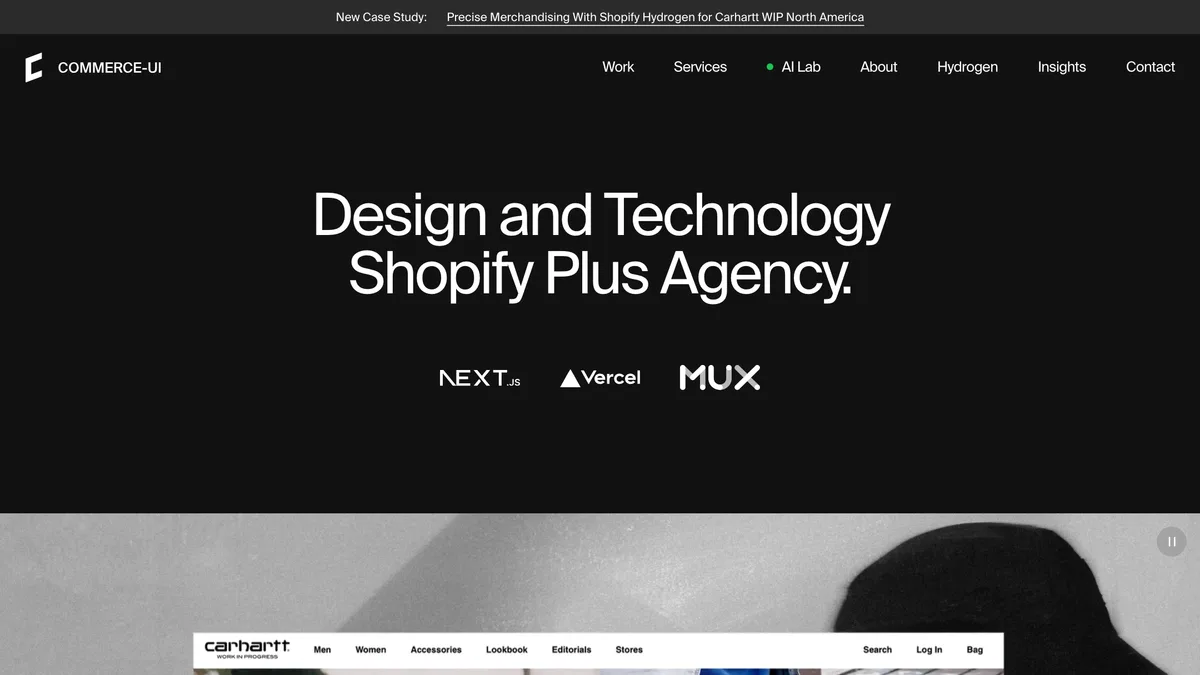
Commerce-UI is a Shopify Plus agency in Gdańsk, Poland, that designs and builds custom stores for design-conscious brands. Many of their builds are headless, using Shopify's Hydrogen framework or Next.js, with Sanity for content.
The team is small and senior, and the lead developer on your project is also your main contact. Commerce-UI says most of their clients stay with them long term, and the team keeps improving those stores after launch.
Commerce-UI's Hydrogen store for Nour Hammour won Shopify's 2024 Build Award for best custom Hydrogen storefront. A month after the store launched, Nour Hammour saw a 63% increase in conversion rate and a 128% increase in sales year over year, according to the case study.
- Pricing: quoted on request
- Clients include: Carhartt WIP North America, the official Lady Gaga store, Oura Ring, Magda Butrym and Pangaia
- Best for: design-conscious fashion, lifestyle and beauty brands that want a custom or headless build
3. GetDevDone
GetDevDone is a San Francisco website development company, building sites since 2005 and now part of the P2H Group. GetDevDone says they've delivered 131,000 projects for more than 15,150 agencies and brands, with a team of more than 400 engineers, and that 95% of clients come back.
White-label work is GetDevDone's core model. Their developers work inside an agency's own process and tools and take full responsibility for the development, while the client sees only the agency's name. GetDevDone also works directly with brands.
On Shopify, GetDevDone builds themes, migrates stores and handles Shopify Plus, integration and B2B projects. For a German electronics retailer, they connected Shopify Plus with Amazon and SAP Business One, and the retailer's Amazon cancellations fell from 12% to 2%, according to the case study.
- Pricing: Shopify work from $4,900, as a fixed-scope project or on time and materials
- Clients include: Equifax, Havas, AARP and Adesso
- Best for: in-house teams and agencies that need more developers
4. Blend Commerce
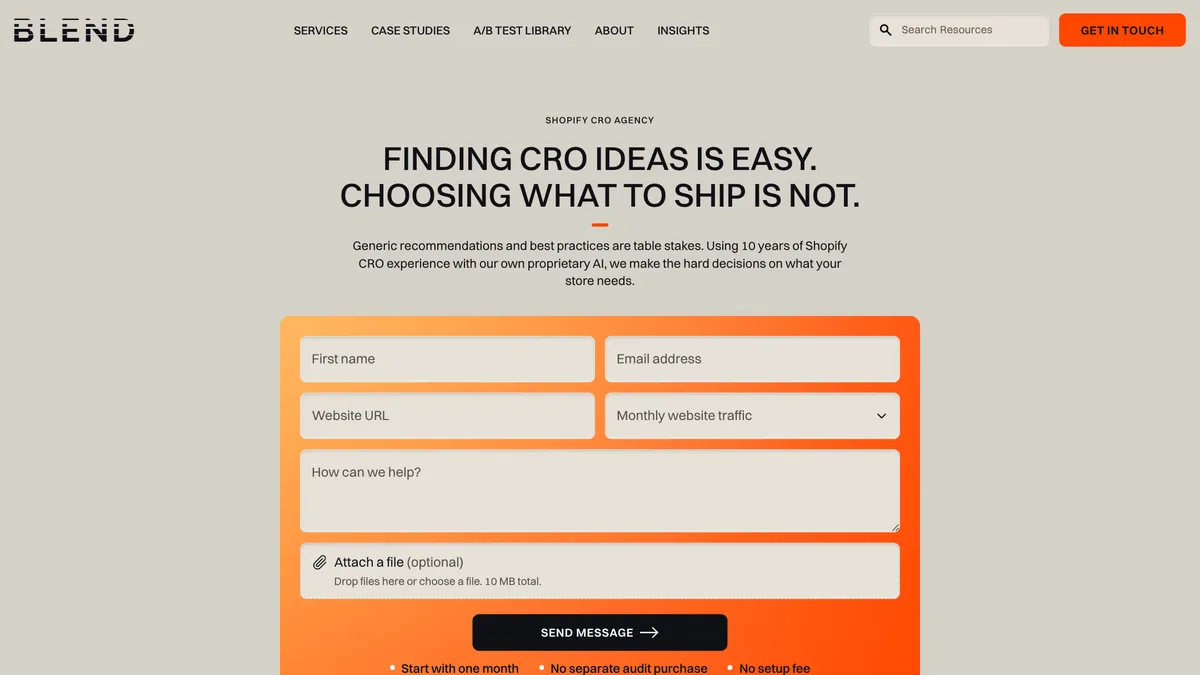
Blend Commerce is a Shopify CRO agency for established DTC brands on Shopify and Shopify Plus. Their in-house team handles strategy, UX, development, A/B testing and QA, and they don't run paid media.
Blend says they work best with brands that get at least 50,000 visitors a month. The agency won CRO Agency of the Year at both the European Agency Awards 2026 and the Global Agency Awards 2026.
Over six months in 2026, Six Brothers Beef's revenue rose 52%, revenue per session 32% and conversion rate 24% compared with the previous six months, according to Blend's case study.
- Pricing: quoted on request; projects usually start with a one-off audit and roadmap, then monthly optimization
- Clients include: Six Brothers Beef, Rep Fitness, Hunter & Gather and Absolute Collagen
- Best for: established stores with steady traffic whose growth has slowed
5. Fourmeta
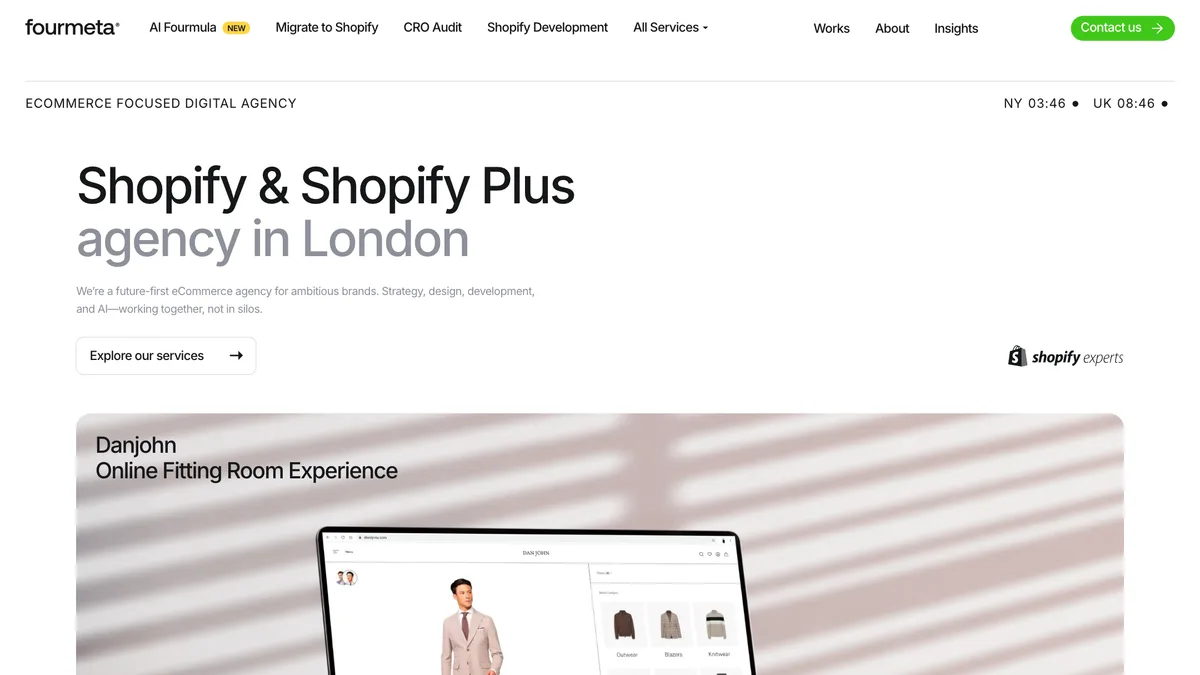
Fourmeta is a full-service Shopify and Shopify Plus agency in London. Fourmeta says they have more than 60 specialists and have launched more than 100 Shopify sites.
Their work covers design, development (including headless builds), migrations, CRO, SEO and marketing. Brands hire Fourmeta for a project, such as a migration, or on a monthly retainer for ongoing work.
For Josh Wood Colour, Fourmeta built a headless store on Shopify Plus. The agency's project page reports a 21% increase in conversion rate and more than 2,400 subscriptions enabled.
- Pricing: migrations from £9,000, or from £15,000 with custom design and advanced integrations; the Grow retainer costs £2,700 a month for 30 hours
- Clients include: Dan John, Josh Wood Colour and Crep Protect
- Best for: UK and European brands that want one partner for design, development and marketing
Which kind of Shopify agency do you need?
Choosing a Shopify agency starts with the job you need done, because each kind of agency does different work. Match the job to the kind of agency first, then compare agencies of that kind.
| If you need to… | Look for |
|---|---|
| Move to Shopify from another platform | A build and migration agency |
| Rebuild for a premium brand, or go headless | A design-led studio |
| Clear a backlog of development work | A development partner |
| Turn more of your traffic into sales | A CRO agency |
| Hand most of the store to one partner | A full-service agency |
Build and migration agencies
You need a build and migration agency when you're moving to Shopify from another platform, or rebuilding your store on Shopify Plus.
The risk in a migration is the data. Customer accounts, order history, active subscriptions and redirects from your old URLs all have to move across without breaking. Ask to see migrations from your platform, for stores your size, and ask how the agency tested them before launch.
The questions to ask before you hire a Shopify development company apply here too, from who builds the store to what support costs after launch.
Design-led and headless studios
A design-led studio is the hire when you're a premium brand and your website is the showroom for your products. These studios design and build custom stores, and many build them headless, with a custom frontend running on Shopify's backend.
Headless adds cost and upkeep, because the frontend is a second system someone has to host and maintain. So headless is worth paying for when a theme can't give you the site you need. Look closely at the stores a studio has built, and ask who'll maintain the frontend after launch.
Development partners and white-label shops
A development partner makes sense when your team knows what to build but doesn't have the developers to build it. These partners add developers who deliver on a predictable schedule, working from a brief by your own team or by another agency.
You keep the strategy, and the partner builds what you specify. So ask how they scope work, how they test it before handing it over and how quickly they can start.
CRO agencies
Bring in a CRO agency when your store gets steady traffic but too few visitors buy. Ecommerce CRO agencies sell research and testing rather than a redesign: they find what stops shoppers from buying, test changes and keep the ones that win.
Testing needs traffic, because each test needs enough visitors to reach a clear result. Ask how they decide what to test, and ask to see results with the period and baseline they were measured against.
Full-service agencies
A full-service agency puts design, development and marketing in one team. This kind of agency suits you if you don't have an in-house ecommerce team and want one partner to run most of the store.
The tradeoff is depth, because one team can't match a specialist in every area. That's why many brands hire specialists alongside their build agency instead, such as a Klaviyo agency for email or an ecommerce growth agency for paid media.
Hiring a Shopify agency for a project or on retainer
A Shopify agency works with you either on a project or on a retainer. Project work has a scope and an end date, such as a migration, a redesign or a new build.
A retainer buys a set number of hours every month for ongoing work. Fourmeta's Grow plan includes 30 hours a month, for example, and Netalico's tiers run from 30 to 60.
Ongoing Shopify work mostly runs on retainers. Netalico says about 85% of their clients work with them on a monthly retainer.
The longer an agency works on your store, the more useful their team becomes, because they learn what you've tested, why a project stalled and which apps matter. So before you sign a retainer, ask who'll be on your account day to day, how onboarding runs and how they handle scope changes.
Where to find a Shopify agency
Shopify's Partner Directory is the usual place to start looking for a Shopify agency. The directory sorts partners into six service categories: store building, custom app development, marketing, migrations, integrations and channel expansion.
Each profile lists the agency's top services, based on the last four years of Shopify data, and shows client relationships Shopify has verified.
Profiles also show a partner tier, which reflects the sales and number of stores Shopify credits to the agency rather than the quality of their work. And on January 1, 2027, Shopify replaces the current tiers with new ones.
Not every agency keeps a directory profile, so treat the directory as a starting point rather than the full list.
The partner directories of apps you already use are another place to look. Klaviyo's, for example, lists agencies by the platform they work on and the services they offer.
Then ask operators you know which agencies they've hired, and which they'd hire again.
How much does a Shopify agency cost?
What a Shopify agency costs depends on the kind of agency and the job. As of November 2026, Netalico's retainers run from $3,700 to $10,000 a month, and their hourly packages from $165 to $185 an hour.
Fourmeta's migrations start at £9,000, and their retainer costs £2,700 a month. GetDevDone's Shopify work starts at $4,900, while Commerce-UI and Blend Commerce quote after a call.
Larger custom builds and replatforms cost more, and what a Shopify build costs depends on how much is custom, what you're migrating and which systems the store connects to.
Whatever the job, ask for the project quote and for the cost of a typical month after launch. You'll pay the second number for as long as you keep the agency.
Final thoughts
The agency you hire shapes the store your customers come back to, from how fast it loads to how well their accounts and subscriptions work. So pick the kind of agency for the job before you pick the name.
If you're replatforming to Shopify Plus and want the same team to stay on after launch, start with Netalico. Commerce-UI suits a design-led or headless build. When you need more hands rather than strategy, GetDevDone can add developers to your own team or to the agency you already work with.
Blend Commerce fits when the traffic is there but the sales aren't. And Fourmeta suits a UK or European brand that wants one partner across design, development and marketing.
Frequently asked questions
Do you need a Shopify Plus agency?
A Shopify Plus agency makes the most sense when your store runs on Shopify Plus or is moving to it. These agencies work with larger brands: Netalico, for example, works with DTC brands with $2 million to $50 million in revenue. A smaller store can hire any Shopify partner that builds stores like theirs.
What is a white-label Shopify agency?
A white-label Shopify agency builds stores and features that another agency delivers to their clients under their own name. The client deals only with the agency they hired, while the white-label team does the development. GetDevDone works this way, inside each agency's own tools and process, and also takes direct work from brands.
How long does a Shopify migration take with an agency?
A Shopify migration with an agency usually takes 3 to 24 weeks, depending on the store and the scope. Fourmeta says typical migrations take 3 to 12 weeks, while Netalico says most of theirs take 12 to 24. For a $5 million to $50 million store leaving Magento, Netalico expects 16 to 24 weeks.
Should your Shopify agency also run your email and SMS?
Your Shopify agency can also run your email and SMS if they offer that work, as Netalico does with Klaviyo. A specialist usually goes deeper on flows, segments and campaigns, so an agency that specializes in Klaviyo is worth a look if email drives much of your repeat revenue.
What is a Shopify Partner?
A Shopify Partner is an agency or other service business in Shopify's Partner Program. Partners start on the Registered tier and, from January 1, 2027, move up to Silver, Gold, Platinum or Diamond as the stores they've launched grow in number and sales. Only Silver partners and above can appear in the Partner Directory.