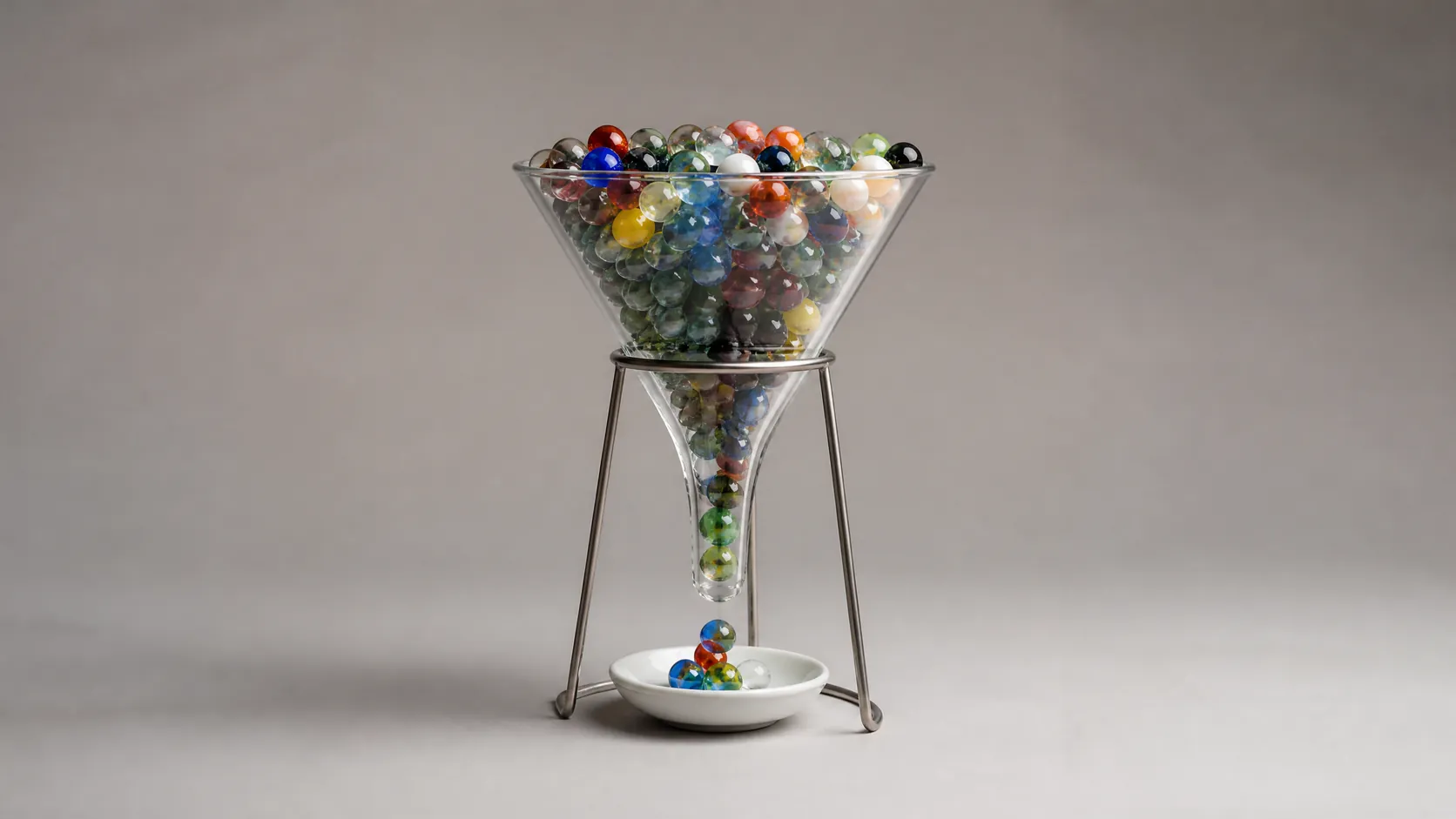
Most of the shoppers you pay to bring to your store leave without buying. Turning a few more of them into customers is often cheaper than buying more traffic, because you've already paid for the visit.
A conversion rate optimization (CRO) agency helps you turn more of those visits into orders. The best CRO agencies find out why shoppers leave, test fixes on your store and keep the ones that make money. What you're paying for is that testing process, not another list of the best practices you've already read.
We've rounded up the ecommerce CRO agencies worth talking to below. After the list, we cover what a CRO program involves, whether your store is ready for one, what it costs and how to choose an agency.
Which ecommerce CRO agencies are worth considering?
The ecommerce CRO agencies worth considering include Blend Commerce, Convertibles, Spiralyze, Invesp and Speero. The list runs from Shopify specialists to agencies that build experimentation programs for enterprise teams.
Every agency on the list researches, tests and ships changes for you. But each one sets their own floor for traffic or revenue, and only Spiralyze and Invesp publish their prices.
| Agency | Based in | Works mostly with | Published pricing (November 2026) | Best for |
|---|---|---|---|---|
| Blend Commerce | Henley-in-Arden, UK | Established Shopify and Shopify Plus brands | On request | Shopify stores with around 50,000 sessions a month |
| Convertibles | New York and Sofia | Shopify Plus brands doing $2M+ a year | On request | Plus brands that want tests built in theme code |
| Spiralyze | Atlanta | B2B SaaS, with an ecommerce offer | $25,000/month, or performance-based | Brands that want a lift guarantee |
| Invesp | Chicago | Ecommerce, SaaS and lead generation | From $10,000/month, or performance-based | Brands from $1M a year that want a structured program |
| Speero | Austin, Tallinn and London | Large ecommerce and SaaS teams | On request | Brands at $50M+ building an in-house testing program |
1. Blend Commerce
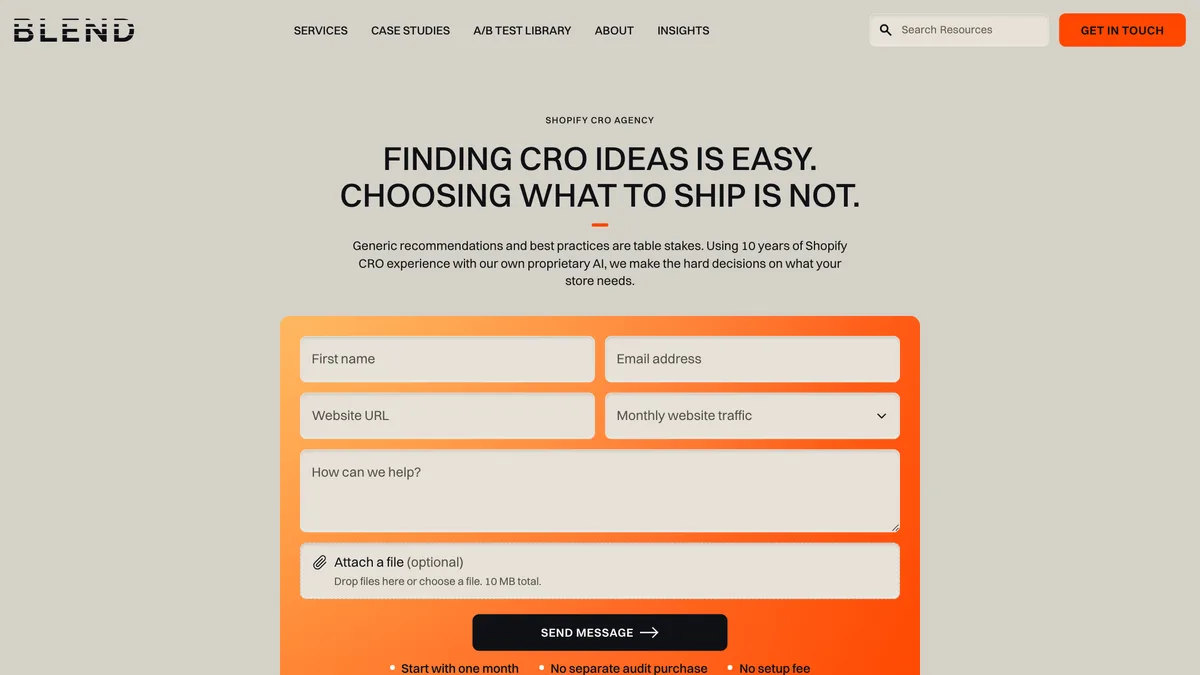
Blend Commerce is a Shopify CRO agency in the UK that works with established Shopify and Shopify Plus brands. Their in-house team covers CRO strategy, UX design, Shopify development, A/B testing and QA, and Blend doesn't run paid media or SEO.
Blend won CRO Agency of the Year at both the European Agency Awards and the Global Agency Awards in 2026.
Work starts with an audit of your data and store, which becomes a roadmap of 40 or more recommendations for the next six to 12 months. Blend ranks the recommendations with their own PECTI framework, then tests them where traffic allows and makes the changes directly where it doesn't.
Six Brothers Beef, a ranch-to-table beef brand, didn't have the traffic for reliable tests. So Blend moved product reassurance closer to the buy button, made the search bar visible on mobile and answered common questions on the homepage.
From February 23 to August 23, 2026, revenue rose 52% against the previous six months, according to Blend's case study. Revenue per session rose 32% and conversion rate 24%, while sessions rose 15%.
- Pricing: quoted on request; you can start with one month, with no setup fee
- Works best for: Shopify and Shopify Plus brands with around 50,000 sessions a month and about $1 million a year in sales
- Clients include: Jackson's, Stone Creek Coffee, Aquarium Co-op and Titan Casket
2. Convertibles
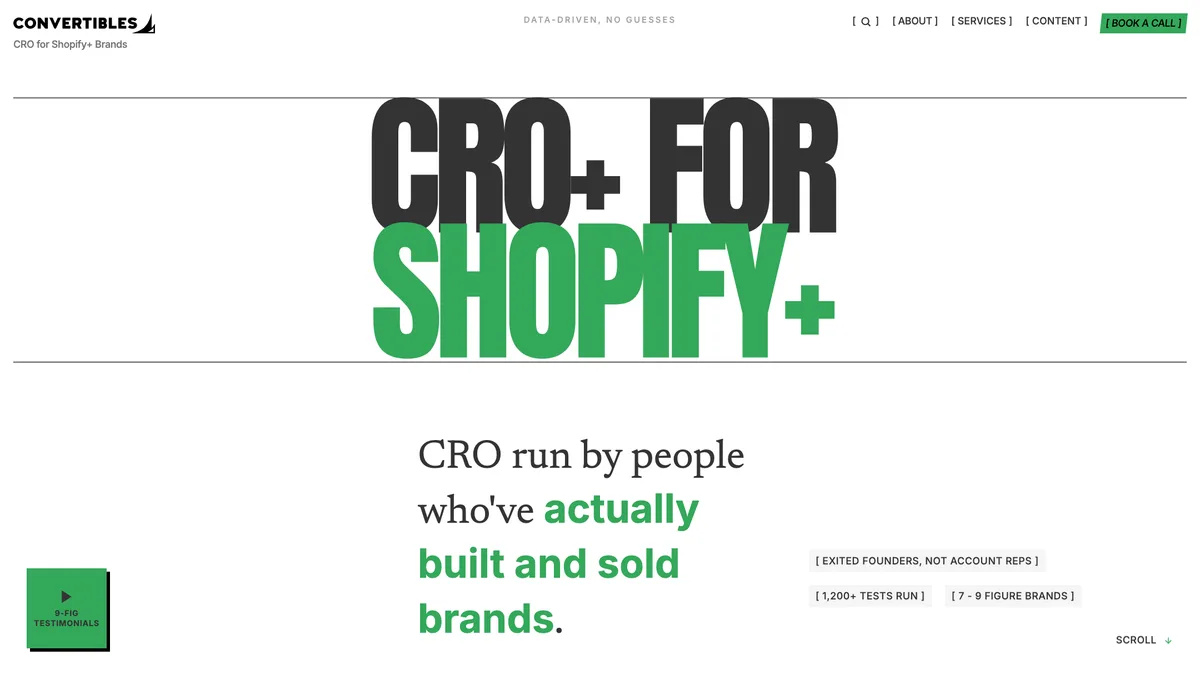
Convertibles runs A/B testing programs for Shopify Plus brands doing $2 million or more a year. Founded in 2023, they're a team of eight in New York and Sofia, Bulgaria. Their retainer also covers Google and YouTube ads.
A typical month brings two to four tests, each with two to four variations, in cycles of about two weeks. Convertibles' own developers build every test in your theme code rather than with a visual editor.
Convertibles publishes their results, including the tests that lost, and doesn't guarantee any lift.
In one published test, a helmet brand tried a cart drawer in place of their cart page. After 32 days, US and Canadian visitors who saw the drawer brought in 18.2% more revenue per visitor than those who saw the cart page.
- Pricing: quoted on request; one monthly retainer covers testing, landing pages, speed and development work and ads
- Works best for: Shopify Plus brands with $2 million or more in annual sales, typically spending $50,000 or more a month on ads
- Clients include: Jones Road Beauty, Performance Golf and Gymreapers
3. Spiralyze
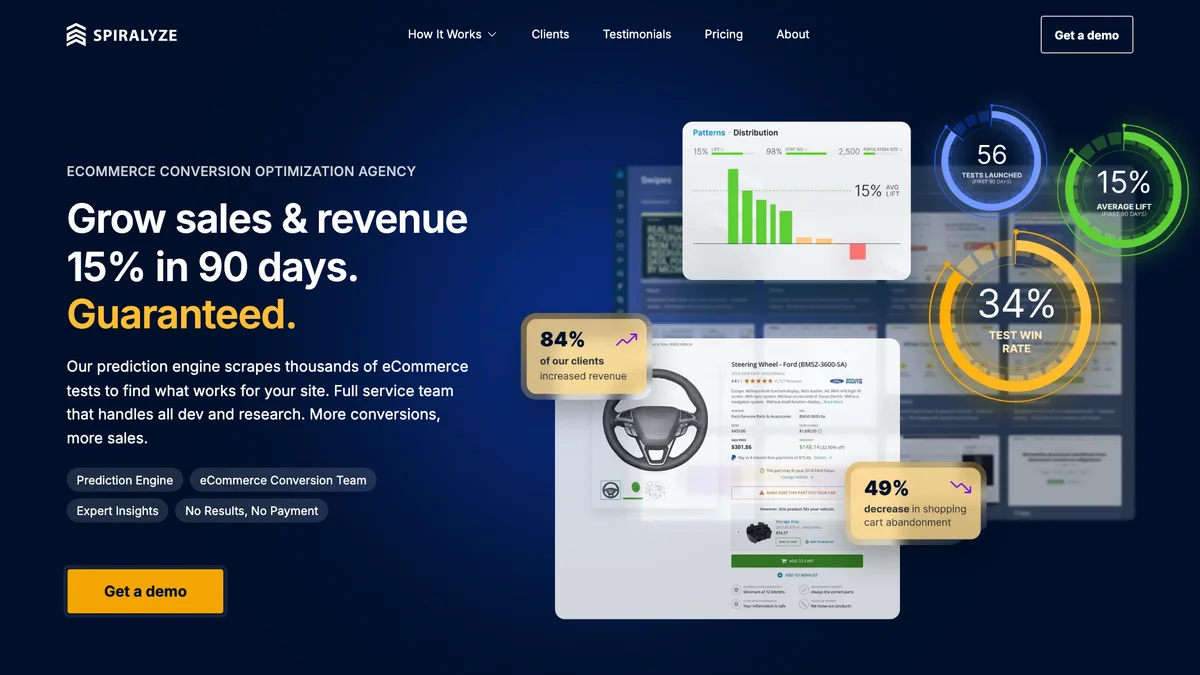
Spiralyze is a CRO agency headquartered in Atlanta, with 170 people in 16 countries. Their main focus is B2B SaaS, and they run separate offers for ecommerce and Shopify stores.
Spiralyze calls their approach predictive CRO. Instead of starting from a blank page, they pick tests from a database of winning A/B tests captured across 78,000 websites. Their team handles the design, copy, development and QA, and the first test goes live in about two weeks.
The ecommerce offer comes with a guarantee: 10 tests, three wins and 15% more revenue in 90 days. You don't pay until you see the lift, and you're the sole judge of it. For Shopify stores, Spiralyze recommends at least 1,000 visitors a month.
- Pricing: $25,000 a month flat on a month-to-month basis, or a performance deal with fees tied to test results
- Works best for: brands that want a guaranteed lift and a team that brings proven test ideas
- Clients include: Stitch Fix, Fanatics, Snake River Farms and Pura Vida
4. Invesp
Invesp has done nothing but CRO since 2006. Khalid Saleh and Ayat Shukairy founded the agency, which is now headquartered in Chicago. Invesp has worked with more than 900 clients, over 420 of them in ecommerce.
Invesp's CRO Catalyst platform looks across more than 70,000 sites for changes that have won elsewhere. A team then builds and runs those tests on your store. Your first test goes live on day 15, then a new one about every two weeks. You own the code and the data.
Brands doing $1 million to $6 million a year can apply for the Foundation program. Larger brands choose between the Growth program, which charges a flat monthly fee, and the Performance program.
Nick Osborn, head of growth at Catalina Crunch, says the food brand's conversion rate rose by around 18% to 20% while they worked with Invesp. He puts the extra revenue over that time at about $900,000.
- Pricing: Growth from $10,000 a month, with the first month free; Performance charged only on the lift you get; Foundation by application
- Works best for: brands from $1 million a year that want a structured testing program
- Clients include: eBay, BarkBox and Z Gallerie
5. Speero
Speero started out as CXL in 2011 and took their current name in 2020. Their offices are in Austin, Tallinn and London, and they call themselves a UX and customer experience research firm at heart.
Speero builds and runs experimentation programs for product and marketing teams, and helps those teams run more of the testing themselves. Their ideal client has $50 million or more in annual revenue, with leadership that backs experimentation.
For Native, Speero ran a test that drew shoppers' attention to cross-sells. The winning version was worth $1.5 million in annualized revenue, and Native's checkout conversion rate rose 9% overall, according to Speero's case study.
- Pricing: quoted on request
- Works best for: brands with $50 million or more in annual revenue that want testing to become part of how their own team works
- Clients include: Dr. Squatch, Native, Charles Tyrwhitt, RevZilla and Decathlon
What a CRO agency does for an ecommerce store
A CRO agency runs your store through a repeating loop: research where shoppers drop off, rank the ideas, test them and ship the winners. The agencies above differ in how fast that loop turns and how much of it they take on, but the stages are the same.
Researching where shoppers drop off
Research shows where and why shoppers leave your store. Agencies combine your analytics with heatmaps, session recordings, customer surveys and user tests.
Most stores lose shoppers in the same places. Product pages leave questions unanswered, and surprise costs make shoppers abandon their carts. Checkouts ask for too much, and phone shoppers drop out on pages that are hard to use.
A checklist can name all of these problems. Research tells you which of these problems your store actually has, and how much each one costs you.
Ranking what to change
Research produces more ideas than any store can test, so the agency ranks them. Blend's PECTI framework, for example, scores each idea on proof, ease of implementation, cost, time to impact and impact.
The ranking puts the first tests on the changes with the strongest evidence and the biggest likely payoff, not on the idea with the most senior supporter.
Testing the changes
Most programs run two to four tests a month. Invesp's Foundation program runs two tests a month, and Spiralyze promises 10 tests in the first 90 days. Speero raised Dr. Squatch's pace from two tests a month to five.
A test that loses is useful too. Convertibles stopped a volume discount test after 12 days, when the discount was bringing in 15.7% less revenue per visitor. Without the test, the discount could have gone live for every shopper.
Shipping the winners
A winning test only pays off once it's a permanent part of your store. A testing tool's visual editor layers its changes over your pages, so a developer still has to build the winning version into your theme.
Most of the agencies above include development in their fees for this reason. Spiralyze's flat fee covers hard-coding the winners, for example, and Convertibles avoids the extra step by building every test in theme code.
Is your store ready for a CRO agency?
Your store is ready for a CRO agency when it has the traffic to finish a test in a few weeks and the revenue for a small lift to cover the fee. The agencies above publish their own floors for traffic or revenue:
- Spiralyze: 1,000 visitors a month for their Shopify offer
- Blend Commerce: around 50,000 sessions a month
- Convertibles: $2 million or more in annual sales
- Invesp: $1 million a year for Foundation, and $6 million for their other programs
- Speero: $50 million or more in annual revenue
Traffic matters because a test needs enough orders in each version to tell a real difference from chance. Convertibles' cart drawer result came from about 290 orders across the two versions. Even with those orders, Convertibles put the drawer's chance of beating the cart page at 84%.
Collecting those orders took 32 days. A store taking a tenth as many orders would need about 10 months to collect the same number. Few changes are worth waiting that long to judge.
If your store is below these floors, start with the fixes that have the strongest evidence behind them, or pay for a one-off audit. Some agencies, Blend among them, will also make changes without testing them and track the results over several months.
How much does a CRO agency cost?
Published prices for ecommerce CRO run from $3,700 a month for a Shopify retainer to $25,000 a month for a full testing program, as of November 2026. An audit on its own costs less.
Netalico, a Shopify Plus agency with a CRO service for brands doing $2 million to $50 million a year, charges $1,800 for a CRO audit. Their retainers start at $3,700 a month, and the average client pays about $4,500.
Invesp's Growth program starts at $10,000 a month. Spiralyze charges a flat $25,000 a month, which includes design, development, QA and the testing tools.
Blend, Convertibles and Speero quote after a call. Speero's contact form asks for a monthly budget, with options starting at $5,000.
Invesp and Spiralyze also sell pay-for-lift deals, where the fee depends on the lift the tests produce. Convertibles, on the other hand, charges a monthly retainer with no lift guarantee.
To check whether a fee could pay for itself, start with the extra orders a modest rise in your conversion rate would bring at your current traffic. Multiply them by your average order value and your margin, then compare the result with a month's fee.
How to choose a CRO agency
The right CRO agency has worked with stores like yours, at your size, and gives specific answers about how they research, test and measure. Ask every agency on your shortlist the same questions, then check their case studies for the detail behind the headline numbers.
Questions to ask a CRO agency
- Who does the research, and what does it include?
- How many tests will you run each month?
- Do you build tests in our theme code or with a visual editor?
- Do you judge a test on revenue per visitor or on conversion rate?
- How do you decide a test has won, and how long do tests run?
- Will you show us the tests that lost?
- Who owns the code and the data if we leave?
- Is there a minimum term?
Good answers are specific: who does the work, how many tests, which measure and when a test stops.
Revenue per visitor is the safer measure, because it counts order value as well as orders. So a discount that brings in more but smaller orders only counts as a win if the extra orders make up the difference.
How to read a CRO agency's case studies
A useful case study gives the period, the baseline and whether the result came from a controlled test. Blend's Six Brothers Beef study has that shape. The study names the six months, compares them with the six months before and says plainly that the result comes from a before-and-after comparison, not a controlled test.
A controlled test, like Convertibles' cart drawer test, shows both versions to shoppers over the same days, so the season and your ad spend affect both alike. A before-and-after comparison can't separate the agency's changes from everything else that changed.
Testimonials usually give a figure with no period or baseline, like the Catalina Crunch result Invesp quotes. Ask the agency for both before you rely on the number.
Final thoughts
Traffic keeps getting more expensive, so every extra order from the visitors you already have makes that spend go further. A CRO agency finds those orders with evidence rather than guesses.
If you run an established Shopify store and want the work done for you, tested where your traffic allows, start with Blend Commerce. A Shopify Plus brand that wants tests built in theme code and results in the open should talk to Convertibles.
Invesp suits a brand from $1 million a year that wants a structured program, with a pay-for-lift option from $6 million. If a guarantee matters most, Spiralyze puts one in writing. And a large brand building testing into how their own team works should call Speero.
Frequently asked questions
How long should an A/B test run?
An A/B test should run until each version has enough orders to show a real difference, not until a fixed date. Convertibles works in cycles of about two weeks, but a store with fewer orders needs longer. Running in whole weeks also keeps weekday and weekend shoppers in both versions.
What's a good A/B test win rate?
A good A/B test win rate depends on how bold the tests are, because small, safe changes win more often and earn less. Invesp publishes a 42% win rate on tests sourced from their platform.
Convertibles doesn't treat win rate as their main measure, because "a high win rate is easy to game by running small, low-risk tests."
Can CRO increase repeat purchases, not just first orders?
CRO can increase repeat purchases when the work covers what returning customers do, such as reordering and managing subscriptions. Blend Commerce, for example, reports purchase frequency next to conversion rate and order value for their clients.
Track it through your repeat purchase rate over several months, because a test that runs for a few weeks won't show it.
What's the difference between a CRO agency and a UX or design agency?
A CRO agency changes your store to win more orders and checks each change against your sales, while a UX or design agency designs how the store looks and works. Many CRO agencies do UX design, but they judge it on revenue, and Blend turns down design-only work.
If you need a new store or a full redesign, start with a Shopify agency instead.
Do pay-for-performance CRO deals work?
Pay-for-performance CRO deals work when you and the agency agree up front on how to measure the lift. Invesp's Performance program charges only for the lift you get, for brands doing $6 million or more a year. Spiralyze ties their performance fees to test results and makes you the judge.
Before you sign, ask what counts as lift and over what period. Also ask what you pay if tests win but revenue doesn't move.