
People open shopping apps for different reasons. Sometimes they want to reorder something quickly. Other times they're browsing new styles, following a favorite seller or checking whether an item is available at a nearby store.
The best apps make those visits feel worthwhile. They help customers get something done, discover a product they're interested in or stay connected to a brand they already like.
For ecommerce teams, these apps are useful examples to study. Below are 15 worth knowing, with a look at what each does well and what you can take from the experience.
Which shopping apps are worth exploring?
Amazon is a useful example of everyday convenience, Nike shows how a brand can build around membership, and Whatnot takes a different approach with live shopping. The right app to explore depends on the experience you're interested in improving.
| App | Useful example of |
|---|---|
| Amazon | Product research, saved items and order tracking |
| Shop | Brand discovery and purchases across Shopify stores |
| Temu | Browsing a broad, price-led assortment |
| Shein | Fashion discovery and new-arrival alerts |
| Nike | Membership and a connected brand experience |
| Walmart | Reordering, pickup and shopping in-store |
| Target | Store availability, offers and curbside pickup |
| Instacart | Grocery shopping and replenishment |
| Whatnot | Live selling and real-time conversation |
| eBay | Saved searches and specialist inventory |
| Etsy | Personalized products and independent sellers |
| Depop | Fashion resale and style discovery |
| Poshmark | Seller-led discovery and live shopping |
| OfferUp | Local buying and selling |
| Rakuten | Cashback and shopping rewards |
Apps for everyday shopping and discovery
Large catalogs can be useful when shoppers know exactly what they need, but they also need to be manageable. These apps give customers different ways to explore, save products and return to a purchase later.
1. Amazon
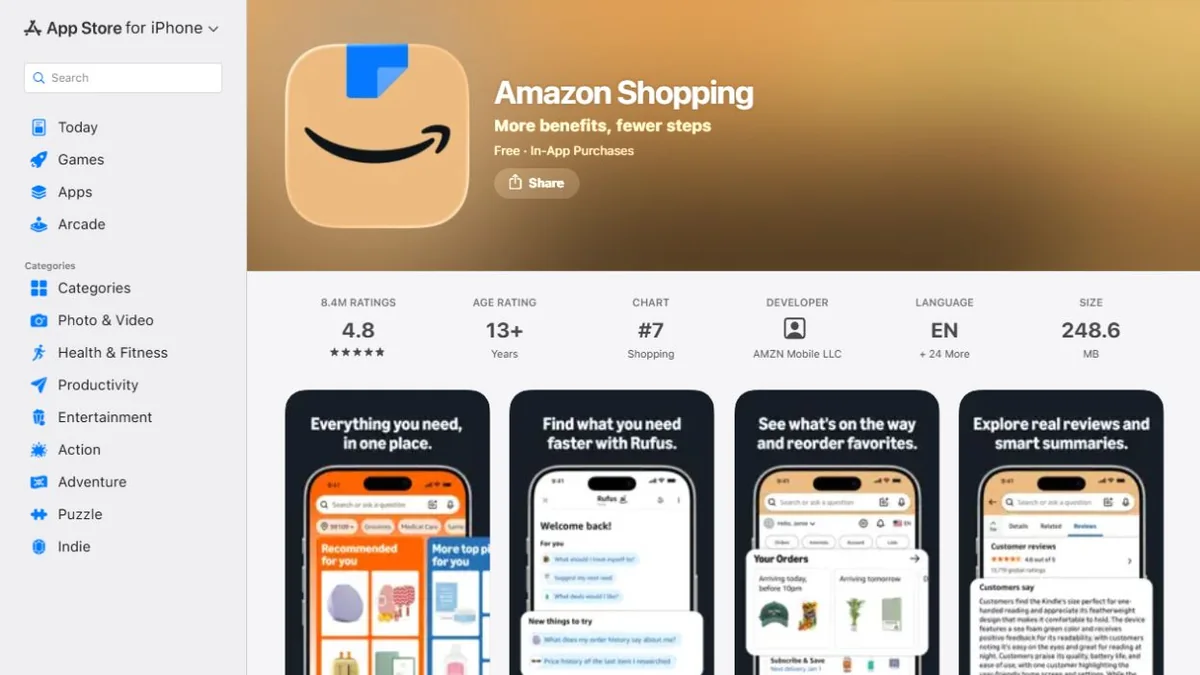
Amazon Shopping puts a broad catalog, detailed listings, customer reviews and order tracking within the same experience. Shoppers can save products to lists, receive price-drop alerts and search from a photo or barcode when they don't know the exact name of an item.
What makes it useful is the number of shopping tasks it keeps connected. You can discover a product, compare alternatives, leave it on a list and return when you're ready to buy. Afterward, delivery tracking gives you a practical reason to open the app again.
The combination is worth studying even if your store sells a small range. Reviews help people evaluate an unfamiliar purchase, saved items preserve an unfinished decision, and order information supports customers after checkout. Amazon shows how an app can remain useful throughout the purchase rather than depending entirely on the next promotion to bring someone back.
2. Shop
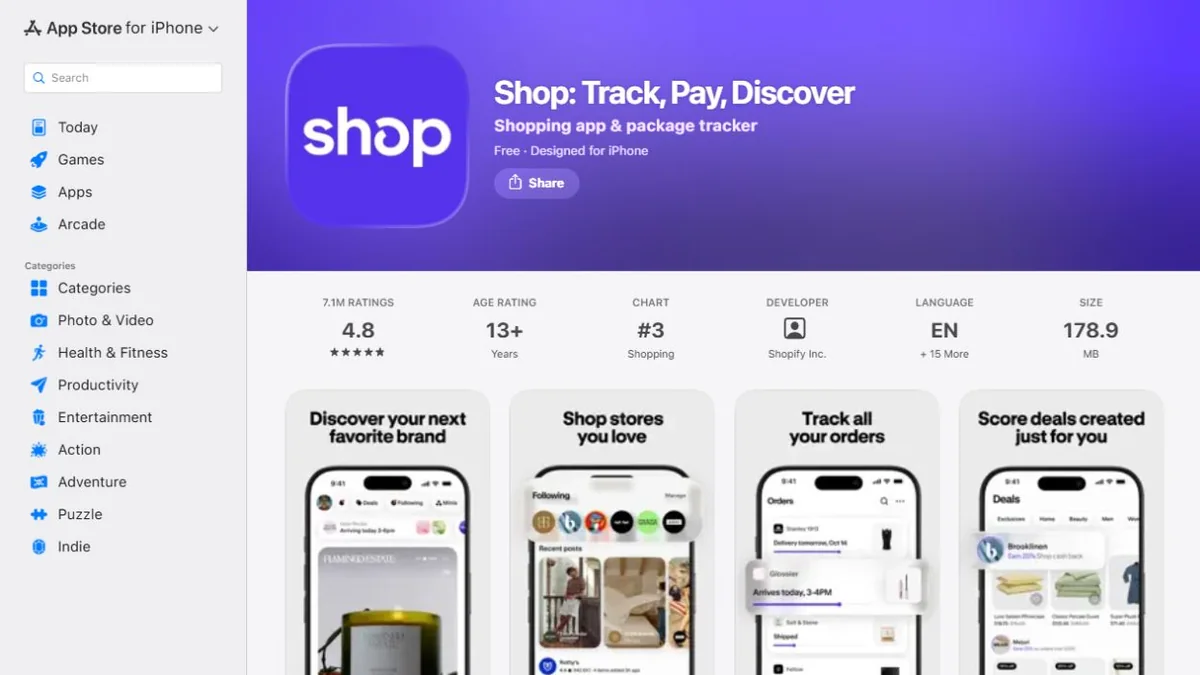
Shop connects shopping and order tracking across Shopify brands. Customers can follow stores, save products and use saved checkout details, with purchases from different merchants brought into a familiar app.
That shared experience is part of its appeal. Someone checking an order has a reason to return, and can also discover products or revisit a brand they've bought from before. New-product and restock notifications give followers a route back to an assortment they're already interested in.
For a store owner, Shop demonstrates how useful post-purchase services can support an ongoing shopping relationship. Following a brand gives that connection more continuity than a single transaction. The setting is a wider network of stores, so it also offers a different experience from a brand's own app: customers get the convenience of several retailers together, while each merchant has another place to be discovered and revisited.
3. Temu
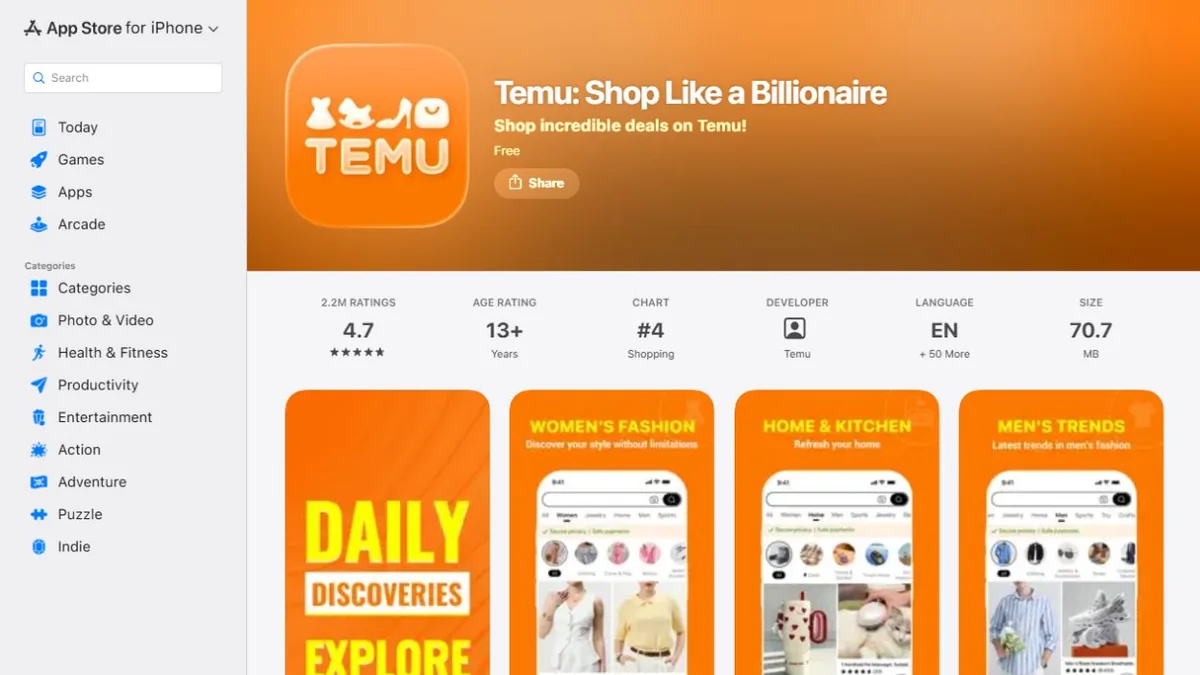
Low prices and a very broad assortment are central to Temu's app. Clothing, home goods, accessories and beauty products sit within a shopping experience built around offers and frequent discovery, giving customers plenty to explore even without a specific purchase in mind.
The appeal is the sense that a visit may turn up an inexpensive, useful find. That makes the app interesting to study as a browsing experience: product variety and visible value can draw someone from one category into another.
For a specialist brand, the relevant lesson is about helping customers discover more of your range. A homeware store might introduce complementary pieces around a room or a particular need, for example. Your assortment can be much smaller, but the experience should still make exploring it rewarding. The opportunity is strongest when shoppers can quickly understand the product, its price and why it would be useful to them.
4. Shein
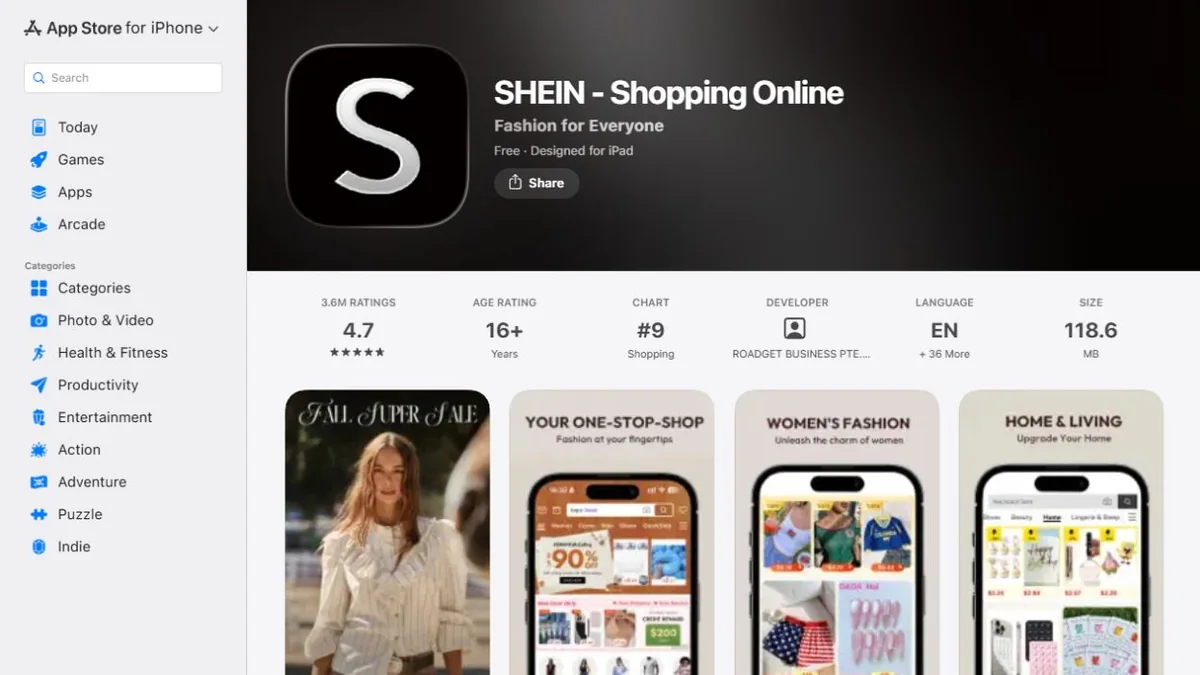
Shein's app approaches fashion shopping through new arrivals, trends, bestsellers and product categories. Those different entry points let customers browse around an interest or occasion as well as search for a specific item. Notifications about drops and offers give interested shoppers a reason to check back.
Its strength as an example is the way merchandising makes a large assortment feel current. A returning customer has something new to explore, while trend and category groupings help them decide where to start. The experience suits people who enjoy browsing fashion as an ongoing activity.
Your brand can apply that idea at a different pace. A seasonal collection, an edit for a particular occasion or the return of a popular style can make a visit feel worthwhile. Pairing those collections with relevant updates helps customers understand what's new without expecting them to search through your whole catalog each time.
Apps that connect customers with a retailer
A retailer's app can help customers shop across several situations: at home, on the move or inside a store. Membership, saved preferences and practical services make that relationship easier to maintain.
5. Nike
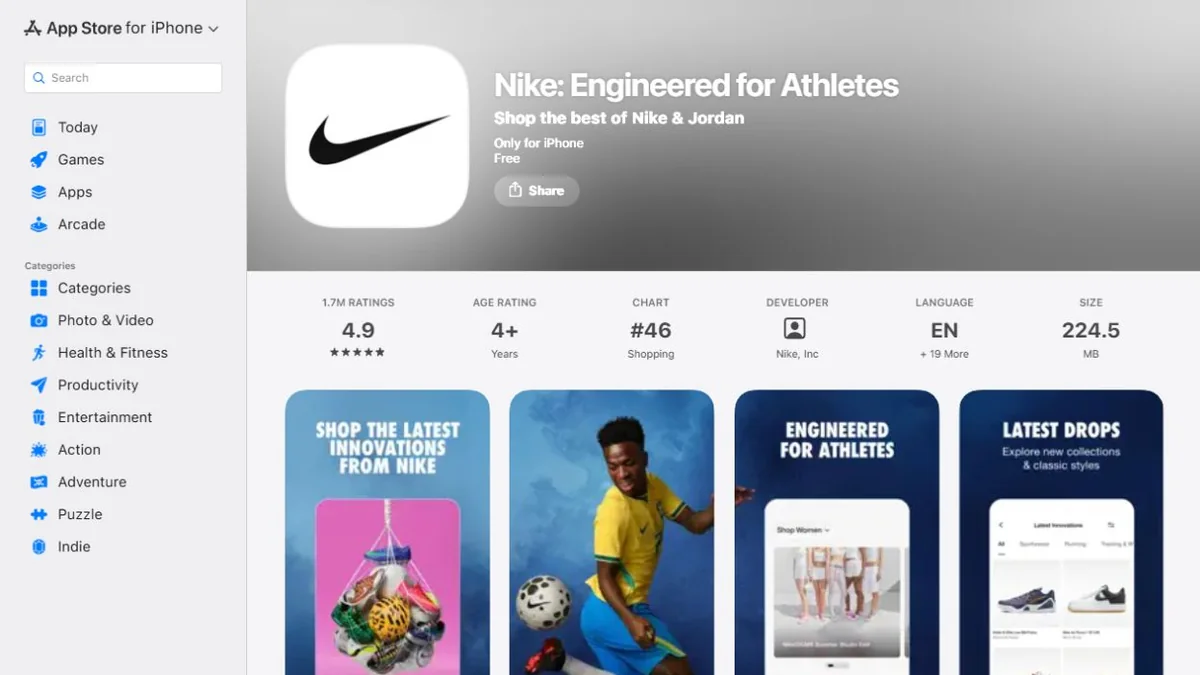
Nike's shopping app puts membership at the center of a branded shopping experience. Products sit alongside personalized recommendations, sport and style content, member benefits and access to expert advice. In-store tools, including barcode scanning, extend its usefulness beyond shopping from home.
That gives customers several ways to engage with Nike. They might arrive looking for a product, explore content around their interests or use the app while visiting a store. The connection with sport and style gives the assortment context, making it easier to see how a product fits into the customer's life.
For ecommerce brands, Nike is a useful example of what an app can offer an existing audience. Membership, relevant content and practical shopping services reinforce the same relationship. A smaller brand can build around its own area of expertise, giving regular customers a familiar place to learn, shop and see what has been created for them next.
6. Walmart
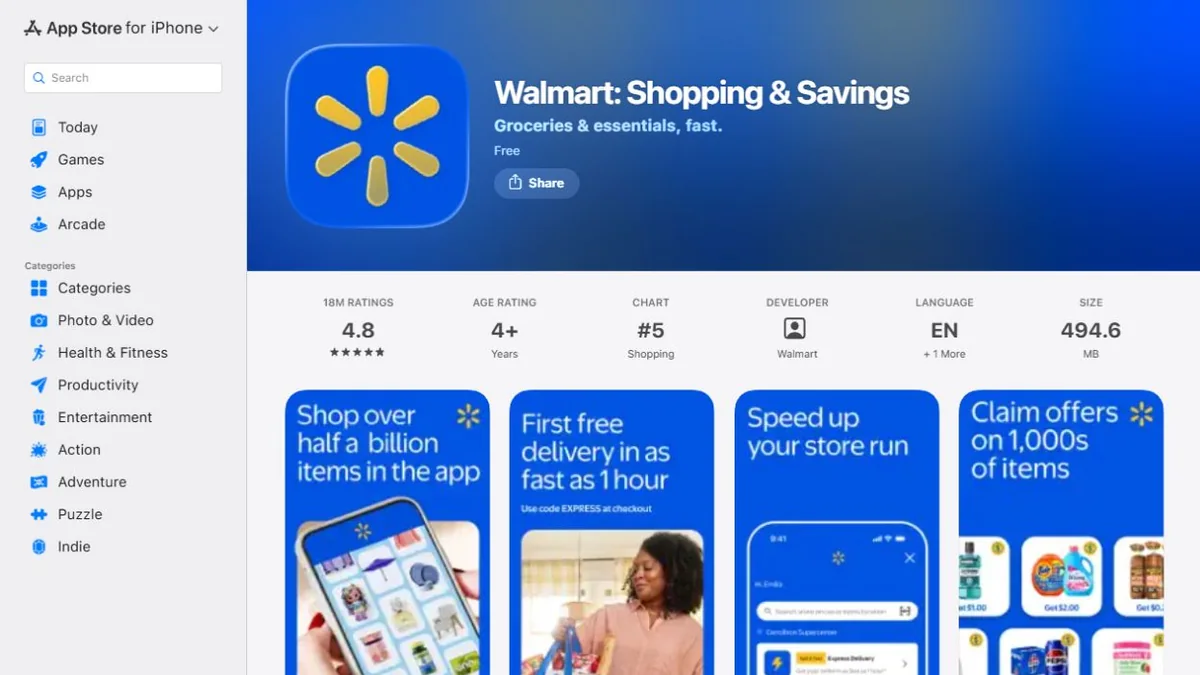
Walmart's app brings shopping lists, repeat orders, delivery and pickup together with tools for visiting a physical store. Product scanning, Walmart Pay and curbside check-in let customers use the app at different points in an ordinary shopping trip.
Its strength is fitting around how people already buy everyday essentials. A shopper can prepare a list, reorder familiar items or arrange collection, then use the same app when it's time to receive the purchase. The customer doesn't need to treat online shopping and a store visit as entirely separate activities.
That makes Walmart particularly relevant for retailers with physical locations. The app can help before someone arrives, during the visit and afterward. Even a few well-chosen services, such as easy reordering and clear collection information, can make your digital experience useful around a recurring routine and give customers a reason to keep it close at hand.
7. Target
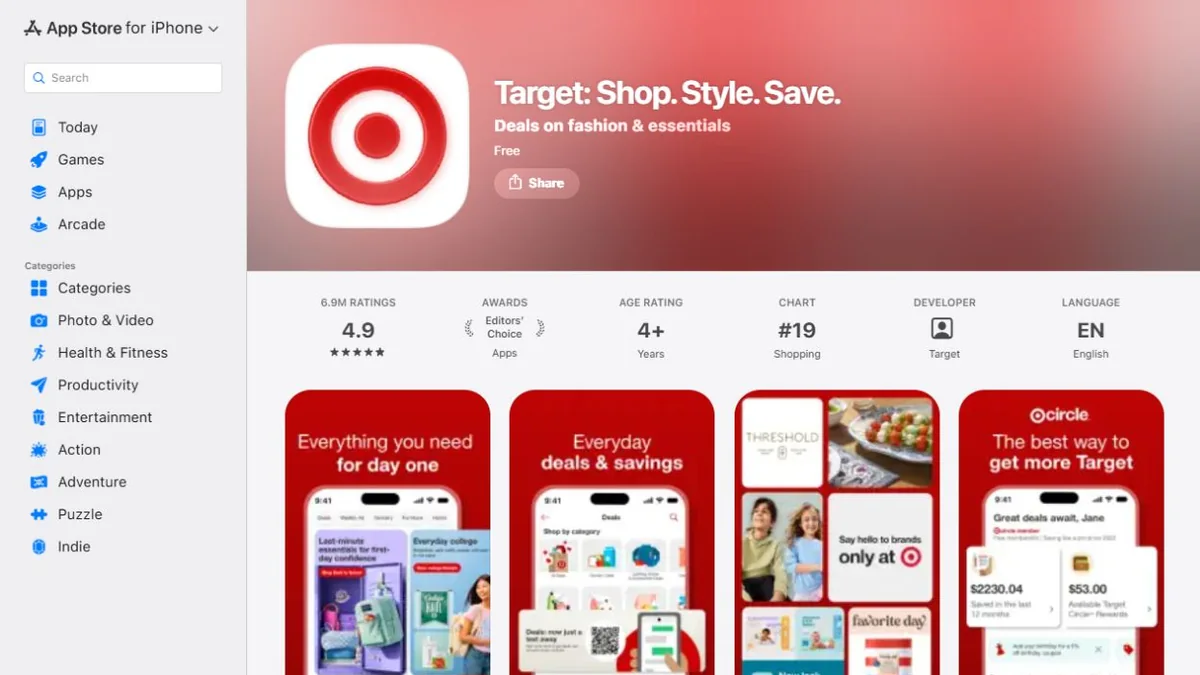
Target's app connects product discovery with the practical details of a store visit. Customers can check local availability, build a shopping list, browse Target Circle offers and choose how to receive their purchases. Drive Up supports curbside collection of eligible orders, while Wallet brings offers and payment options together at checkout.
The convenience comes from keeping those steps close to one another. Before leaving home, a customer can find an item and decide whether to collect it. When shopping in-store, the app also has a role in using offers and paying.
For brands with retail locations, it's a helpful example of how availability, membership and fulfillment can reinforce one another. Each feature resolves a small uncertainty or saves a step in a familiar trip. Together, they make the app useful for regular customers without requiring a special event or promotion to justify opening it.
8. Instacart
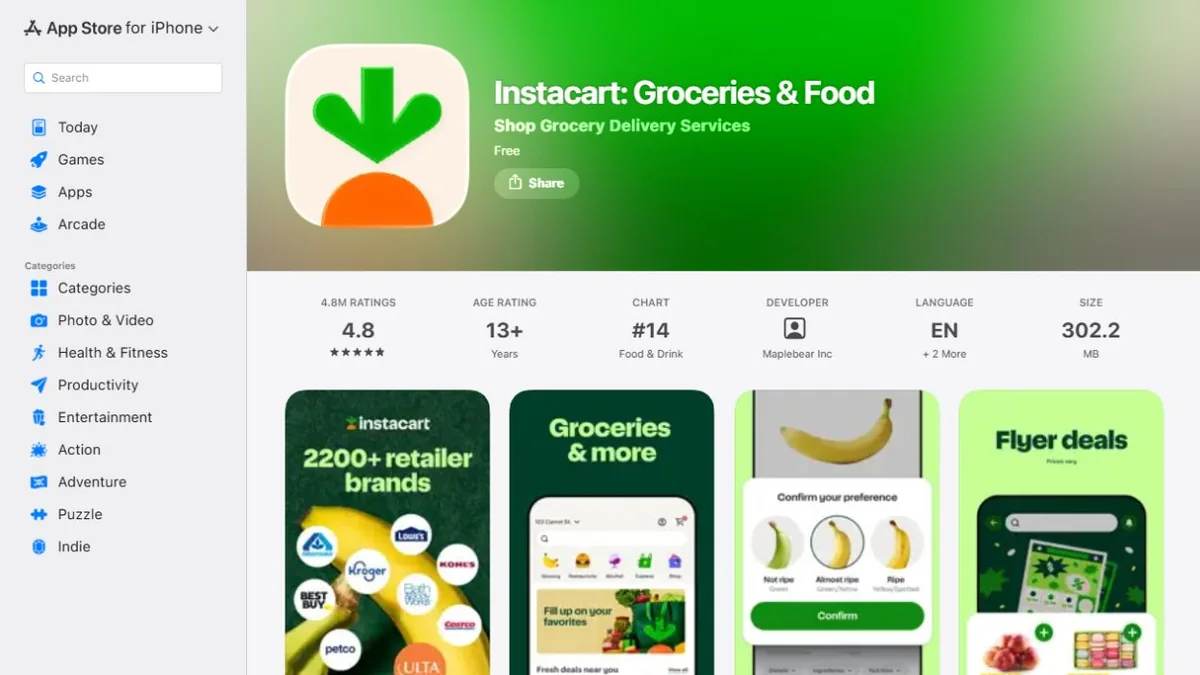
Instacart lets customers buy groceries and other essentials from participating retailers, with delivery or pickup where available. Shopping lists and favorite-product reorders help people build a basket, while communication with the person picking the order supports the purchase as it happens.
That last part matters for groceries, where an unavailable item can affect a meal or the usefulness of the whole order. Being able to communicate during picking helps customers stay involved when the original plan needs to change. Reordering also saves them from rebuilding a familiar shopping list every week.
Instacart is a useful example for any brand selling products customers regularly run out of. It shows the value of remembering what people buy while giving them room to adjust the next purchase. For your store, that could mean easier access to previous orders, flexible quantities or clearer communication when an item isn't available.
Apps built around sellers and specialist products
Some shopping experiences depend on discovering something distinctive or finding a seller who understands your interests. These apps use that connection to make browsing feel more personal.
9. Whatnot
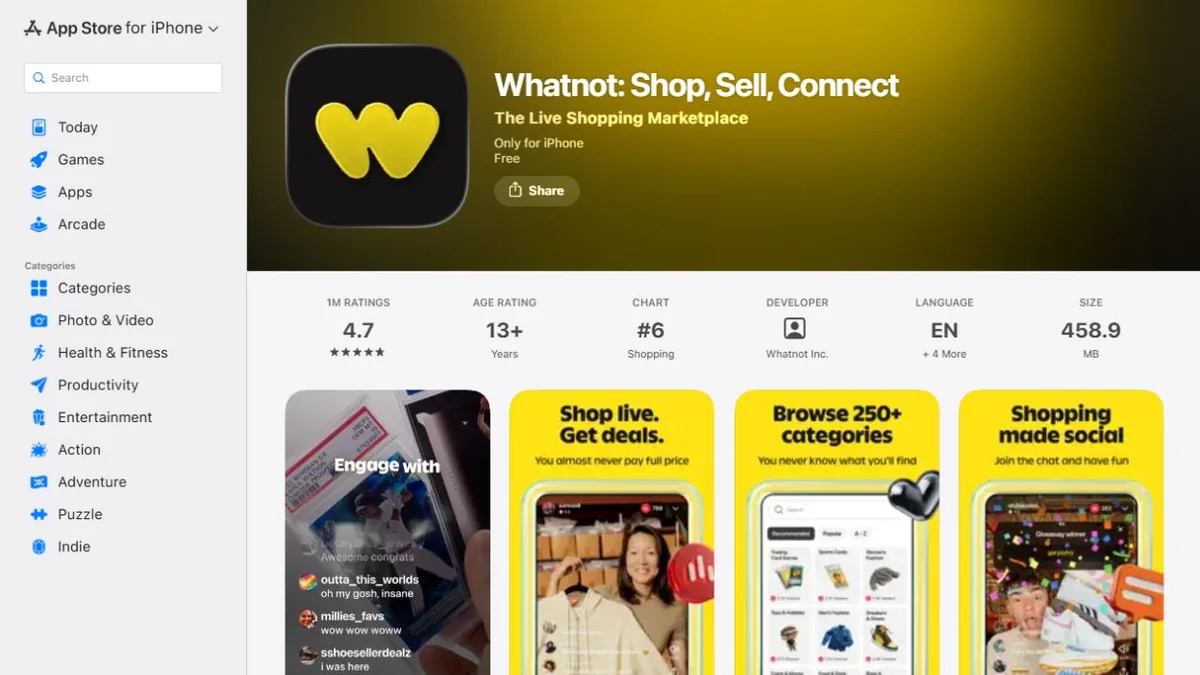
On Whatnot, a seller can present an item live while shoppers watch, ask questions and take part in an auction. The app combines video, chat and purchasing across categories including collectibles, fashion and electronics.
That format gives products a different kind of context from a static listing. A knowledgeable seller can show an item from different angles, explain a detail and respond to what people want to know. For collectors in particular, the seller's expertise and the conversation around an item can be part of the attraction.
The useful lesson for brands is how direct interaction can help someone understand a purchase. A live demonstration, styling session or new-release walkthrough can answer questions as they arise. Whatnot makes the value of live shopping especially clear when the product benefits from explanation and the person presenting it brings something interesting to the experience.
10. eBay
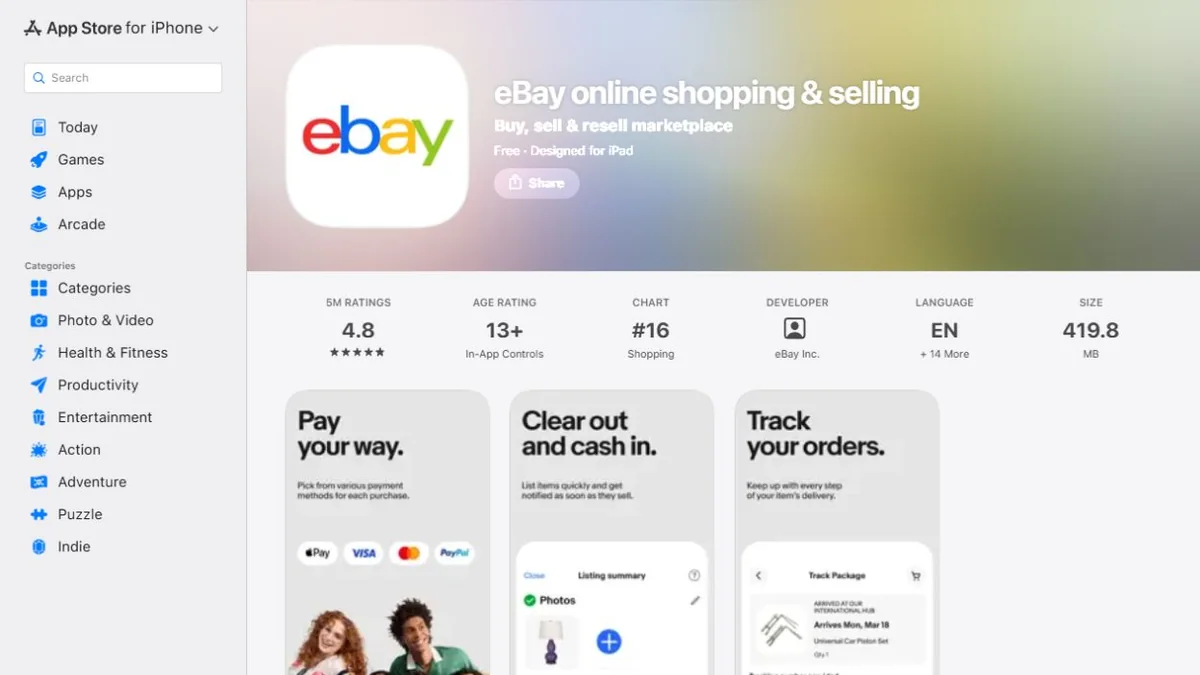
eBay's app is particularly useful for products that aren't always available in a conventional catalog: used goods, collectibles, discontinued items and specific replacement parts. It combines marketplace search with saved searches, watched listings and notifications that help customers follow the items they care about.
Those tools suit a purchase that may take several attempts to complete. A shopper searching for a particular vintage watch can monitor relevant listings; someone watching an auction can return as it progresses. Their interest remains useful even when they don't buy on the first visit.
For brands with limited editions or irregular restocks, that's a valuable pattern. Customers benefit from being able to express interest once and hear when there's something relevant to see. eBay shows how saved preferences and timely follow-up can support a deliberate search, giving the next visit a clear purpose.
11. Etsy
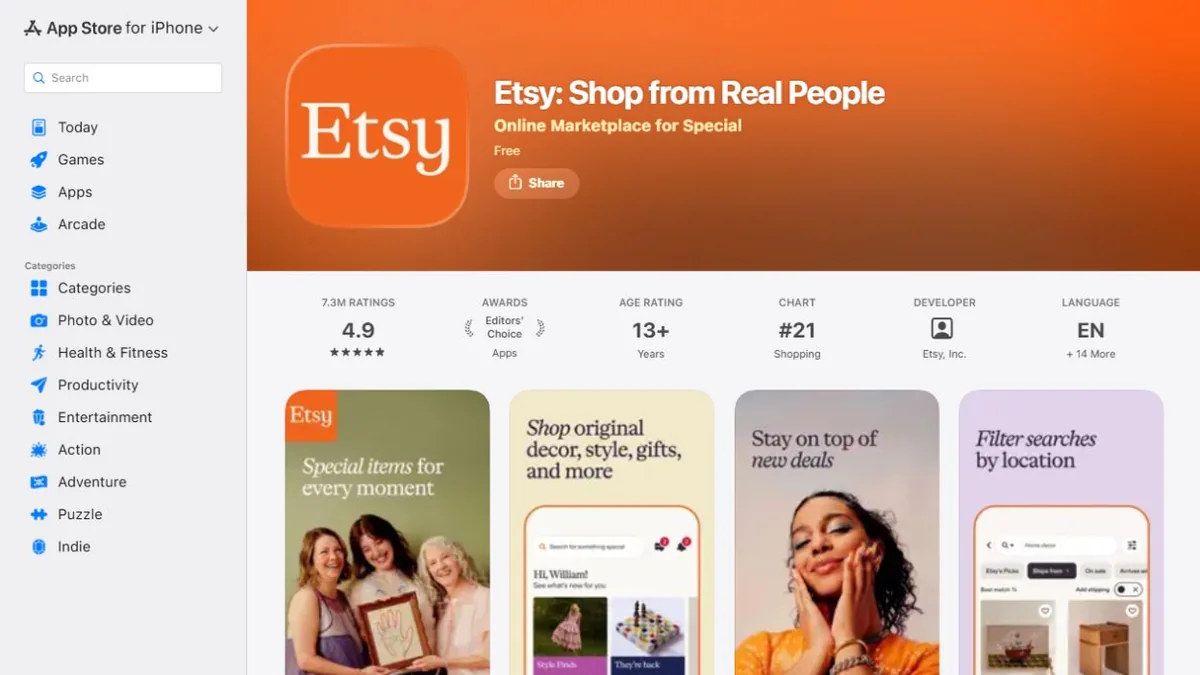
Etsy brings independent sellers together around products with a distinctive style or personal element. Its assortment includes personalized gifts, vintage items, art and home decor, with seller messaging to support questions and custom details.
The buying experience fits products that often need a conversation. Someone ordering an engraved gift may want to confirm a spelling or ask about the design. A customer choosing a made-to-order piece may need more information before committing. Being able to speak with the person behind the product helps make that decision feel more approachable.
Etsy is worth studying if your brand sells through craftsmanship, customization or a strong creative point of view. The product's story and the interaction around it contribute to its value. Clear options, helpful photography and an easy route to ask a question can make a distinctive product easier to buy without stripping away what makes it special.
12. Depop
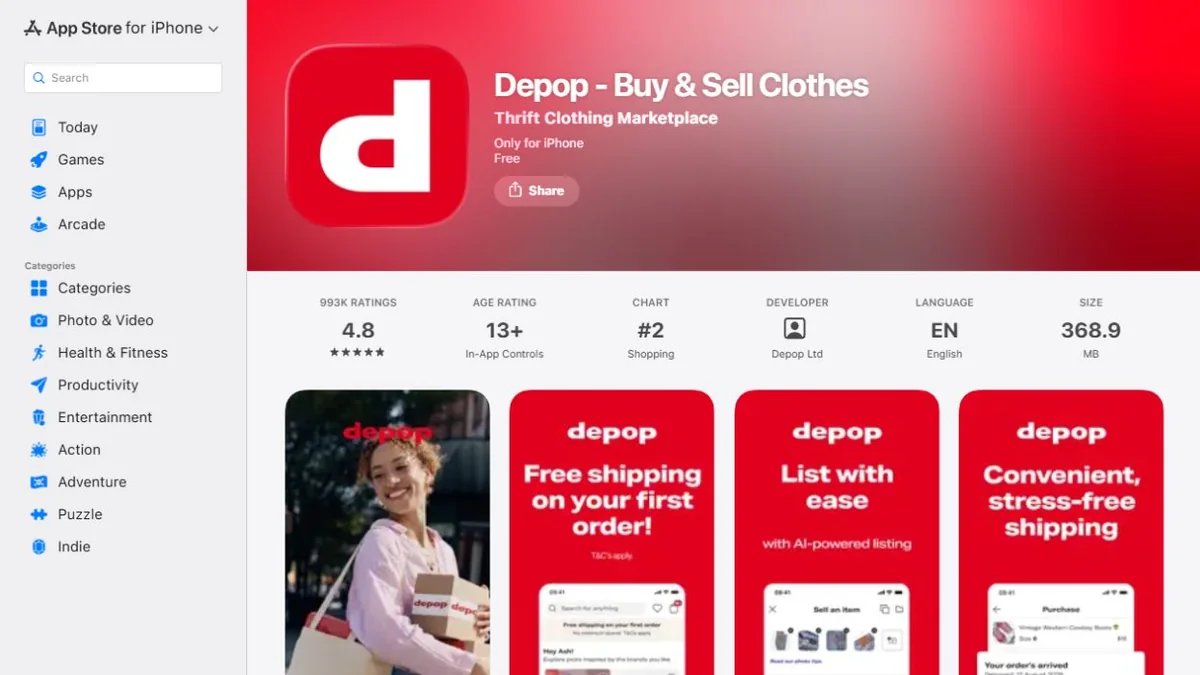
Depop organizes secondhand fashion around individual sellers and a visual sense of style. Shoppers can explore products, save items, follow sellers and communicate through the app, gradually finding people whose selections match their taste.
That makes browsing more personal than working through a large undifferentiated catalog. A seller's collection gives an individual item context: the surrounding clothes help communicate a look or aesthetic. When customers find a selection they like, they have a reason to see what appears next.
For a fashion brand, Depop is a useful reminder of the role curation plays in repeat visits. Consistent photography, styling and product selection help customers understand your point of view. Your store doesn't need constantly changing resale inventory to create that connection; it needs to make clear who the assortment is for and give those shoppers something they enjoy returning to.
13. Poshmark
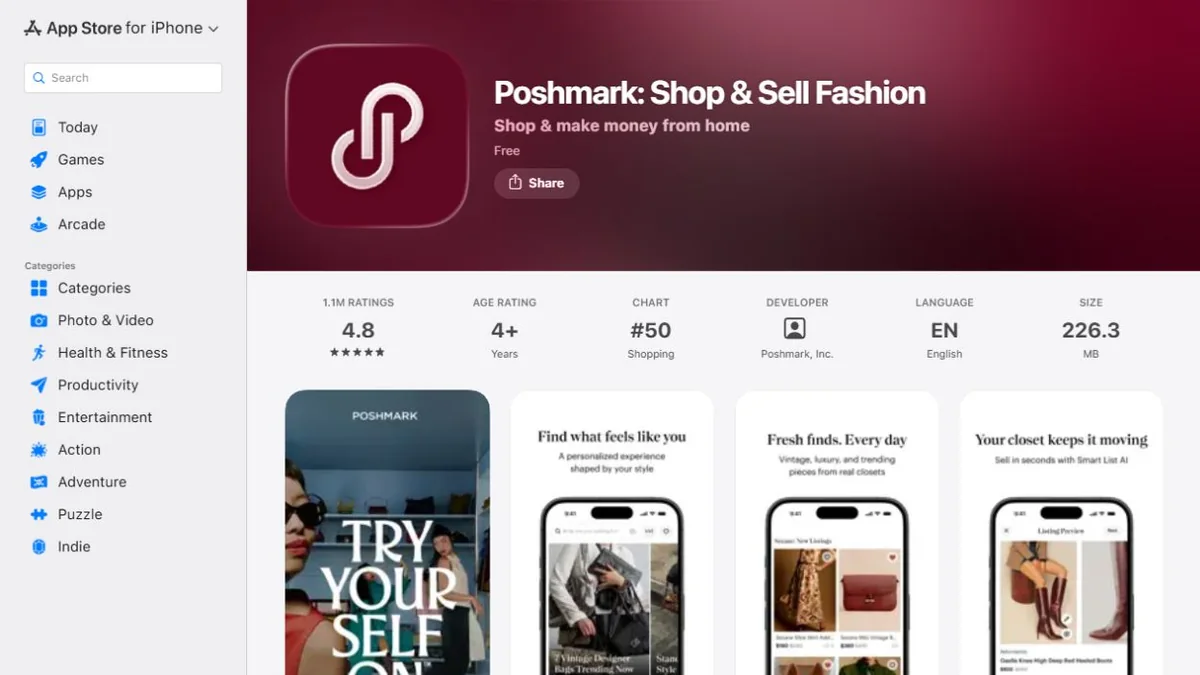
Poshmark gives fashion shoppers several ways to discover individual sellers and their collections. Personalized browsing and photo-based search help customers find products, while Posh LIVE adds a live shopping format with sellers presenting their items.
The combination supports both a specific search and a more social visit. Someone can arrive with a look in mind or spend time exploring what a familiar seller has available. Live presentation adds the opportunity to see products discussed and displayed, bringing more of the seller's personality into the experience.
That seller connection is useful for brands to study. Customers may return because they trust the selection and enjoy how it's presented, even before they know which item they want. Showing the people and taste behind your range can give browsing more character, especially when your products benefit from styling, demonstration or a little explanation.
14. OfferUp
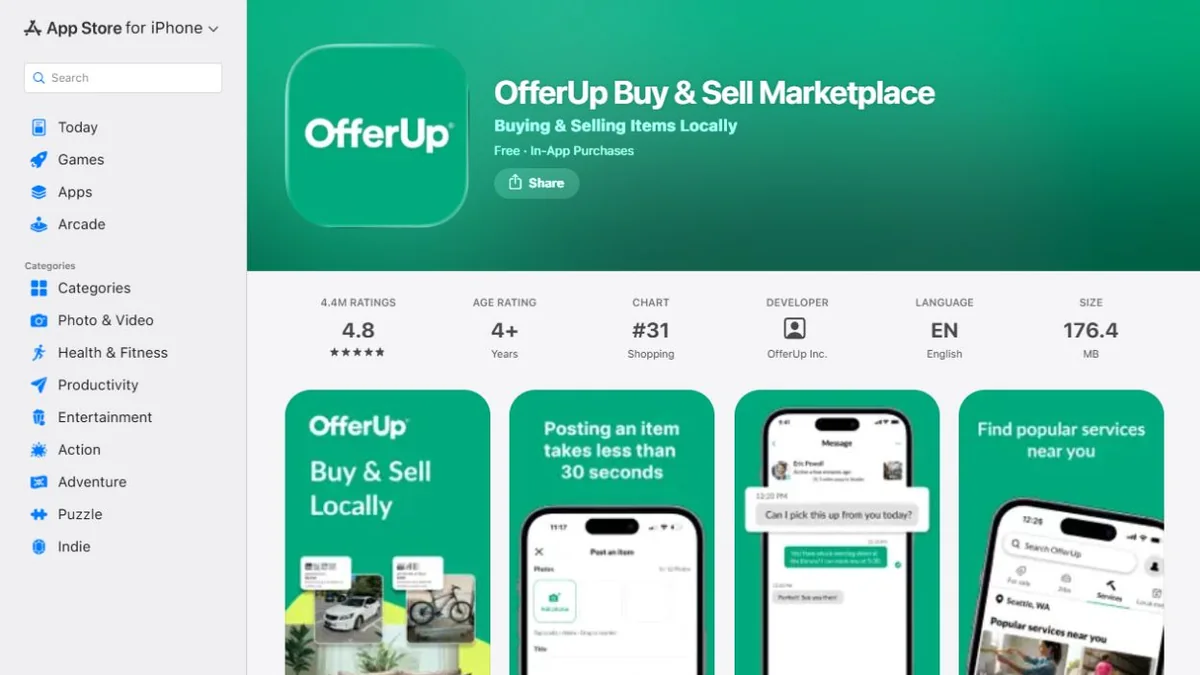
OfferUp focuses on buying and selling nearby. Location-based browsing helps shoppers discover local listings, and messaging lets buyers and sellers discuss the product and collection arrangements within the app.
That proximity is especially useful for furniture, bulky goods and other purchases that are easier to collect than ship. A customer needs to understand what is available in their area, what condition it's in and whether receiving it will be practical. Keeping the listing and conversation close together helps them work through those details.
For local retailers, the interesting part is how the experience makes geography useful. Nearby stock and convenient collection can be compelling reasons to buy from you. Showing local availability clearly, answering product questions and explaining the pickup process can make your store easier to choose when a customer wants something they can receive without a complicated delivery arrangement.
Apps that add rewards to existing shopping habits
Rewards can give customers another reason to choose where they shop. The experience works best when people understand what they'll earn and how to receive it.
15. Rakuten
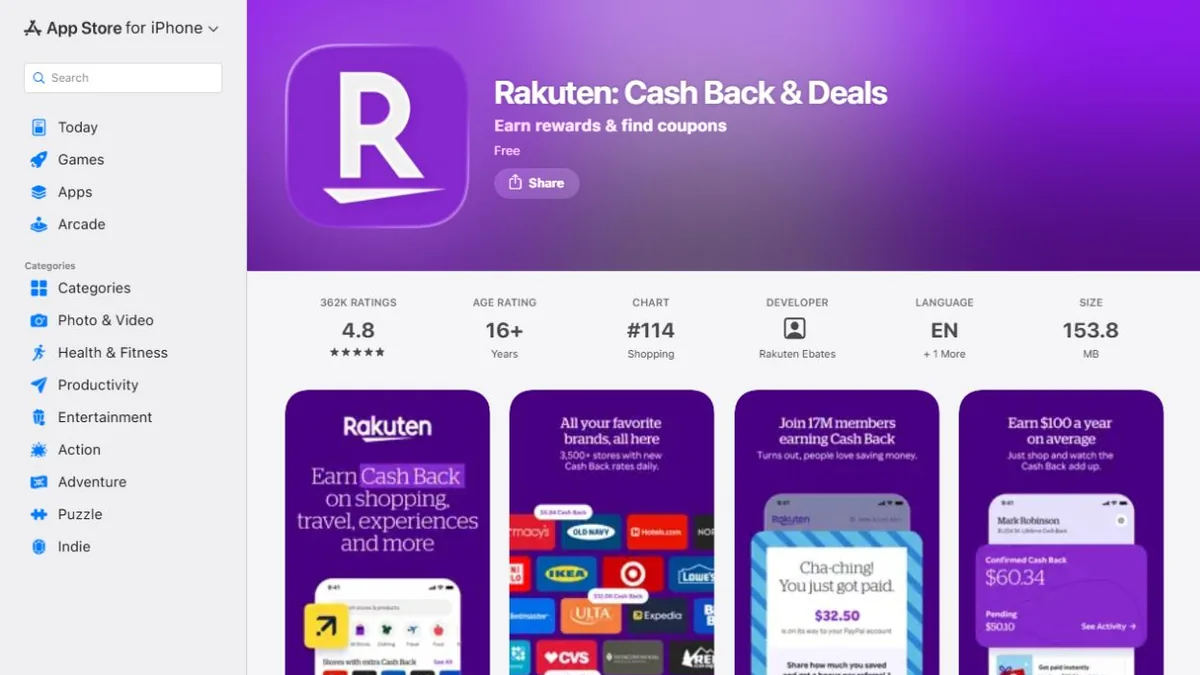
Rakuten gives customers a way to earn cashback when shopping with participating retailers. Instead of selling the products itself, the app helps people find eligible offers and begin a qualifying purchase. Online shopping needs to start through Rakuten; in-store offers require activation under their terms.
The attraction is adding a visible benefit to spending someone may already be planning. A shopper can look for a retailer they know, see the available reward and track their cashback and payment information afterward. That makes the reward part of the shopping process and gives people a place to check its progress.
For your own loyalty program, the useful example is that visibility. Customers should be able to understand what they'll earn, which action qualifies and when they can use the benefit. Rakuten illustrates how a clear reward can become part of a repeat shopping habit when the process is easy to follow.
What can your brand learn from these apps?
Each app gives customers a practical reason to use it. That might be finding an unusual product, getting a familiar order delivered or staying connected to a brand's new releases.
For your own store, start with the moments customers already care about. Saved products, useful notifications, clear delivery updates and a comfortable checkout can each improve the experience without requiring an enormous catalog or a complicated feature set.
Those details belong to the broader work of improving your mobile shopping experience. The aim is to make the customer's next step feel easier, wherever they are in the buying journey.
Final thoughts
These shopping apps succeed in different ways, but each offers something customers can understand and use. The strongest ideas often come from a simple need: save this item, help me choose, show me what's new or make the next order easier.
For your brand, the opportunity is to choose the ideas that fit how your customers shop. A useful, consistent experience gives people a reason to return and a good reason to keep buying from you.