
As your Shopify store grows, small gaps in the customer experience become harder to ignore. More orders can mean more support requests, more complicated merchandising and more time spent keeping your systems in sync.
The right apps help your team handle that work while giving customers a better reason to buy and return. For a Shopify Plus brand, the challenge is finding tools that fit the store you've already built and can support the volume you're growing into.
These 15 apps cover the main areas worth considering, from customer retention and product discovery to the work that happens after checkout.
Which apps are worth considering for Shopify Plus?
The most useful choices depend on where your store needs help. A subscription brand might prioritize Recharge, while a retailer with a large catalog could get more value from better search or bulk data management.
Most of these apps also work on other Shopify plans. Their relevance to Plus comes from the needs they serve as your customer base, order volume and operations become more complex.
| App | Main use |
|---|---|
| Klaviyo | Customer segmentation, email and SMS |
| Attentive | SMS and email marketing |
| Recharge | Subscriptions and recurring orders |
| LoyaltyLion | Loyalty points, rewards and VIP tiers |
| Swym Wishlist Plus | Saved products and wishlist follow-up |
| Boost AI Search & Filter | Search, filtering and merchandising |
| Rebuy | Personalized recommendations and upsells |
| Judge.me | Product reviews and customer photos |
| Gorgias | Customer support and self-service |
| Loop | Returns and exchanges |
| OrderEditing.com | Customer order changes after checkout |
| Shopify Flow | Automating store workflows |
| Wyllo | Fraud and policy abuse prevention |
| Matrixify | Bulk data imports, exports and migrations |
| Triple Whale | Ecommerce analytics and marketing measurement |
Apps for customer retention and communication
As more customers buy from you, it becomes harder to give everyone a relevant experience manually. These tools help your team use customer information to manage communication, subscriptions and rewards.
1. Klaviyo
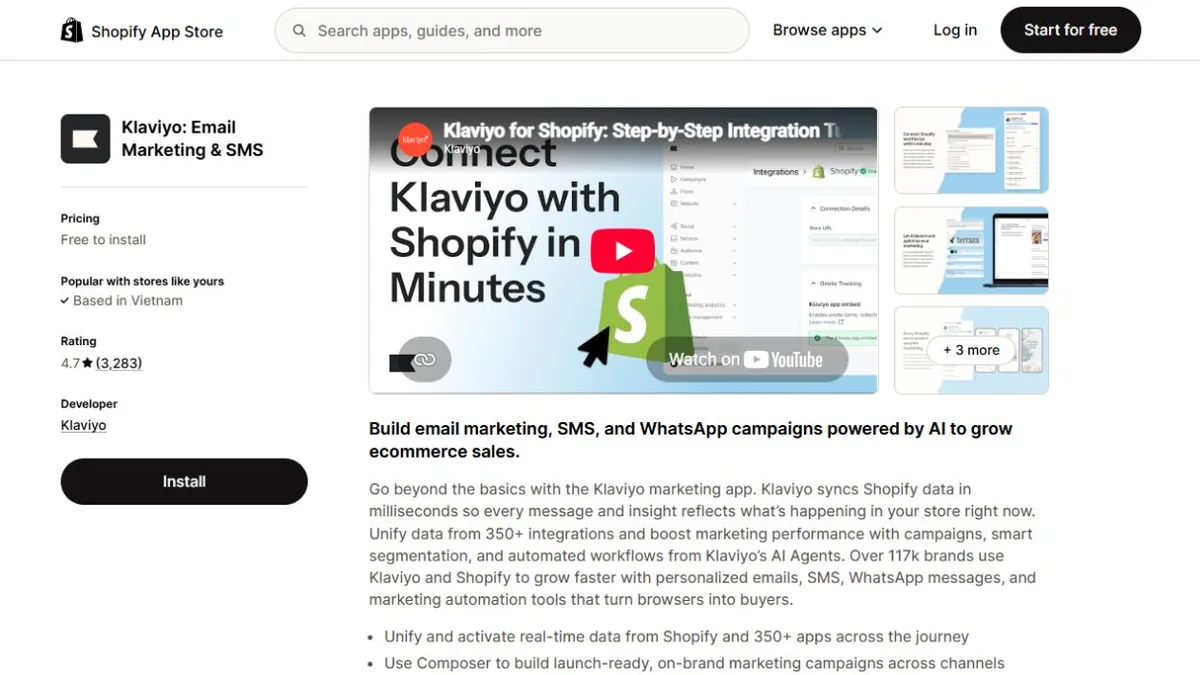
Klaviyo connects your Shopify customer and order data with email, SMS and automated marketing. Purchase history and browsing behavior become information you can use to decide who receives a message, what it says and when it arrives.
That makes it particularly useful as your audience becomes more varied. A skincare brand could introduce first-time buyers to their new routine, remind existing customers when they may need a refill and send a new-product campaign to shoppers who bought something complementary. Those journeys can run alongside your regular newsletters and promotions.
The depth of its segmentation and automation is the main attraction for a growing store. You can build communication around the customer's relationship with your brand, with different paths as that relationship changes. It's a strong option when you have enough customer data and marketing capacity to move beyond sending the same campaigns to your whole list.
2. Attentive
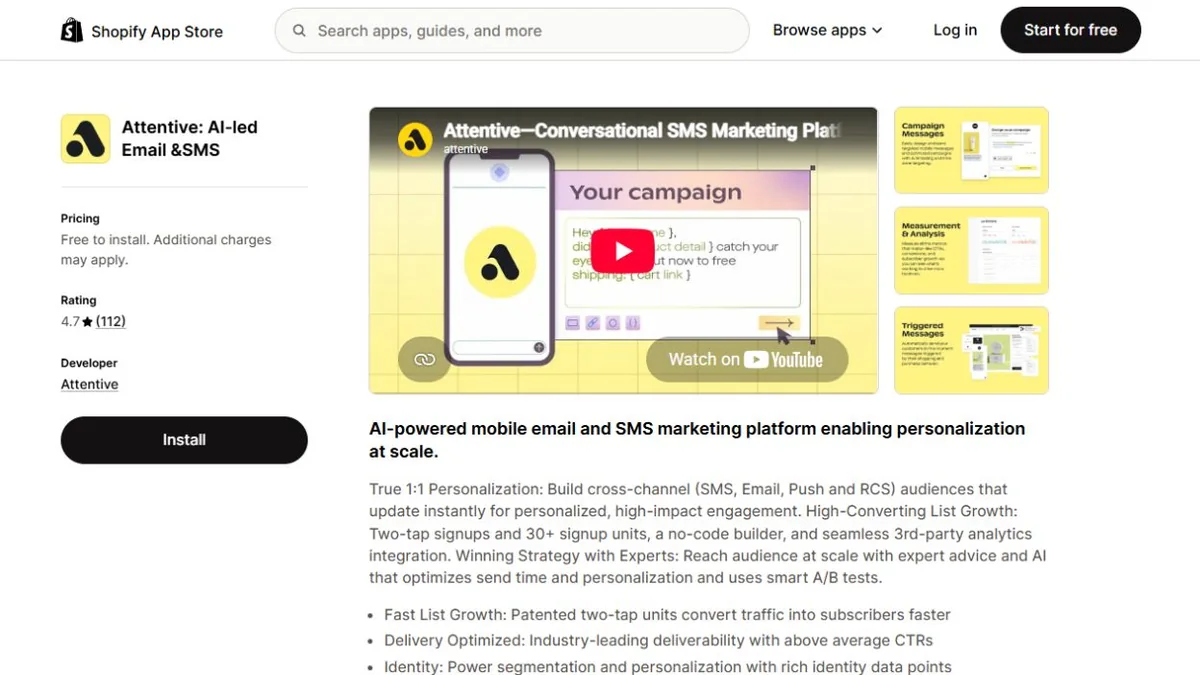
For brands making SMS a substantial part of their marketing, Attentive covers the work from collecting subscribers to planning, sending and testing messages. Its Shopify integration supports signup forms, audience segments and campaigns triggered by customer activity, alongside email marketing.
That combination helps connect how someone joins your list with what they hear from you next. A shopper who signs up while exploring a product can enter a relevant follow-up journey, while existing subscribers can receive messages about launches, offers or items they've shown interest in. Testing gives your team a way to compare approaches as the program develops.
Attentive deserves a look when SMS needs dedicated attention and a more deliberate place in your customer communication. Its email capabilities also give you the option to manage both channels together. If you already use another email platform, the choice comes down to which setup makes those conversations easiest to coordinate.
3. Recharge
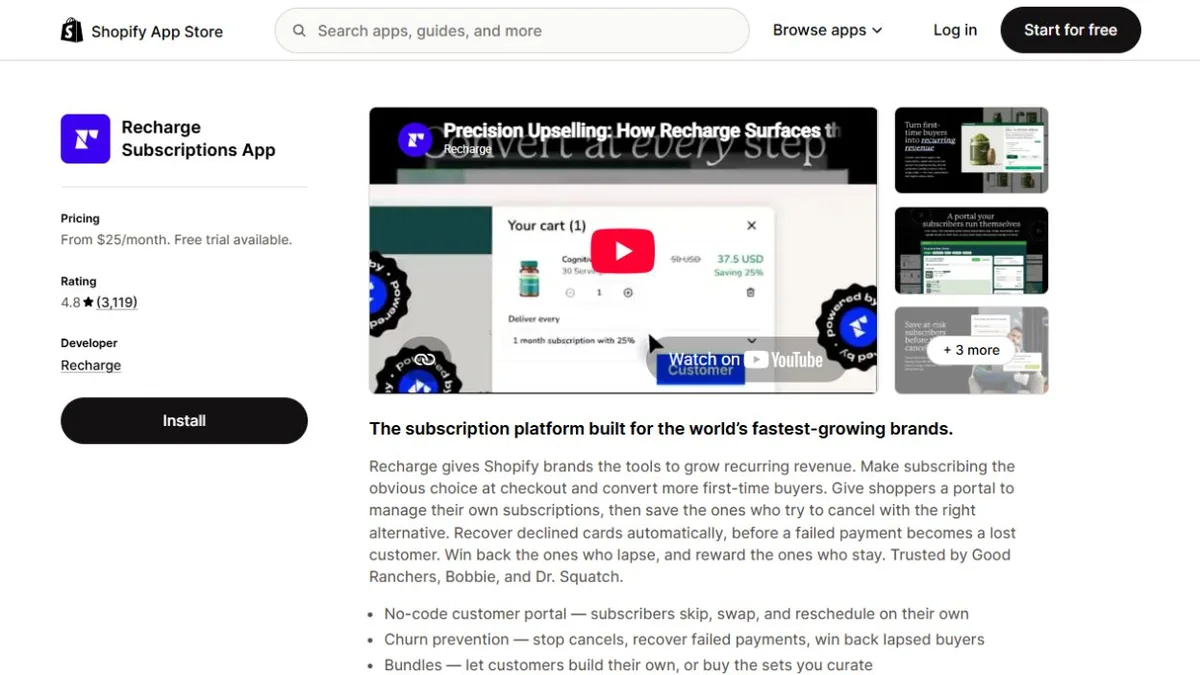
Recharge gives Shopify brands the tools to sell and manage subscriptions, from recurring orders to customer self-service and payment recovery. It's particularly relevant for products people use regularly, such as coffee, supplements, skincare and household essentials.
Much of its value comes from what subscribers can change themselves. Through the customer portal, they can skip an order, switch products or move a delivery date. A coffee customer heading away for two weeks can delay their next shipment; someone tired of one flavor can choose another without abandoning the subscription altogether.
On your side, Recharge supports subscription offers and follow-up, while payment recovery helps address recurring orders interrupted by failed payments. Those features give your team more ways to respond to the reasons a subscription stops working for someone. For a store building repeat revenue around replenishment, that flexibility is an important part of keeping the service convenient over time.
4. LoyaltyLion
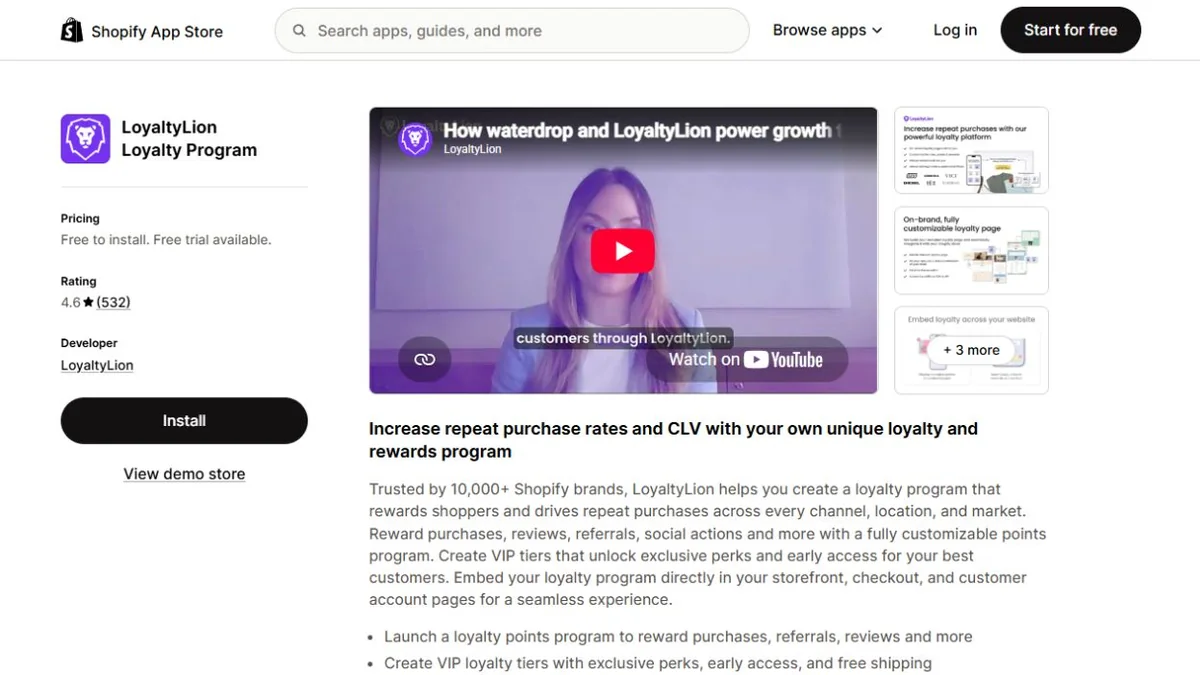
A loyalty program needs to give customers a reason to care about their next purchase. LoyaltyLion helps you build that program through points, rewards, referrals and VIP tiers, with options for recognizing different levels of customer activity.
You might reward repeat orders with redeemable points, then give your most engaged customers access to a higher tier with more valuable benefits. Referrals add a way for existing shoppers to introduce friends to your brand. The structure can reflect how your customers buy, whether that means frequent small orders or a few larger purchases each year.
Connections with tools such as Klaviyo and Gorgias help make loyalty part of the wider experience. Marketing can reflect someone's reward status, and support can understand their relationship with the program. That's useful for Plus stores where a standalone points balance isn't enough: customers should encounter the benefits through the messages, service and shopping experience they already use.
5. Swym Wishlist Plus
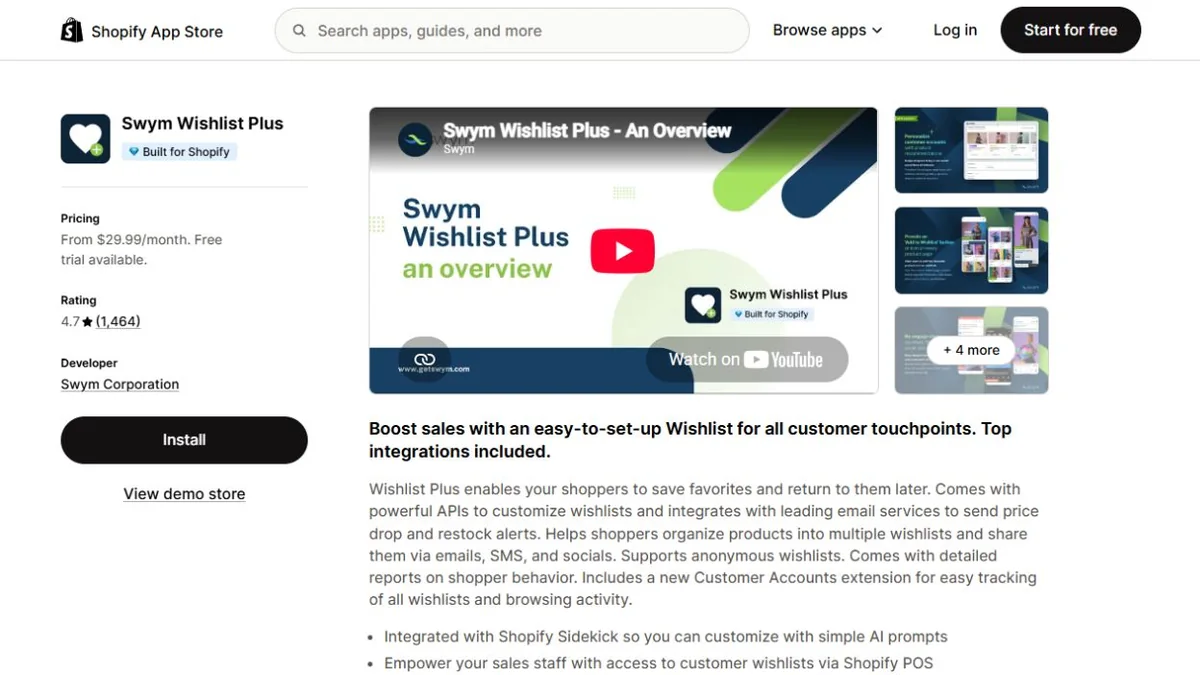
Not every interested shopper is ready to place an order. Swym Wishlist Plus gives them a way to save products, organize wishlists and share them, including support for shoppers who haven't created an account.
That makes it useful for purchases that take a little thought. Someone furnishing a room can collect options over several visits, while a fashion shopper can keep track of pieces they'd like to buy later. Saving an item gives them a straightforward route back without having to search your catalog again.
The app also connects wishlist activity with reminders, restock alerts and price-drop notifications through messaging integrations. For your team, that creates a specific reason to get back in touch: an item the customer chose is available again or has become more affordable. The strength of the experience is that it begins with an interest the shopper has already expressed, making the follow-up easier to keep relevant.
Apps for product discovery and conversion
Once someone reaches your store, they need to find the right product and feel comfortable buying it. These apps support that decision through search, recommendations and information from other customers.
6. Boost AI Search & Filter
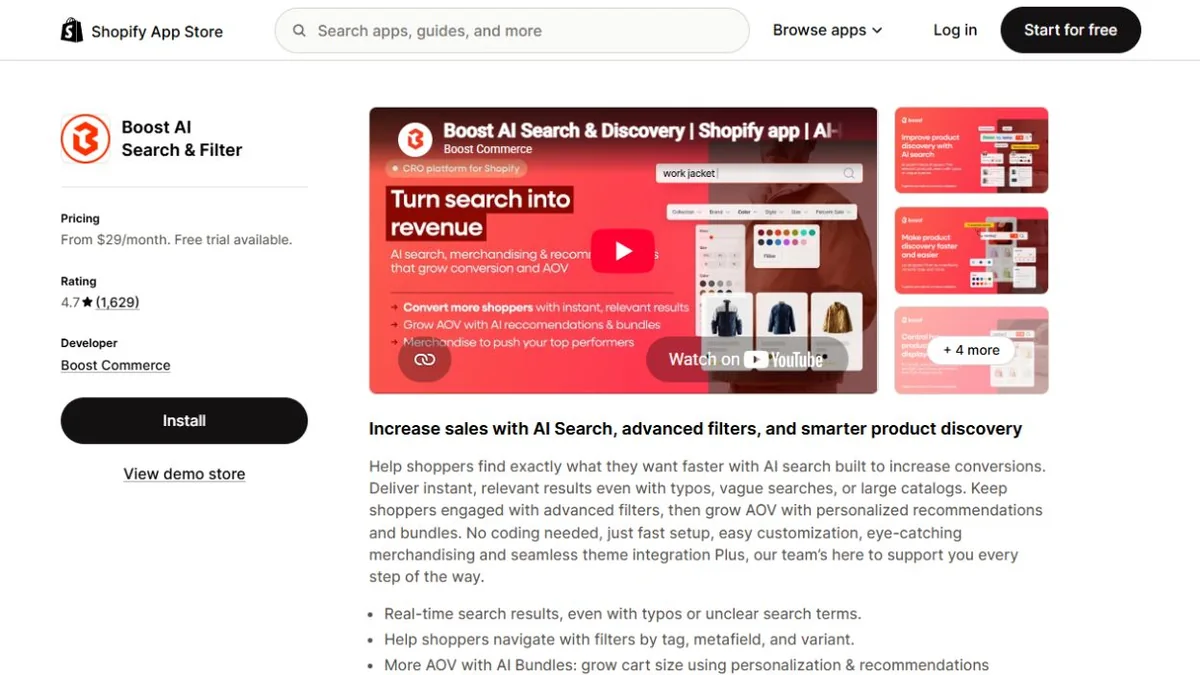
Boost AI Search & Filter helps customers find their way through a large catalog, combining storefront search with filters and merchandising controls. Shoppers can narrow the assortment, while your team can influence which products appear and how they're ordered.
That becomes valuable when your range is too varied for broad category pages alone. A customer looking for a particular material, size and style needs a manageable selection of suitable products. Useful filtering brings those options together instead of leaving them to work through page after page of items they can't use.
The merchandising side gives you more control over discovery too. You can promote selected products or adjust results around the assortment you want customers to see. Boost is worth considering when navigation has become a barrier to buying, especially across detailed product ranges. Consistent product data matters here: the more clearly your catalog describes each item, the more helpful its filters can be.
7. Rebuy
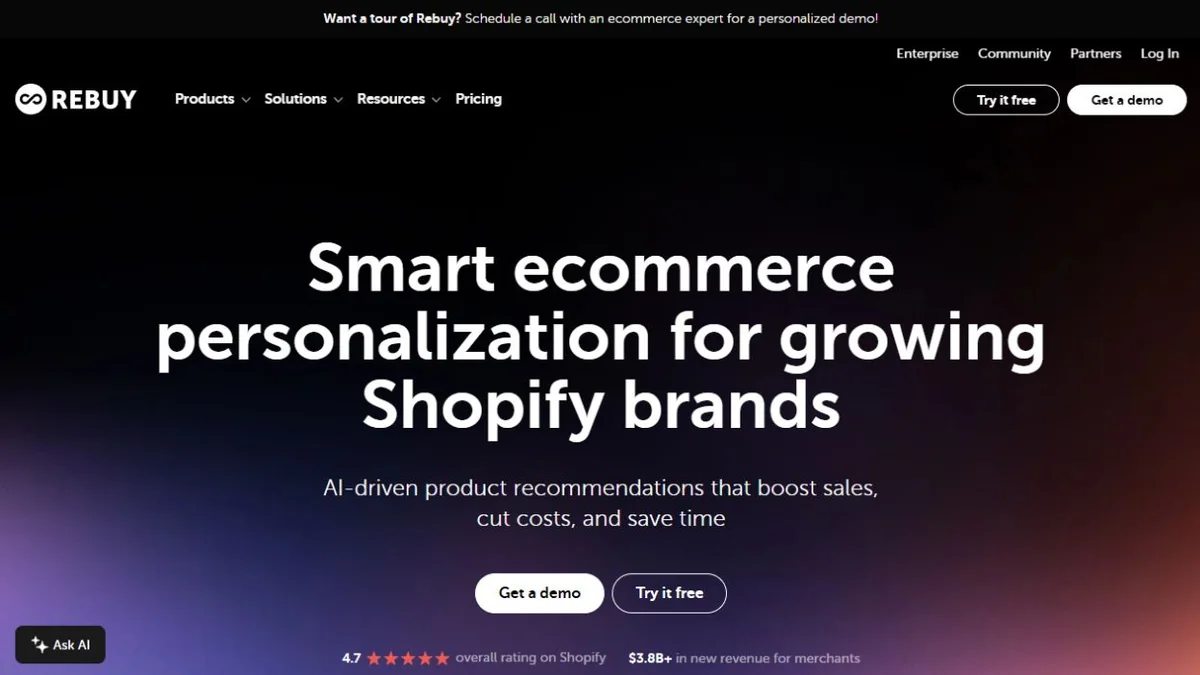
Rebuy adds personalized recommendations, cart offers, bundles and post-purchase upsells to Shopify stores. For Plus merchants, it also supports customized checkout experiences, giving your team several places to present a relevant additional product.
The distinction is in how the offer fits the purchase. A customer buying a camera might need a compatible accessory; someone ordering a routine skincare product might appreciate a useful bundle. Cart and post-purchase offers let you approach those situations at different moments, rather than relying on the same recommendation everywhere.
Rebuy brings those experiences into a connected set of tools that your team can build and test. It's useful when you have complementary products and want more control over how customers discover them. A larger basket is most valuable when the additions make sense to the buyer, so the quality of your product pairings matters as much as where the offer appears.
8. Judge.me
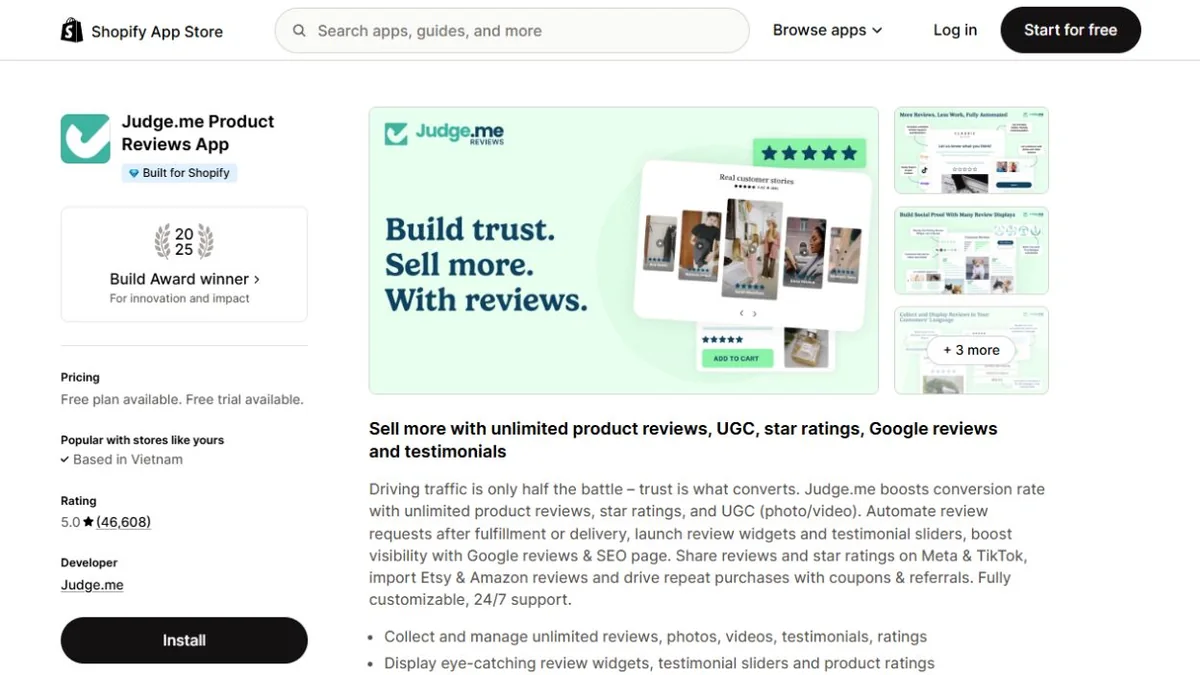
Judge.me helps you collect product reviews and make them useful to future customers. It supports star ratings, written feedback, photos and videos, with automated review requests and widgets for displaying the results in your store.
Customer photos can show how a garment fits on different people or how a piece of furniture looks in a real home. Written reviews add detail about materials, everyday use and the experience after delivery. Together, they answer questions that polished product photography and a description may leave open.
For a growing catalog, automated collection gives your team a repeatable way to gather that information across many products. The value isn't limited to displaying a high average rating: detailed feedback can help customers choose the right item and give your team a better understanding of what needs explaining. Placing reviews alongside clear product information makes them part of the buying decision, where they're most useful.
Apps for support and the post-purchase experience
Customer experience continues after payment. Returns, delivery questions and order corrections are routine parts of ecommerce, and handling them well gives customers a reason to trust their next purchase to you.
9. Gorgias
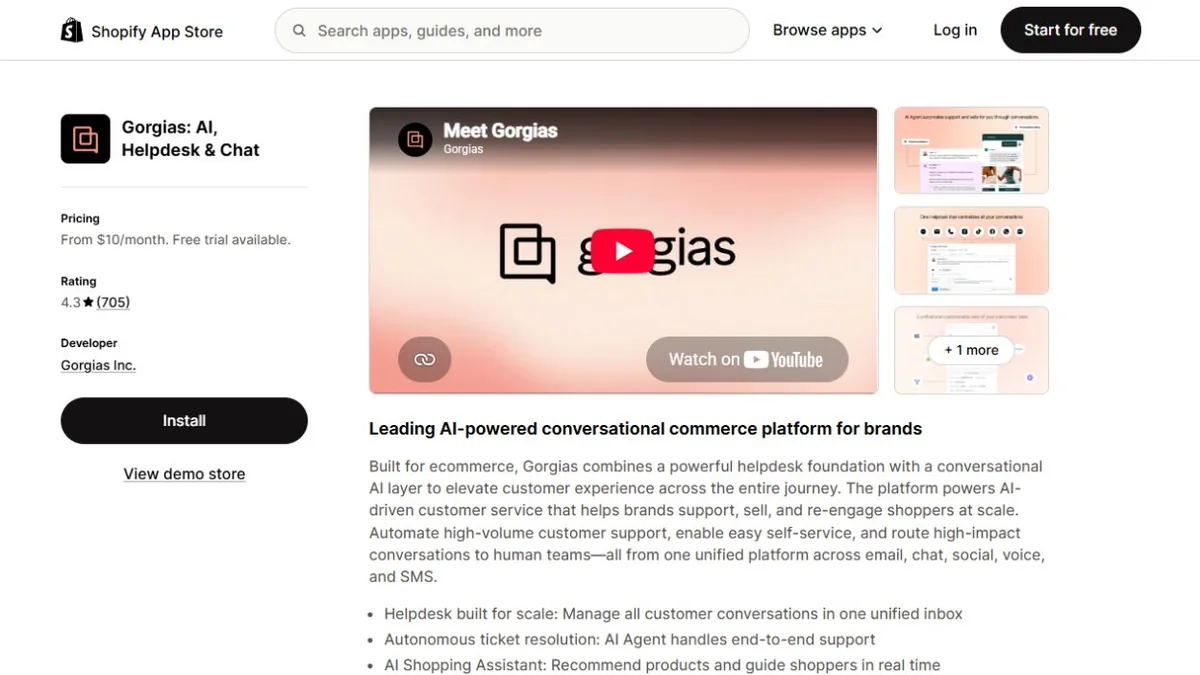
When your support team has to open several systems before answering a simple question, Gorgias can bring much of that work together. It combines customer conversations across email, chat and social with Shopify order context in one support platform.
Someone asking about a purchase can be helped with the conversation and relevant order information in view. That saves the agent from reconstructing the situation each time, and makes it easier for another team member to pick up the request. It's especially useful once several people are sharing a growing queue.
Gorgias also offers automation, AI and self-service tools for routine support work. Those can help your team handle common questions and route conversations while preserving time for problems that need a person's judgment. Its ecommerce focus is the main draw: support is organized around the purchases, delivery questions and customer relationships your store deals with every day.
10. Loop
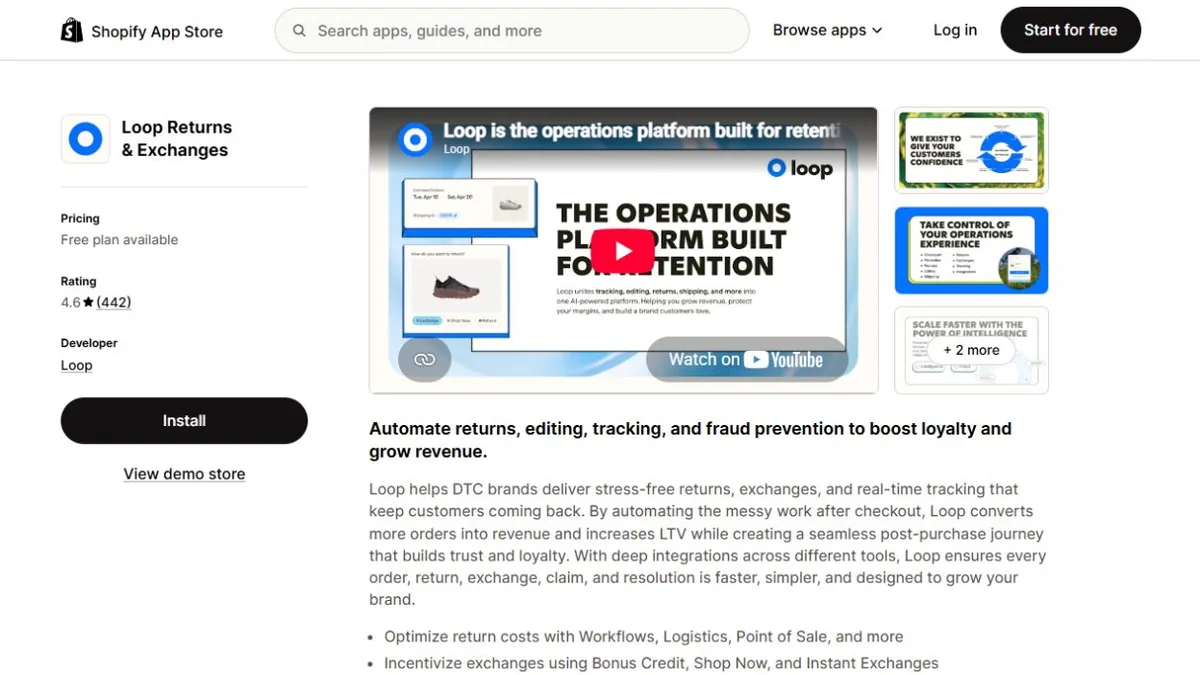
Loop gives customers a portal for returns and exchanges, backed by rules and automated workflows for your team. It also connects with fulfillment and support tools, helping the request move through the systems involved in receiving an item back.
For apparel brands in particular, a return may begin with a solvable problem: the customer likes the product but needs another size. Loop supports an exchange-led experience and incentives that can help shoppers find a suitable alternative. That gives the customer a route to the purchase they wanted without starting a separate support conversation.
The operational side becomes more useful as return volume grows. Defined rules help your team handle requests consistently, while the portal gives customers a clearer way to begin the process. Loop is worth considering when returns need to be managed as a regular part of your shopping experience, with a policy and warehouse process that support the choices customers see.
11. OrderEditing.com
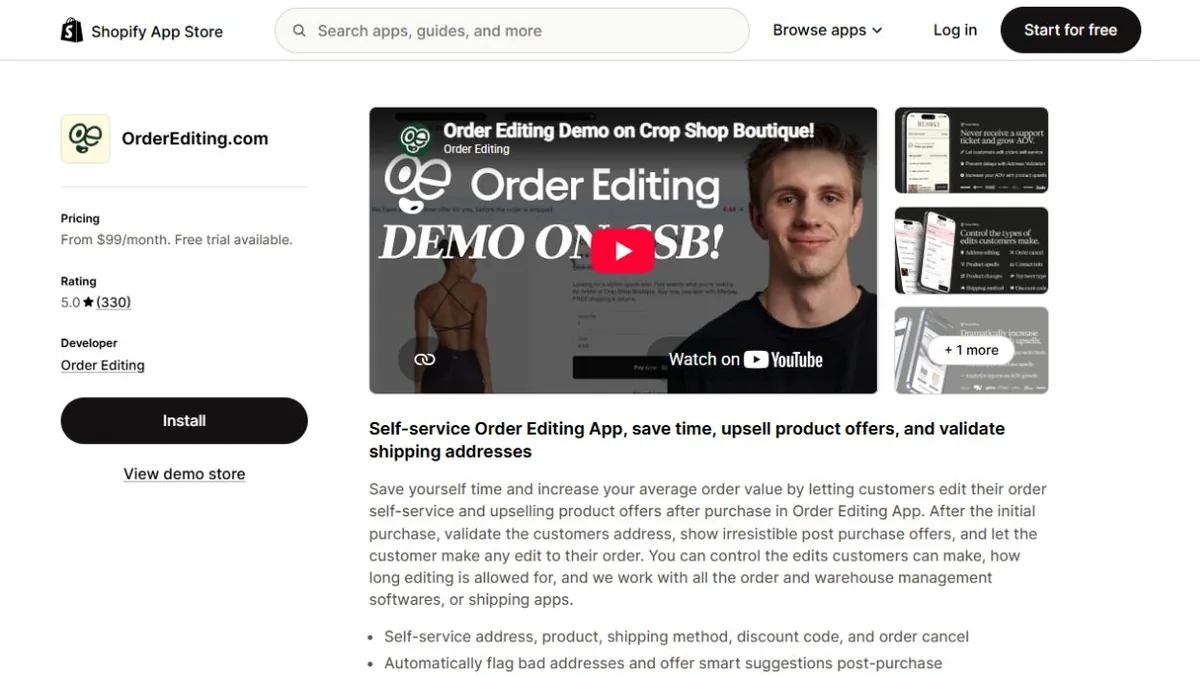
An incorrect address or forgotten item can generate a support ticket minutes after checkout. OrderEditing.com lets customers make permitted changes themselves, including address corrections, product changes and cancellations, within a window you control.
For the shopper, the benefit is immediate: they can fix the mistake while the order is still eligible for editing. For your team, it removes some of the back-and-forth involved in receiving the request, finding the order and making the same change manually. That becomes useful when small corrections take up a meaningful share of your support queue.
The app's controls let you decide how much flexibility to offer and when edits should close. Its connection with fulfillment is especially important for busy stores, because a correction needs to reach the people packing the order. It's a focused tool for making that short period after checkout easier for both customers and staff.
Apps for operations and measurement
Some of the most valuable improvements happen behind the scenes. These tools help your team manage recurring tasks, store data, risk and performance as the business becomes more demanding.
12. Shopify Flow
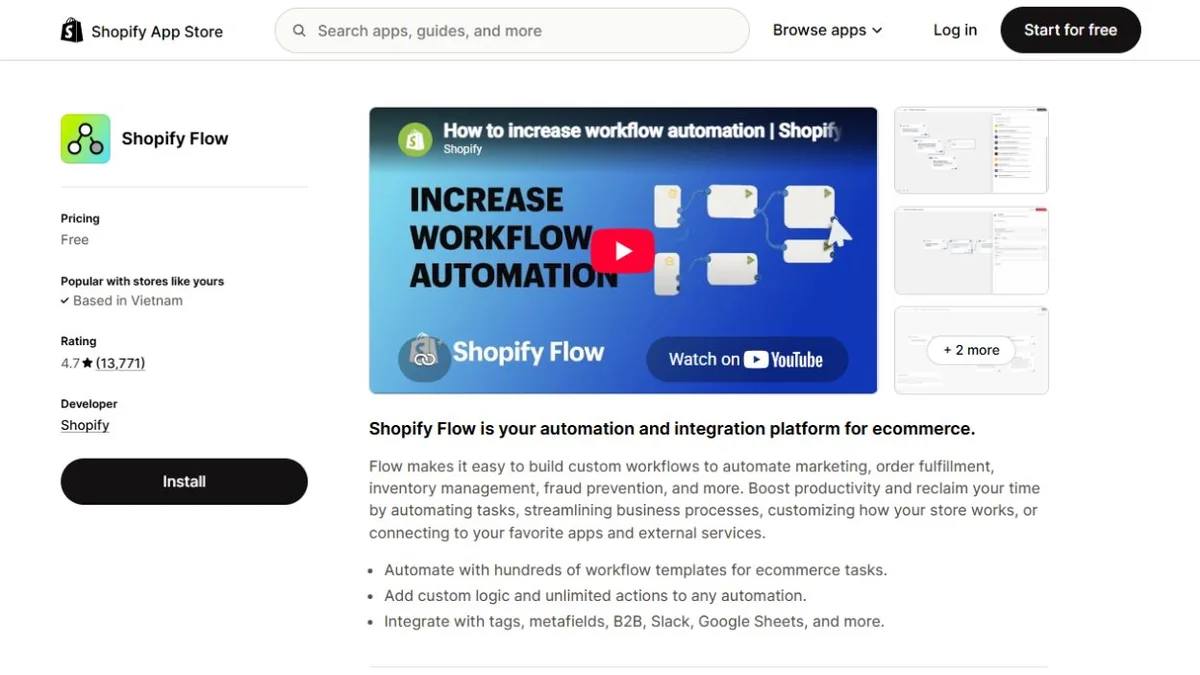
Shopify Flow is Shopify's free automation app, built around triggers, conditions and actions. An event starts a workflow, your rules determine what should happen, and the app carries out the supported action.
For example, a new order could trigger a check for a condition your team cares about, followed by a tag or internal notification. Similar workflows can involve customers, inventory and supported third-party apps. The point is to make routine responses happen consistently without someone watching for each event and doing the same work again.
Flow is a useful place to start when a growing store accumulates lots of small administrative tasks. Your team can build workflows around its own process and connect actions across compatible tools. It's particularly helpful for clear, repeatable rules; decisions that need judgment can still be routed to a person, with the relevant information already brought to their attention.
13. Wyllo
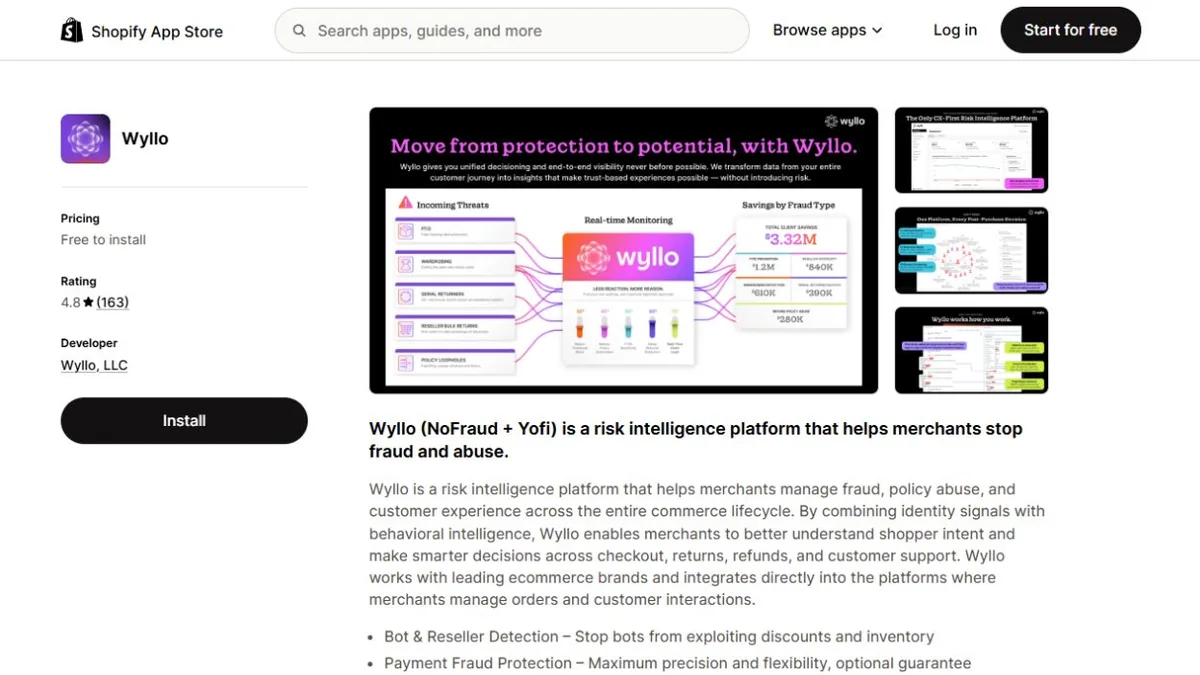
Wyllo, which brings together NoFraud and Yofi, helps ecommerce teams assess payment fraud and policy abuse. Its scope includes risks around transactions, returns, refunds, bots and reseller activity.
Those problems can become difficult to handle with manual reviews alone. A payment review addresses one kind of risk, while repeated misuse of a returns policy creates another. Wyllo's broader coverage is relevant for stores that need to consider several forms of abuse across the customer journey.
For a high-volume brand, the useful balance is catching problematic activity while allowing legitimate customers to shop without unnecessary friction. Wyllo is worth evaluating when your team is spending considerable time on reviews or relying on broad rules that may reject good orders. If chargeback protection is part of the proposed service, understand the specific coverage alongside the prevention tools, so your team knows which responsibilities the agreement includes.
14. Matrixify
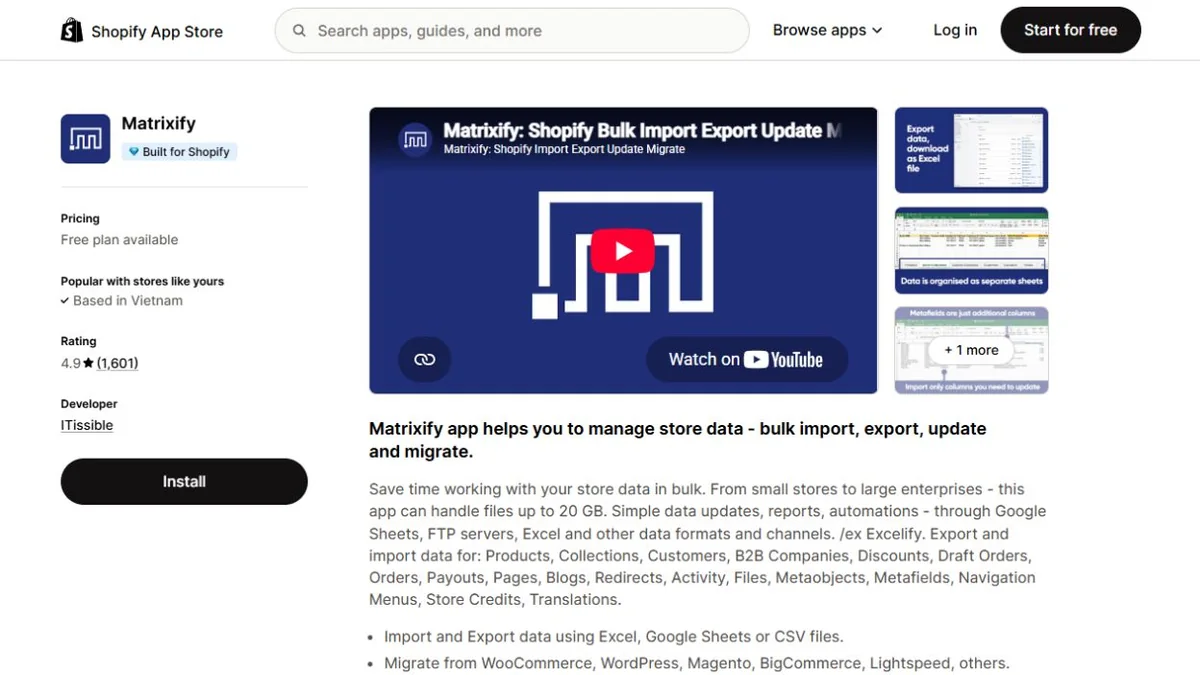
Matrixify lets your team manage Shopify data in bulk through imports, exports and spreadsheet-based updates. It supports products, customers, orders, metafields and redirects, as well as migrations and scheduled data jobs.
That makes a difference when a change affects hundreds or thousands of records. A seasonal catalog update, migration from another system or cleanup of product information is easier to organize in a structured file than through individual edits in your store's admin. You can review the data together before applying it.
Its range is useful for more than occasional migrations. Scheduled imports and exports can support recurring work involving other systems, while bulk updates give merchandising and operations teams a practical way to maintain a large store. Matrixify is particularly valuable when the job is managing the underlying information at scale. A careful review of the file remains worthwhile, since one import can change a lot at once.
15. Triple Whale
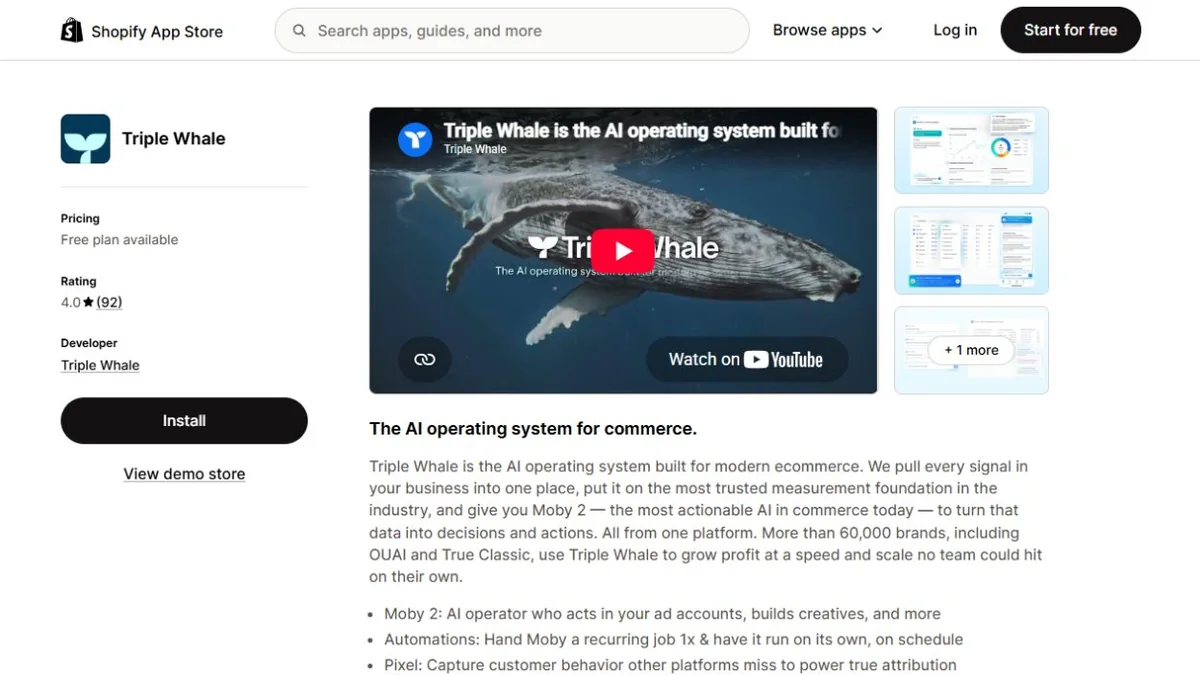
Triple Whale brings ecommerce and marketing data together so your team can assess store performance and advertising in a more connected way. Its tools cover reporting and attribution, alongside marketing mix modeling and incrementality testing.
That helps when a campaign looks healthy in its own dashboard but your store's overall results tell a different story. You can examine sales, advertising and customer behavior together, then investigate which activity is contributing to the business. Cohort analysis also lets you compare groups of customers over time, giving you more context about the buyers a campaign brings in.
For a Plus store investing across multiple advertising platforms, the appeal is having more context for budget decisions than isolated channel reports provide. Triple Whale is worth considering when your team needs to bring those views together and investigate what is influencing performance. Its value grows when someone has clear responsibility for turning the reporting into decisions about spend, campaigns and customers.
How to choose the right apps for your store
A good shortlist starts with the work you need to improve. If your team can't clearly describe the problem, it's difficult to judge whether a new app has solved it.
Before adding another tool, look at the capabilities already available in Shopify and your existing apps. There's considerable overlap in areas such as messaging, recommendations and order management. Giving each tool a clear job makes the whole setup easier to maintain.
For your finalists, a demo using your real requirements is more useful than a generic feature tour. Include the details that affect implementation: your theme, checkout, customer accounts, regional storefronts and fulfillment systems.
Pricing also needs to reflect your volume. Ask for the cost at your expected contact count, order count or usage level, including implementation and any additional services. That gives you a useful basis for comparing the benefit with the ongoing expense.
Final thoughts
The best Shopify Plus apps make your store easier to operate and more useful to customers. Some help people discover and buy products; others improve the experience that determines whether they'll return.
Choose the tools that address a clear need and fit the way your team works. A well-connected set of apps gives you room to grow while keeping the customer experience consistent.